This guide covers everything a UK diver needs to sort before a Red Sea liveaboard on Blue Horizon or Blue Melody. Four things matter most. Boarding is at 18:00 only. Your logged-dive count decides which routes you can join. You will need a visa, and you should check the latest FCDO advice. And there are no power sockets in the cabins, so plan how you will charge your kit.
At a glance
A Red Sea liveaboard with us is a 7-night dive cruise from Hurghada or Port Ghalib, on one of two boats. Here are the key facts in one place.
| Item | Details |
|---|---|
| Boats | Blue Horizon and Blue Melody |
| Routes | Northern Red Sea Wrecks & Reefs; Red Sea Wrecks; Strait of Tiran & North; Northern Red Sea & Brothers; Brothers, Daedalus & Elphinstone; Daedalus & St Johns; Rocky, Zabargad & St Johns |
| Nights | 7 |
| Embarkation | Marriott Resort Marina, Hurghada, or Port Ghalib Marina, depending on route. Boarding at 18:00 only |
| Disembarkation | Day 8, between 09:00 and 10:00 |
| Level required | PADI Open Water or equivalent. Minimum 10 logged dives on the two northern wreck and reef routes (20 for the Thistlegorm), 30 on all other routes |
| Water temperature | December to February 22-24°C; March to May 24-28°C; June to August 28-30°C; September to November 26-28°C |
| Currency | Egyptian pound (EGP) |
| Time zone | Usually 2 hours ahead of the UK |
| Plugs | Type C and F, 220-230 V, in hotels ashore. No sockets in cabins on board |
| Best months | All year. March to May for hammerheads at the Brothers, June to August for calm seas and visibility, September to November for oceanic whitetips |
Certification, logged dives and documents to bring
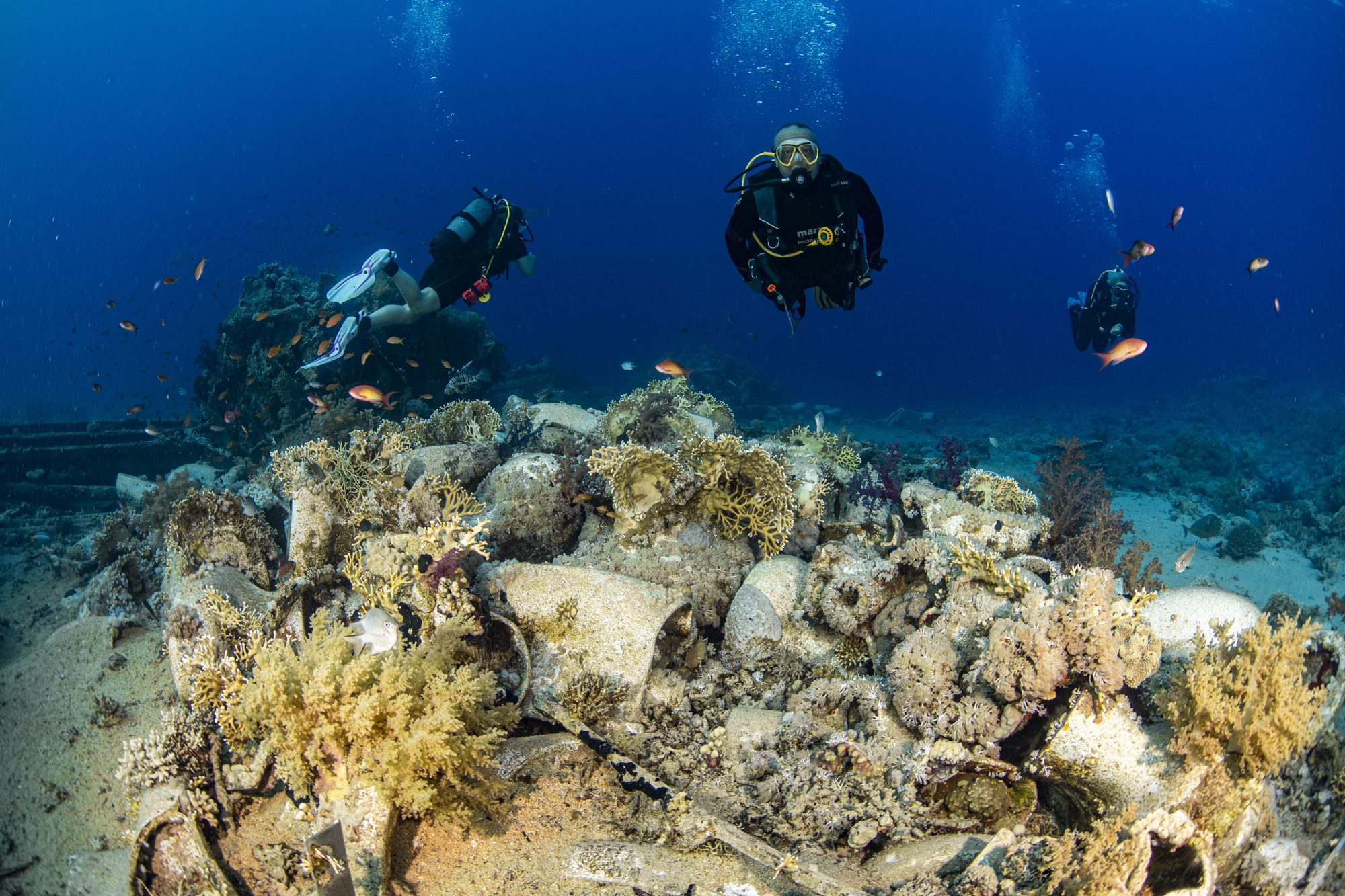
Every Red Sea route asks for PADI Open Water certification or equivalent. The real difference between routes is the number of logged dives you need. The operator states these minimums:
- Northern Red Sea Wrecks & Reefs and Strait of Tiran & North: “PADI Open Water or equivalent – minimum 10 logged dives (minimum of 20 logged dives for Thistlegorm)”.
- Red Sea Wrecks, Northern Red Sea & Brothers, Brothers, Daedalus & Elphinstone, Daedalus & St Johns and Rocky, Zabargad & St Johns: “PADI Open Water or equivalent – minimum of 30 logged dives”.
The 20-dive rule for the SS Thistlegorm comes from local legislation, according to the operator.
Pack your certification card, your logbook (paper or app) and your nitrox card if you plan to dive nitrox. Your logbook is how you show you meet the minimum, so make sure it is up to date.
If you want to build skills on board, courses are offered. The operator notes that course prices cover the practical diving only. Course study materials and certification registration are charged separately, through SSI. Tell us before you travel which course you want, so we can check it is possible on your week.
Getting there from the UK
Your route decides your port. Northern Red Sea Wrecks & Reefs, Red Sea Wrecks and Strait of Tiran & North sail from Marriott Resort Marina in Hurghada. Daedalus & St Johns and Rocky, Zabargad & St Johns sail from Port Ghalib Marina. The two Brothers routes can use either port, so check your confirmation.
Hurghada International Airport (HRG) serves Hurghada, and Marsa Alam International Airport (RMF) serves the southern coast. Which UK airports fly direct, and when, changes from season to season, so check before you book flights, or ask us to help.
Shared return transfers between the local airport and the boat are included on embarkation and disembarkation days. Extra or private transfers are not included.
Boarding is at 18:00 only, followed by dinner and orientation briefings. If your flight lands late in the evening or the schedule looks tight, talk to us about arriving the day before and staying a night ashore.
Going home, you leave the boat on day 8 between 09:00 and 10:00, after breakfast. The operator asks you to leave at least 18 hours, ideally 24 hours, between your final dive and your flight home. The last dives are on the morning of day 7, followed by a free evening ashore. Check your flight time with us before you book.
Entry, visas and travel advice
This section is based on the UK Foreign, Commonwealth & Development Office (FCDO) advice for Egypt, checked on 3 November 2026. Rules can change at short notice, so check the latest FCDO advice before you travel: gov.uk/foreign-travel-advice/egypt.
- Passport: the FCDO says your passport must have an expiry date at least 6 months after the date you arrive, and at least one blank page.
- Visa: British passport holders normally need a visa for Egypt. Hurghada and Port Ghalib are on the mainland, so the free Sinai-only entry stamp does not apply.
- E-visa: tourist e-visas are valid for up to 3 months. The official Egyptian e-visa portal asks you to apply at least 7 days before you leave.
- Visa on arrival: the FCDO says you can buy a visa on arrival for 30 US dollars, cash only, valid for up to 30 days.
- Money at the border: you can bring up to 5,000 Egyptian pounds in or out, and must declare foreign currency worth more than 10,000 US dollars on arrival.
- Drones and cameras: do not bring a drone without prior permission from the Egyptian Ministry of Defence. Professional photo or film equipment needs a permit, and high-value electronics should be declared on arrival.
The FCDO advises against travel to some parts of Egypt, including North Sinai and areas near the Libyan border. Read the summary and map on the FCDO page for the latest position on the Red Sea coast.
The FCDO also notes that some medicines are controlled in Egypt. If you take prescription medicine, carry a letter from your GP and check the FCDO health page before you go.
Health and insurance
We cannot give medical advice, but we can tell you who to ask.
- Vaccinations and travel health: the FCDO suggests checking the latest vaccine recommendations at least 8 weeks before your trip. See your GP or a travel clinic, and check NHS Fit for Travel for Egypt.
- Fitness to dive: ask a doctor if you have any doubt. The UK Diving Medical Committee (UKDMC) runs a medical self-declaration system. If you answer yes on it to a question about a new problem, the UKDMC says you should contact one of its medical referees.
- Insurance: check that your policy covers scuba diving to the depths you plan to dive, hyperbaric (recompression) treatment, and emergency evacuation. DAN Europe points out that dive accident cover is not the same as full travel insurance, so check both.
The FCDO says diving below your policy’s depth limit will invalidate your cover. It also advises making sure your insurance, or the dive company, covers air or sea rescue, which it says can cost more than 4,000 US dollars per hour. Read your policy wording before you fly.
Money on board
A lot is already included. Your trip covers full board, tea, coffee, fruit juice, soft drinks and water, a 12 litre cylinder with air fills, weights, up to four dives a day and shared airport transfers on embarkation and disembarkation days.
Not included: flights, extra or private transfers, equipment rental, nitrox, alcohol, soda and tonic water, on-board merchandise, and crew and dive guide gratuities.
The operator currently charges 14% Goods & Services Tax on extras paid for on board (checked 3 November 2026; confirm before travel). Nitrox, equipment and cylinder rental can be pre-booked and pre-paid when you book, which keeps your on-board bill smaller.
A Government Reef Tax also applies, which covers the Red Sea marine park fees. Fees apply, paid on board; we confirm the current amount before you travel.
Gratuities for the crew and dive guides are not included in the price. Ask us before you go how to pay for extras on board, so you bring the right mix of cash and cards.
What to pack
Dive kit
Two items are mandatory on every dive: a dive computer and a DSMB with a reel. Tanks, weights and a weight belt are provided. You can bring your own BCD, regulator, mask, fins and exposure suit, or rent them.
Wetsuit thickness depends on the season. The operator suggests:
- December to March: 5 mm or 7 mm full-length wetsuit.
- Spring and autumn: 5 mm.
- Summer: 3 mm or a shorty.

Rental and nitrox
Both boats have a nitrox membrane system. A full recreational rental set includes wetsuit, BCD, regulators, weights, weight belt, SMB and reel, mask and snorkel, fins and boots. A computer is not part of that set, so bring your own or ask us about renting one. All equipment must be pre-booked so the right sizes are on board, and rentals can be pre-booked from the operator’s port store in Hurghada.
Clothes and personal items
- Light clothes, swimwear and a warm layer for evenings and windy crossings, especially in winter.
- Sun hat, sunglasses and sun cream. The sun deck is exposed.
- If you are prone to seasickness, ask a pharmacist or your GP what to bring. Some routes include several overnight sailings.
- Toiletries. Cabins have hot water and complimentary shower gel.
- Any prescription medicines, with your GP letter.
Camera kit and charging
Camera kit is welcome. Plan your charging, though. To comply with regulations from the Egyptian Maritime Inspections Office in February 2026, power sockets and USB ports have been removed from all guest cabins on both boats. Bring spare batteries, a multi-way charger and a power bank, and ask us before you go where charging is available on board.
For hotels ashore, Egypt uses two-pin type C and F sockets, so bring a UK-to-European adapter.
Documents
- Passport with at least 6 months left after arrival and a blank page.
- E-visa printout, or US dollars in cash for a visa on arrival.
- Certification card, nitrox card and logbook.
- Travel and dive insurance details, including the emergency number.
- Your booking confirmation and flight details.
A day on board Blue Horizon or Blue Melody
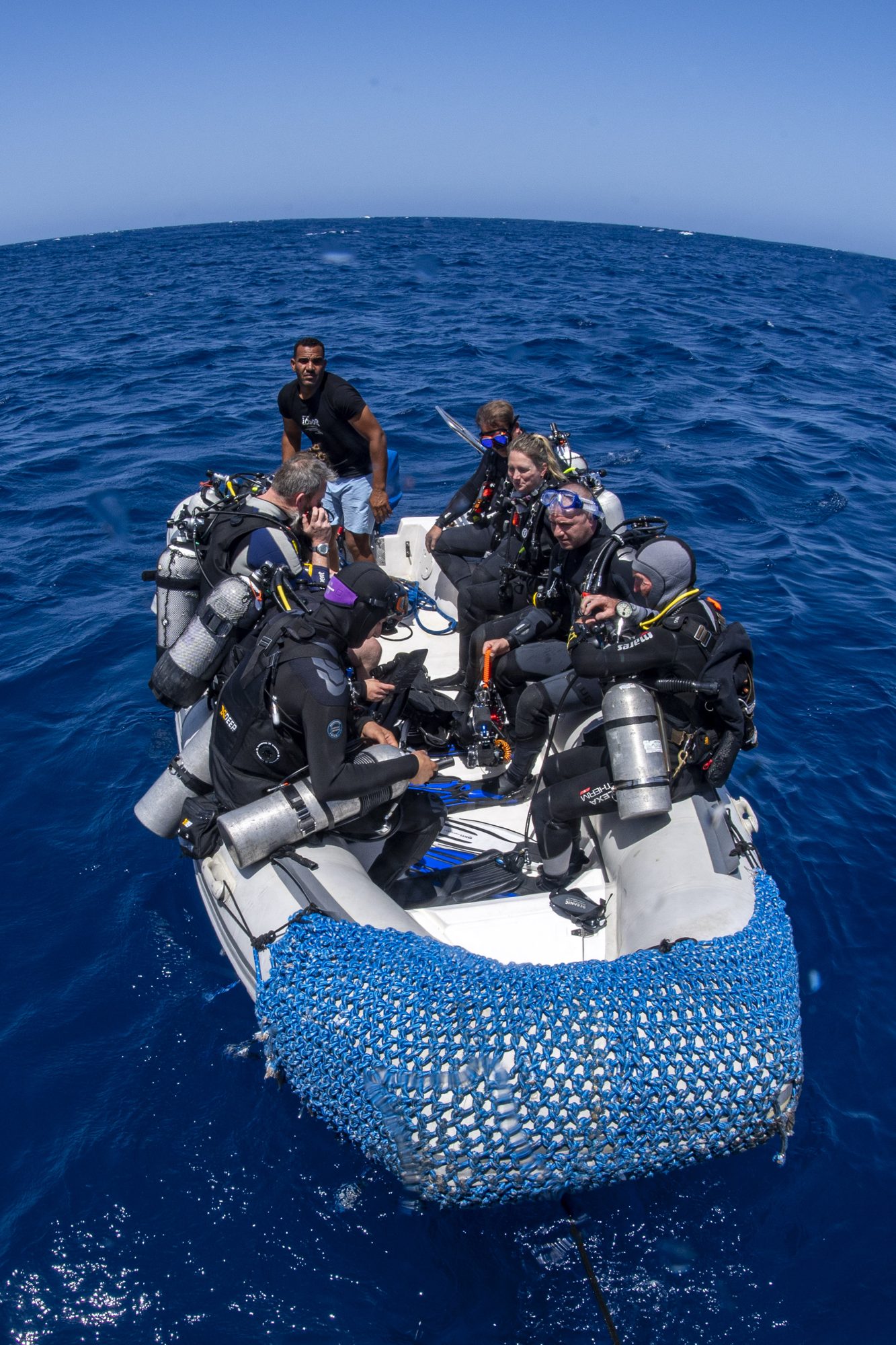
A typical diving day follows a set rhythm. The cruise director plans up to four dives a day: three day dives and, where possible, a sunset or night dive.
- Light breakfast, briefing and dive 1.
- Full breakfast, rest, briefing and dive 2.
- Lunch, rest, briefing and dive 3.
- Snack, rest, briefing and dive 4, where possible.
Night dives are not allowed in the marine parks, so the offshore routes have fewer night dives. On the Brothers, Daedalus & Elphinstone route, day 2 includes a check dive and a practice zodiac dive near port before you head offshore.
The boats and cabins
Blue Horizon has a large dining area, an air-conditioned sky lounge, a shaded deck and a sun deck with loungers. Her cabins are classic twins and twin/doubles on the lower deck and premium doubles on the mid-deck. Every cabin has air conditioning, an en-suite bathroom, a lockable safety box and a mini fridge.
Blue Melody takes up to 26 guests in three premium upper-deck doubles and ten twin cabins, all en suite with air conditioning. She has a large dining area, an air-conditioned salon, a shaded upper deck with a bistro, a sun deck and a generous dive deck. She was fully refurbished in 2024.


Diving conditions to prepare for
Red Sea diving runs all year. Water temperature and the main highlights change with the season. This table uses the operator’s seasonal notes. Sightings are never guaranteed.
| Months | Water | Season notes | Wetsuit |
|---|---|---|---|
| December to February | 22-24°C | Fewer boats | 5 mm or 7 mm full-length |
| March to May | 24-28°C | Peak season for hammerheads at the Brothers | 5 mm in spring (7 mm into March) |
| June to August | 28-30°C | Best visibility, calm seas | 3 mm or shorty |
| September to November | 26-28°C | Oceanic whitetip activity peaks | 5 mm in autumn |
For a deeper look at seasons across all our destinations, see compare dive destinations month by month.
Northern routes: wrecks and reefs
Northern Red Sea Wrecks & Reefs, Red Sea Wrecks and Strait of Tiran & North sail from Hurghada. They are known for wrecks such as the SS Thistlegorm, the Abu Nuhas wrecks, the Dunraven and the Salem Express, plus reef dives at Ras Mohamed. Strait of Tiran & North adds the four Tiran reefs, known for strong currents and a wide range of corals. Read our guide to diving the SS Thistlegorm before you go.
Sha’ab El Erg, visited on some northern routes, is known for dolphin encounters, though they are never guaranteed.
Offshore and southern routes: walls, currents and sharks
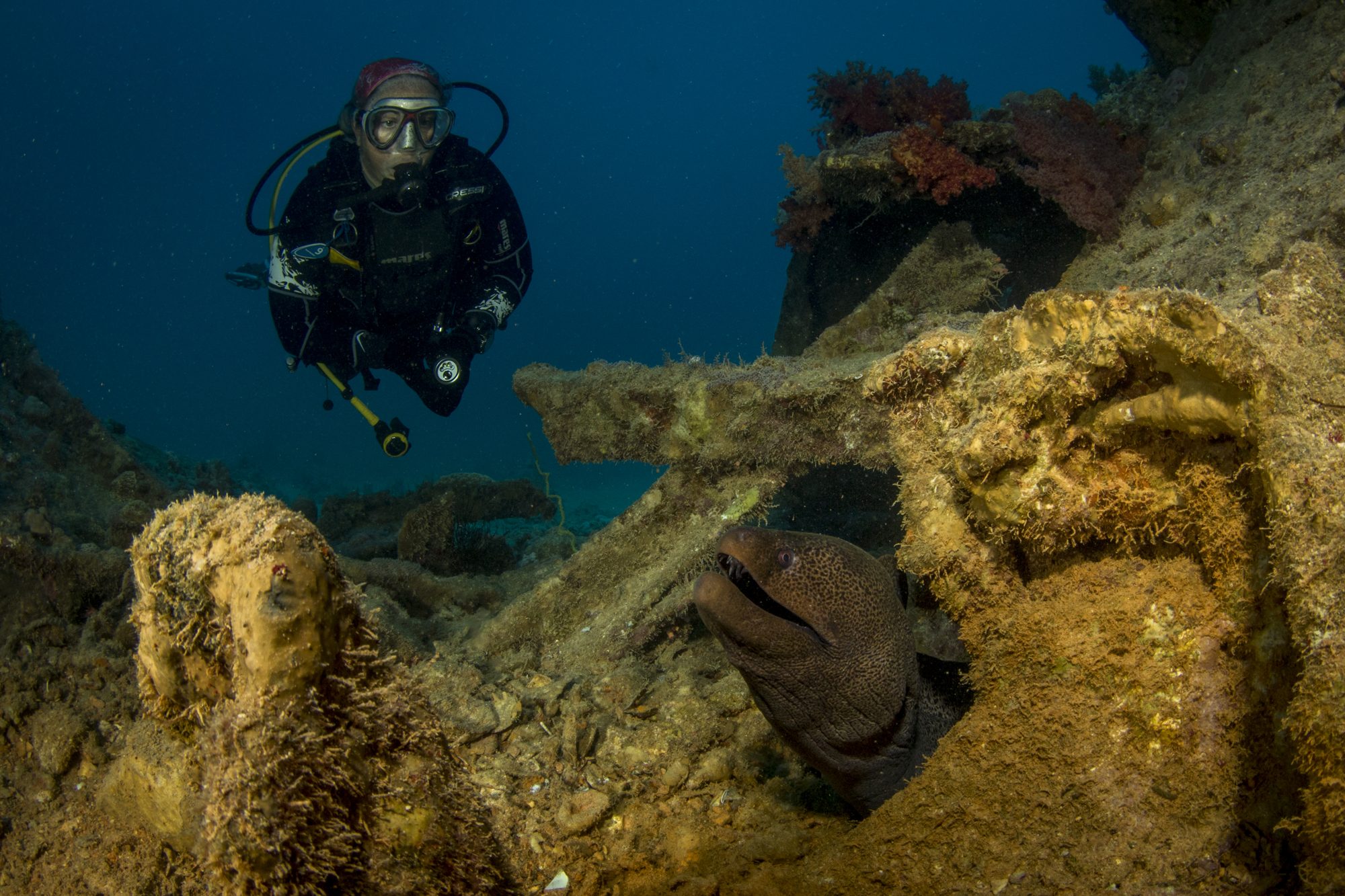
Brothers, Daedalus & Elphinstone, Northern Red Sea & Brothers and Daedalus & St Johns take you to remote offshore reefs. Here you can expect strong currents, steep walls and drift dives. Hammerheads and oceanic whitetips are often seen at the Brothers and Daedalus, and Big Brother is known for thresher shark sightings. Sightings are never guaranteed. Our guide to Brothers, Daedalus and Elphinstone goes into more detail.
Elphinstone sits 12 km offshore between Port Ghalib and Marsa Alam. Currents there are often strong and can be unpredictable, and its walls drop past 40 metres. Grey reef sharks are regularly spotted there in summer.
Rocky, Zabargad & St Johns explores the deep south. Expect coral gardens, caves and swim-throughs at St Johns, walls at Rocky Island and a chance of sharks, turtles and rays. The week ends with an easy day at Fury Shoals.
Adverse weather and sea conditions can affect any route, and the captain decides the final plan on the day.
When each route sails
Our live departures (3 November 2026) show these months:
- Northern Red Sea Wrecks & Reefs: December 2026, then January to July, November and December 2027.
- Red Sea Wrecks: December 2026, then January to March, September, November and December 2027.
- Northern Red Sea & Brothers: November 2026, then April, May, July and November 2027.
- Brothers, Daedalus & Elphinstone: April to October 2027.
- Daedalus & St Johns: May, August and September 2027.
- Rocky, Zabargad & St Johns and Strait of Tiran & North: Red Sea liveaboard departures.
Responsible diving
Much of the Red Sea you will dive is protected. Ras Mohamed is a national park, and the Government Reef Tax covers marine park fees. Night dives are not allowed inside the marine parks.
- Keep your buoyancy tidy and your gauges and octopus clipped in, so nothing drags on the reef.
- Do not touch, stand on or collect anything, including on the wrecks.
- Give sharks, turtles and dolphins space. Never chase or feed marine life.
- Follow your guide’s briefing on currents and entry points. Offshore reefs need a careful plan.
- Ask for and listen to the safety briefing at the start of the trip. The FCDO says the UK Marine Accident Investigation Branch advises asking the crew for a thorough safety briefing before departure.
Your pre-trip checklist
4 weeks or more before
- Check your passport has 6 months left after arrival and a blank page.
- Check vaccine recommendations at least 8 weeks before, and see your GP or a travel clinic.
- Count your logged dives against your route minimum.
- Arrange insurance that covers diving depth, recompression treatment and evacuation.
- Pre-book rental kit, nitrox and any course with us.
- Check your flight home leaves at least 18 hours, ideally 24, after your last dive.
1 week before
- Apply for your e-visa (at least 7 days before departure), or get US dollars cash for a visa on arrival.
- Check the latest FCDO advice for Egypt.
- Service your regulator and computer, and charge every battery.
- Pack spare batteries, a power bank and a European plug adapter.
- Get a GP letter for any prescription medicine.
The day before
- Confirm your port: Hurghada or Port Ghalib.
- Put certification card, nitrox card and logbook in your hand luggage.
- Check your flight lands in time for 18:00 boarding.
- Leave the drone at home unless you have permission.
On board
- Listen to the orientation and safety briefings.
- Show your certification and logbook when asked.
- Set up your kit and DSMB, and check your computer.
- Ask where to charge batteries.
Red Sea liveaboard pre-trip questions
Is there good diving in Egypt?
Yes. The Egyptian Red Sea offers famous wrecks such as the SS Thistlegorm, colourful reefs at Ras Mohamed and offshore walls where sharks are often seen. Our routes cover the north, the offshore marine parks and the deep south.
What is the best time to dive in Egypt?
You can dive all year. March to May is the peak season for hammerheads at the Brothers. June to August brings the warmest water, best visibility and calm seas. September to November is when oceanic whitetip activity peaks. December to February is cooler, at 22-24°C, with fewer boats.
Are sharks common in Egypt?
On the offshore routes, hammerheads and oceanic whitetips are often seen at the Brothers and Daedalus, and grey reef sharks are regularly spotted at Elphinstone in summer. Sightings are never guaranteed. The FCDO notes that shark attacks are rare, but there have been attacks on tourists in the region, so follow your guide’s briefing.
Is the Red Sea good for beginners?
Yes, if you choose the right route. Northern Red Sea Wrecks & Reefs and Strait of Tiran & North need Open Water or equivalent with 10 logged dives (20 for the Thistlegorm). The offshore and southern routes need 30 logged dives and suit more experienced divers.
Do I need a visa for Egypt?
British passport holders normally need one. You can apply for an e-visa at least 7 days before you leave, or buy a visa on arrival for 30 US dollars in cash. Check the latest FCDO advice before you travel.
Can I charge my camera in my cabin?
No. Since February 2026, power sockets and USB ports have been removed from all guest cabins on both boats to meet Egyptian maritime regulations. Bring spare batteries and a power bank, and ask us where charging is available on board.
How soon can I fly home after the trip?
The operator asks you to leave at least 18 hours, ideally 24 hours, between your final dive and your flight. The last dives are on the morning of day 7 and you leave the boat on day 8 between 09:00 and 10:00.
Book your Red Sea liveaboard
Checklist done? Then you are ready. If anything is unclear, ask us. You can browse all our Red Sea liveaboards, or go straight to the Red Sea liveaboard departures to find your week.
Planning more than one trip? Read the Maldives pre-trip guide.
Leave a Reply