A Thailand liveaboard is a dive trip where you live on Thailand Master for 4 to 10 nights and dive the Andaman Sea up to four times a day. This guide covers everything to sort before you go. The four things that matter most: you need Open Water certification and at least 10 logged dives, from 15 September 2026 UK passport holders can stay up to 30 days visa-free, marine park fees are paid on board, and you need 24 hours between your last dive and your flight home.
At a glance
| Topic | What to expect |
|---|---|
| Boat | Thailand Master (also known as The Phinisi), a traditional phinisi sailing vessel for 18 guests in 7 cabins |
| Routes | Similan & Surin Islands (4 or 6 nights), Southern Thailand (4 nights), Best of Thailand (8 nights; 10 nights mainly on request for charters) |
| Ports | Thap Lamu Pier and Chalong, depending on route and direction |
| Local airport | Phuket |
| Minimum level | PADI Open Water or equivalent with at least 10 logged dives; Advanced Open Water and experience in currents recommended on some routes |
| Water temperature | 28-30°C from October to March, 29-31°C in April and May |
| Wetsuit | 3mm shorty suits most divers |
| Currency | Thai baht (THB); on-board fees are quoted in US dollars |
| Time zone | Indochina Time, UTC+7 all year (no daylight saving) |
| Plugs on land | Types A, B, C and O; a UK plug will not fit |
| Season | Similan & Surin trips run while the parks are open, roughly mid-October to mid-May; Southern Thailand runs mainly in May and June |
Certification, logged dives and documents to bring
The operator’s minimum on every Thailand Master itinerary is PADI Open Water or equivalent with a minimum of 10 logged dives. The Similan & Surin Islands routes list exactly that: “PADI Open Water or equivalent – minimum of 10 logged dives”.
The longer and more southern routes ask for more. For Best of Thailand the operator writes: “We strongly recommend divers have PADI Advanced Open Water certification or equivalent, with experience in strong currents and a mandatory minimum of 10 logged dives.” Southern Thailand carries the same recommendation for Advanced Open Water and the same 10 logged dive minimum.
Why the higher bar? Some sites go beyond entry-level depth limits, and some have strong currents and surge. Hin Daeng and Hin Muang are open-ocean pinnacles that drop below 70 metres. The King Cruiser wreck can be challenging and is only suitable for divers with advanced or deep training and experience in similar conditions.
If you are below the recommended level
The PADI Advanced Open Water course can usually be completed on board, but it must be pre-booked. You can register for online learning for Advanced Open Water and PADI Enriched Air (Nitrox) before you travel. Other PADI speciality courses are also offered. Course prices on board cover the practical diving only; study materials and certification registration cost extra.
Paperwork to bring
- Your certification card (physical or digital) for your highest level
- Your logbook, showing at least 10 logged dives
- Your nitrox card, if you plan to dive nitrox
- Proof of dive insurance
Getting there from the UK
Phuket is the local airport for Thailand Master. The operator includes return shared transfers between the local airport and the boat on embarkation and disembarkation days. Additional or private transfers are not included.
From the UK, Virgin Atlantic runs a seasonal winter non-stop service from London Heathrow to Phuket, three times a week, which started on 18 October 2026. Schedules change, so check with the airline before you book, or ask us to help.
Which port, and when to board
- Similan & Surin Islands: embarkation is at 19:00. The 4-night trip disembarks no later than 14:00 on the last day. The 6-night trip disembarks at 10:00 after breakfast.
- Southern Thailand: embarkation is at 19:00, and the boat returns to Chalong Pier for disembarkation after lunch on the last day.
- Best of Thailand: the route alternates direction between trips. It starts in Chalong and ends at Thap Lamu Pier, or the reverse. Disembarkation is between 09:30 and 10:00. We confirm your ports and embarkation time with your booking.
Because boarding is in the evening, a morning or early afternoon landing on embarkation day can work. If you are flying overnight from the UK, arriving the day before gives you a buffer for delays and a proper night’s sleep before your first dive. Ask us and we can help plan it.
Your flight home
The operator asks guests to leave 24 hours between their final dive and their flight. On the 4-night Similan & Surin and Southern Thailand trips, guests flying out of Phuket on disembarkation day will not be permitted to dive on the last day. Book your return flight with this in mind.
Entry, visas and travel advice
These are the rules for British passport holders as published by the UK Foreign, Commonwealth & Development Office (FCDO) and the Royal Thai Embassy in London, checked on 3 November 2026. They are set by the Thai authorities and can change at short notice, so check the latest FCDO advice before you travel: gov.uk/foreign-travel-advice/thailand. The FCDO also advises against all but essential travel to some parts of Thailand, so read the summary on that page.
- Visa exemption: from 15 September 2026, British passport holders entering under the visa exemption scheme can stay up to 30 days, for tourism only.
- Passport: it needs at least 6 months’ validity from your date of arrival and at least 1 blank page.
- Digital arrival card: every non-Thai visitor must complete the Thailand Digital Arrival Card online before arrival. You can submit it within 3 days before you arrive, for every entry. It is free on the official TDAC website. It is not a visa.
- Onward travel and funds: you may be asked for proof of onward or return travel and of sufficient funds. Check the current amount with FCDO or the Royal Thai Embassy in London.
- Visa-exempt entries: the Royal Thai Embassy in London says visa-exempt entry is allowed twice per calendar year.
Mergui Archipelago (Myanmar waters)
Thailand Master’s itinerary list also includes the Mergui Archipelago in Myanmar. On 3 November 2026, the FCDO advises against all travel to “Tanintharyi Region, excluding Myeik township, and the archipelago and townships south of Tanintharyi township”, and against all but essential travel to “Tanintharyi Region south of Tanintharyi township”. The FCDO says your travel insurance could be invalidated if you travel against its advice. Read the FCDO travel advice for Myanmar and check the latest FCDO advice before you travel. We confirm whether a trip can go ahead.
Health and insurance
We do not give medical advice, but here is who to ask and what to check.
- Vaccinations and malaria: FCDO suggests checking health risks and vaccinations at least 8 weeks before your trip. Speak to your GP or a travel clinic, and see NHS Fit for Travel.
- Fitness to dive: ask a doctor. UK divers often use the UK Diving Medical Committee (UKDMC) Recreational Diver Medical Declaration. If you answer yes about a new health problem, UKDMC says you should contact one of its medical referees.
- Medicines: FCDO notes that some medicines legal in the UK are regulated differently abroad. Check before you pack them.
- Emergency number: FCDO lists 191 (ask for an ambulance) and 1669.
What to check in your insurance
DAN (Divers Alert Network) notes that very few travel policies cover scuba diving incidents, and that most of those that do exclude dives deeper than 30 metres. Read your policy for these points:
- Diving is covered, to the depth you plan to dive (some sites here go deeper than 30 metres)
- Hyperbaric (recompression) chamber treatment is covered
- Emergency evacuation from the boat to hospital or a chamber is covered
- Any conditions on certification or diving with a guide
- Whether cover stays valid if you travel against FCDO advice
FCDO’s Thailand advice also suggests asking operators about safety precautions, including transfer to a hyperbaric chamber. Ask us and we will get the answer from the operator.
Money on board
Thailand’s currency is the Thai baht. Some costs are paid on the boat and some can be paid before you go.
Included in your trip
- Return shared transfers between the local airport and the boat on embarkation and disembarkation days
- Full board accommodation (shared occupancy)
- Tea, coffee, fruit juice and soft drinks
- Up to 4 dives a day, with an 11 litre (80 cu ft) cylinder and air fills
- Weights, weight belt and SMB
Not included
- Flights, and additional or private transfers
- Equipment rental and nitrox
- Alcoholic drinks and on-board merchandise
- Crew and dive guide gratuities
Marine park and port fees
Marine park and port fees are added to your on-board extras and paid on the boat. You can also pre-book and pre-pay them when you book. For Best of Thailand, the operator currently charges US$125 per person on 8-night trips and US$145 per person on 10-night trips (checked 3 November 2026; confirm before travel). For Similan & Surin Islands and Southern Thailand, fees apply, paid on board; we confirm the current amount before you travel.
The operator currently lists no fuel surcharge for Thailand Master (checked 3 November 2026; confirm before travel).
The operator notes that on-board prices can change without notice. Gratuities for crew and dive guides are not included. We confirm accepted payment methods on board before you travel.

What to pack
Dive kit
- Dive computer (rental sets do not include one)
- Torch for sunset and night dives (also not in rental sets)
- Mask, fins and your own regulator and BCD if you prefer them
- Exposure protection: the operator says a 3mm shorty suits most divers in 28-29°C water, and some divers wear just a rash guard and swimwear. Bring an extra layer if you feel the cold, as thermoclines can occur at deeper sites
- An SMB is provided, but bring your own if you are used to it
Rental and nitrox
A full rental set includes BCD, regulators, wetsuit, mask, fins and snorkel, but not a computer or torch. The operator recommends pre-booking rental so the right sizes are on board. An upgrade to a 13 litre (100 cu ft) cylinder is available. Nitrox costs extra and can be pre-booked. If you are not nitrox certified, you can start PADI Enriched Air online before you go.
Clothes and personal items
- Light, casual clothes; you will spend most of the day in swimwear
- A warm layer for evenings and after dives
- Sun hat, sunglasses and sun cream
- Seasickness tablets, if you use them; the routes include overnight sailings
- Any personal medicines, in original packaging
- Shoes you can walk in on sand for island walks
Camera kit and charging
- Spare batteries, chargers and memory cards
- A travel adapter for your hotel: Thailand uses plug types A, B, C and O, and UK plugs do not fit
- Ask us about charging points on board before you travel
Documents
- Passport with at least 6 months’ validity and a blank page
- TDAC confirmation email
- Proof of onward travel
- Certification cards, logbook and nitrox card
- Insurance policy details and emergency numbers
- Booking confirmation

A day on board Thailand Master
Thailand Master is a traditional Indonesian phinisi sailing vessel for 18 guests. She has a spacious dive deck with individual dive stations and storage for your kit. The outdoor dining area at the stern is covered and shaded.
A typical diving day
Your cruise director schedules up to four dives a day: three day dives and, where possible, a sunset or night dive. A full diving day usually runs like this:
- Light breakfast, briefing and dive 1
- Full breakfast and time to relax, then dive 2
- Lunch and time to relax, then dive 3
- Snacks and time to relax
- Briefing and dive 4, where possible
All safety and dive briefings are in English. The operator says the 4-night Similan & Surin trip allows up to 14 dives, the 6-night trip up to 19, Southern Thailand around 14, and the 8-night Best of Thailand around 26. Itineraries are examples only and depend on weather, local regulations and the captain’s decision.
Cabins
- Three double or twin cabins; the bow cabin has a fixed double plus a single
- Two fixed twin cabins
- Two quad cabins, with two single beds and a bunk
Every cabin has individually controlled air conditioning and an en-suite. Cabin occupancy is based on demand and may be mixed-gender share.
Food
The chefs prepare a mix of Western dishes and Thai food from fresh, locally sourced ingredients.

Time off the boat (non-diving)
These are non-diving activities. On the Similan & Surin routes there is a chance to go ashore for beaches and views in the Similans, including the walk to Sail Rock on Island 8, and to visit a Moken village in the Surin Islands. Kayaks are available, subject to availability.

Diving conditions to prepare for
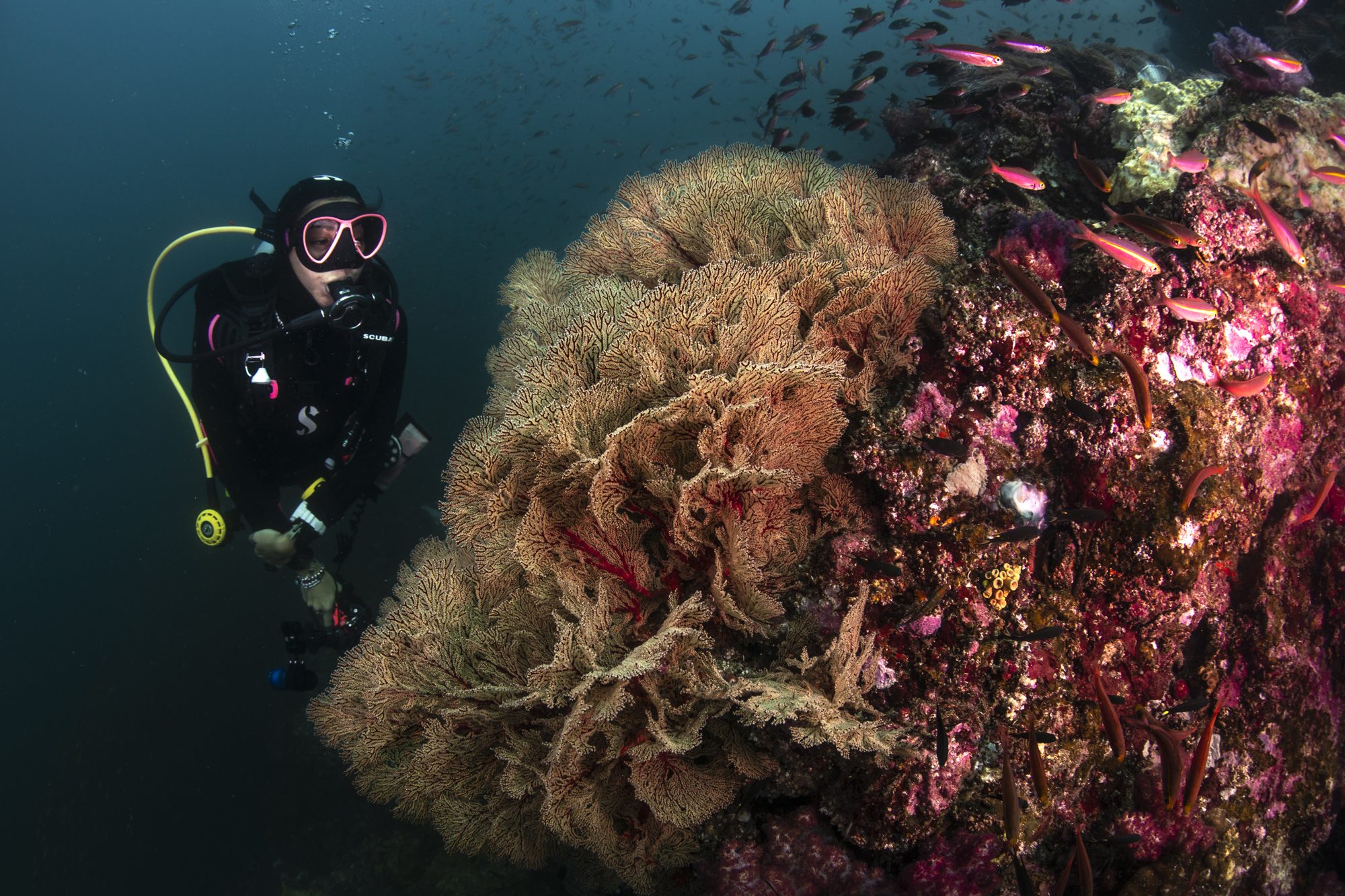
The Andaman Sea is warm all year, and the operator puts average water temperatures at 28-29°C. Visibility ranges from 10 to over 40 metres depending on location, tide and weather. Sites range from granite boulders, pinnacles and walls to sheltered bays and gentle coral slopes. Some have strong currents and surge.
When can you dive?
Thailand’s Department of National Parks closes the Similan and Surin parks each year for the southwest monsoon, roughly mid-May to mid-October, to protect visitors and let marine ecosystems recover. Thailand Master’s Similan & Surin and Best of Thailand trips run in the open season. Southern Thailand runs mainly in May and June, after the Similan season ends. For the latest months, Thailand liveaboard departures.
| Months | Water | What the operator says |
|---|---|---|
| October to December | 28-30°C | Season opens, calm conditions |
| January to March | 28-30°C | Peak season, the season for whale sharks at Richelieu Rock |
| April to May | 29-31°C | End of season, still excellent diving |
What each route is known for
- Similan Islands: a national park since 1982, extended in 2014 to include Koh Bon and Koh Tachai. Giant current-swept boulders with canyons, tunnels and archways on the west side; sheltered coral slopes of 5-25 metres on the east.
- Koh Bon: usually the most likely place for manta rays, although their presence is never guaranteed. The West Ridge can be a lively drift dive.
- Surin Islands and Richelieu Rock: some of the greatest hard coral diversity in Thailand. Richelieu Rock is a horseshoe-shaped pinnacle covered in soft corals, with macro life and the chance of bigger visitors.
- Southern Thailand: Hin Daeng and Hin Muang are best known for manta ray and whale shark encounters. Koh Haa has pinnacles, walls, caverns, swim-throughs and lagoons. Around Phi Phi, many sites are walls of 10-25 metres.
Leopard sharks, turtles, barracuda, giant morays, cuttlefish, seahorses, nudibranchs and harlequin shrimp are often seen. Sightings are never guaranteed.
Responsible diving
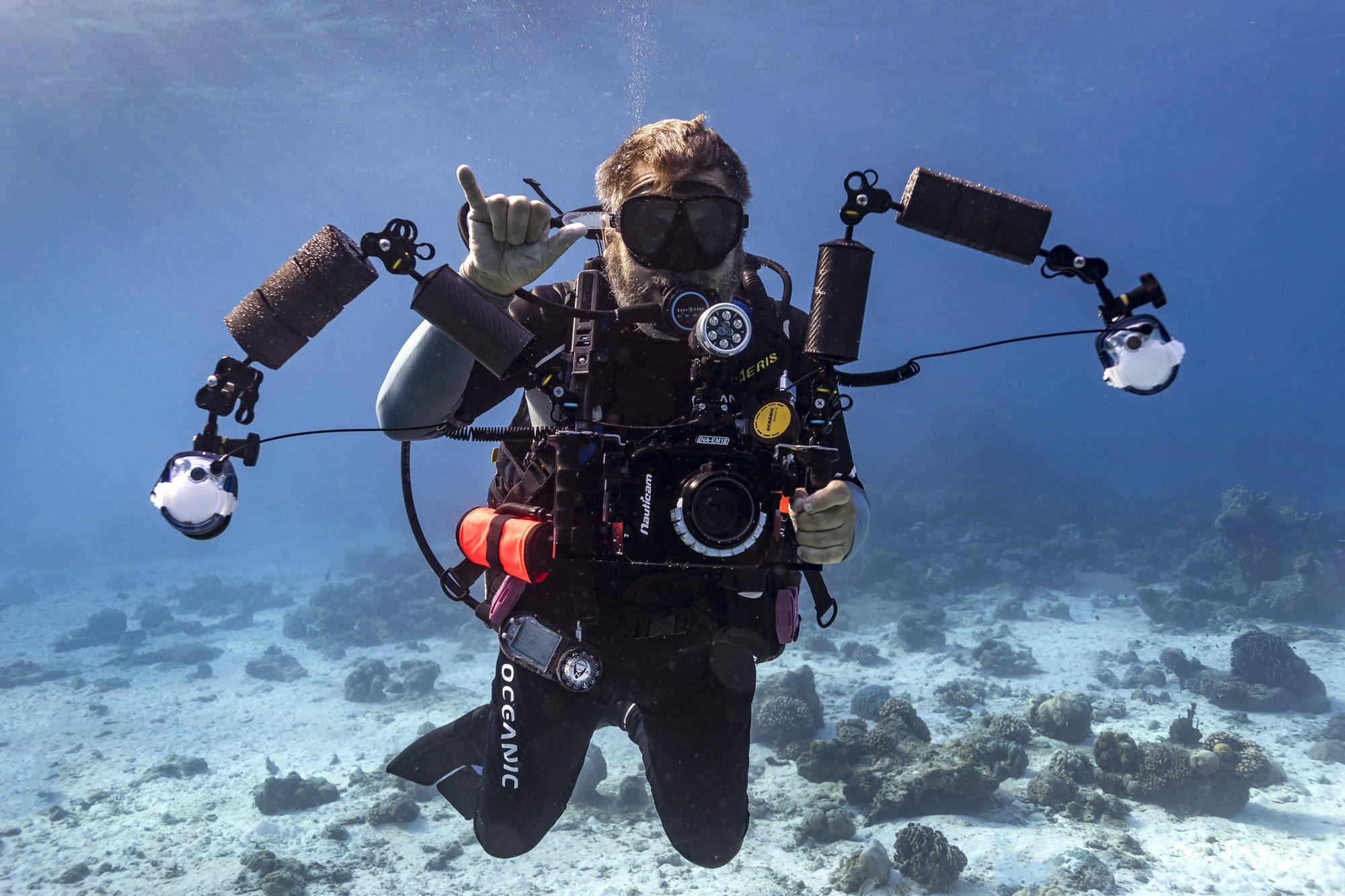
The Similan, Surin and other dive areas on these routes are national parks. The annual park closure exists partly to let marine ecosystems recover. Your guides brief every dive, so follow their lead. A few habits help:
- Keep your buoyancy under control and stay off the reef
- Look, do not touch or feed marine life
- Give mantas, whale sharks and turtles space
- Take all rubbish back to the boat
- Respect local communities on island visits, including the Moken village in the Surin Islands
Your pre-trip checklist
4 weeks or more before
- Check your passport has 6 months’ validity and a blank page
- See your GP or a travel clinic about vaccinations (ideally 8 weeks before)
- Complete a dive medical declaration and see a doctor if needed
- Buy dive insurance that covers depth, chamber treatment and evacuation
- Pre-book rental, nitrox and any courses
- Book a return flight that leaves 24 hours after your last dive
- Service your regulator and check your computer battery
1 week before
- Re-check the latest FCDO advice for Thailand (and for Myanmar, if your itinerary includes Myanmar waters)
- Confirm your port and transfer with us
- Pack certification cards, logbook and nitrox card
- Pack a travel adapter, spare batteries and a torch
Within 3 days of arrival
- Submit your TDAC on the official website and save the email
Day before or day of boarding
- Rest after your long-haul flight
- Have your transfer details and phone charged
- Be ready for evening boarding
On board
- Listen to the safety briefing and set up your kit
- Tell the cruise director about any course or nitrox plans
- Settle fees and extras before you leave the boat
Thailand liveaboard pre-trip questions
When is the Similan Islands diving season?
The Similan and Surin parks are open roughly from mid-October to mid-May and close for the southwest monsoon in between. Exact dates are set each year by Thailand’s Department of National Parks.
Do you need a licence to dive in Thailand?
You need a recognised diving certification. Thailand Master asks for PADI Open Water or equivalent and at least 10 logged dives on every itinerary.
Which Thai island is best for diving?
It depends on what you want. The operator describes the Similan and Surin Islands, the Phi Phi Islands and Richelieu Rock as the most famous and diverse Andaman Sea areas. Southern Thailand adds deep pinnacles and caverns.
Can I see whale sharks at Richelieu Rock?
It is possible. The operator lists January to March as the season for whale sharks at Richelieu Rock. Sightings are never guaranteed.
Can I fly home on the day I get off the boat?
Leave 24 hours between your last dive and your flight. On 4-night trips, guests flying from Phuket on disembarkation day do not dive on the last day.
What wetsuit do I need?
A 3mm shorty suits most divers in 28-29°C water. Bring an extra layer if you feel the cold.
How long can I stay in Thailand without a visa?
From 15 September 2026, British passport holders can stay up to 30 days visa-free for tourism. Check the latest FCDO advice before you travel.
Are marine park fees included?
No. They are added to your on-board extras and paid on the boat, or you can pre-pay them when you book.
That is everything we know you will need. If something is not covered here, ask us and a real person who knows Thailand Master will find out. Browse Thailand liveaboards, check Thailand liveaboard departures for Thailand Master, or compare seasons across our compare dive destinations month by month.
Planning more than one trip? Read the Indonesia pre-trip guide.
Leave a Reply