Blog

  • Before your Galápagos liveaboard: the complete pre-trip guide

    Before your Galápagos liveaboard: the complete pre-trip guide

    This guide covers everything to check, pack and pay before a Galápagos liveaboard on Galapagos Master, from entry rules to the last dive. The Master the Galápagos route is for experienced divers: the operator asks for Advanced Open Water or equivalent, nitrox certification, at least 50 logged dives and experience in currents. The water can drop to 15°C or lower, and you must bring your own gloves, hood and a 20-30 metre reel. Two local charges apply on the way in, the Transit Control Card and the National Park entrance fee, so bring US dollar cash.

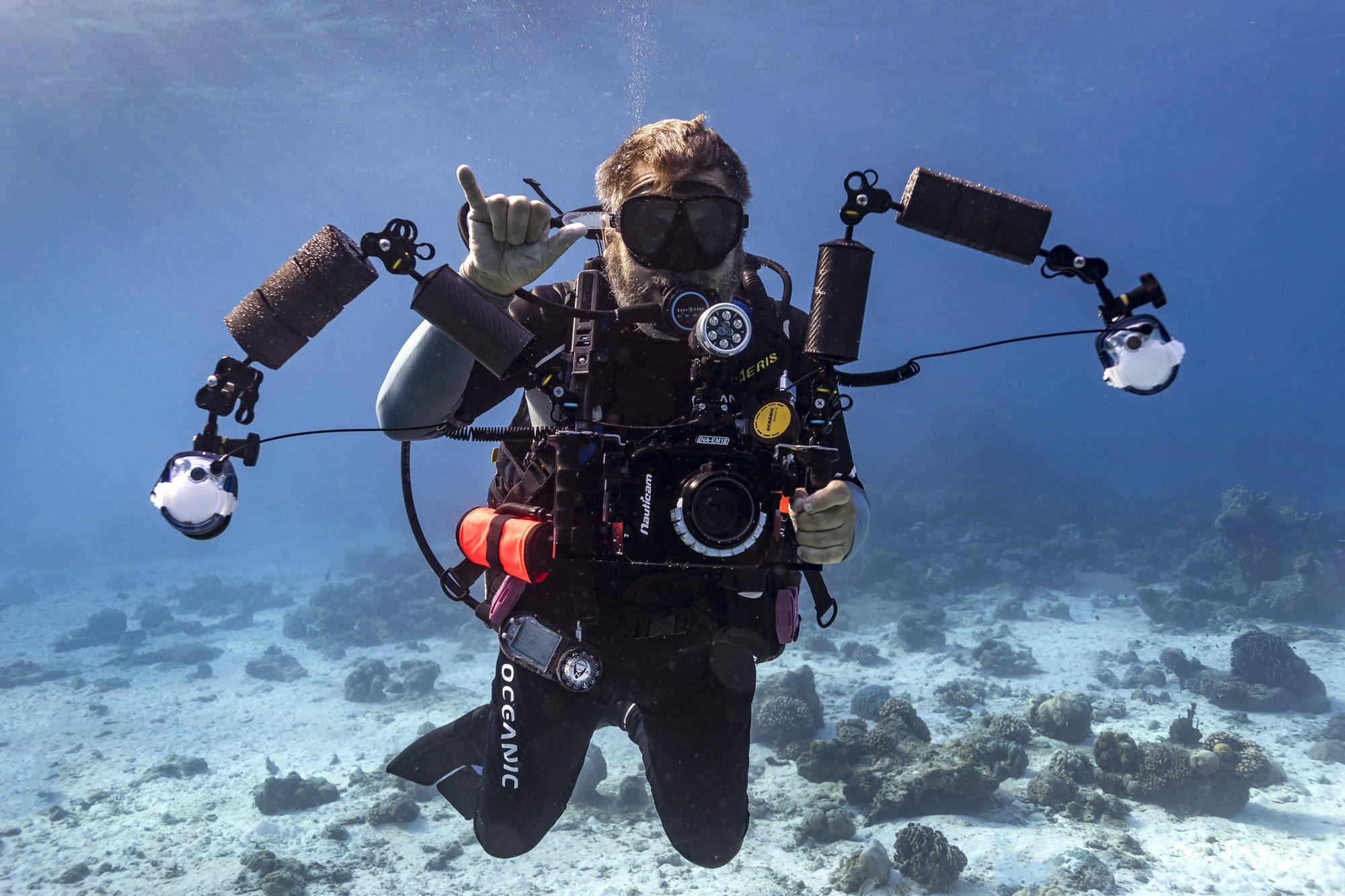
    A diver gives an OK sign above a boulder-strewn seabed in the Galápagos, with other divers in the blue behind
    Diving in the Galápagos. Photo: ms.photography_lovetheocean.

    At a glance

    Boat Galapagos Master, a 32 metre steel liveaboard for 16 guests in 8 cabins
    Route Master the Galápagos, 7 nights (10-night trips are no longer offered, apart from departures already scheduled)
    Embark and disembark Puerto Baquerizo, San Cristóbal: board 14:00 to 14:30, off by 08:30 on the last morning
    Level required Advanced Open Water or equivalent, nitrox card, 50 logged dives, experience in currents
    Dives Up to 18 scheduled dives, up to 4 a day
    Water temperature About 24-28°C January to May, 18-23°C June to November, 22-26°C in December, with thermoclines down to 15°C or lower
    Currency US dollar
    Time zone GMT-6, no daylight saving
    Plugs Camera station charging points use US-type plugs (per the operator)
    Best months June to November for whale shark season and peak hammerheads; January to May for warmer water, the best visibility and mantas

    Certification, logged dives and documents to bring

    The operator’s wording for this route is clear, and it applies to all our Galápagos liveaboards. The mandatory requirements are a minimum of 50 logged dives, PADI Advanced Open Water or equivalent, nitrox certification and experience in currents. The operator also says diving at Wolf and Darwin involves strong currents and surge, and good buoyancy is essential. It adds that conditions are often challenging, even for experienced divers.

    Treat these as entry requirements, not suggestions. If you are short on dives or do not yet hold a nitrox card, talk to us before you book so we can look at the options with you.

    Paperwork to pack

    • Your certification card (physical or app) showing Advanced Open Water or equivalent
    • Your nitrox card
    • Your logbook, paper or digital, showing at least 50 dives
    • Evidence of current diving, if you have it, such as recent drift or current dives in your log

    Getting there from the UK

    Galápagos trips start with an international flight to mainland Ecuador, then a domestic flight from Quito or Guayaquil to the islands. Galapagos Master starts and ends in San Cristóbal, and a return transfer between San Cristóbal airport and the boat is included on embarkation and disembarkation days. The included transfer is from San Cristóbal airport, so book a domestic flight that lands at San Cristóbal unless we have agreed another plan with you.

    Boarding is between 14:00 and 14:30 on day one, followed by introductions, boat and safety briefings and lunch. A shallow check dive is usually scheduled that afternoon. Because the domestic flight has to land in time for a 14:00 boarding, we suggest you plan to reach mainland Ecuador at least the day before. Long-haul delays happen, and a spare night protects the trip.

    On the last morning you have breakfast on board and leave the boat by 08:30. Depending on your flight time, you may have a few hours to fill before the transfer to San Cristóbal airport, and the Interpretation Centre is a 10-minute walk from the pier.

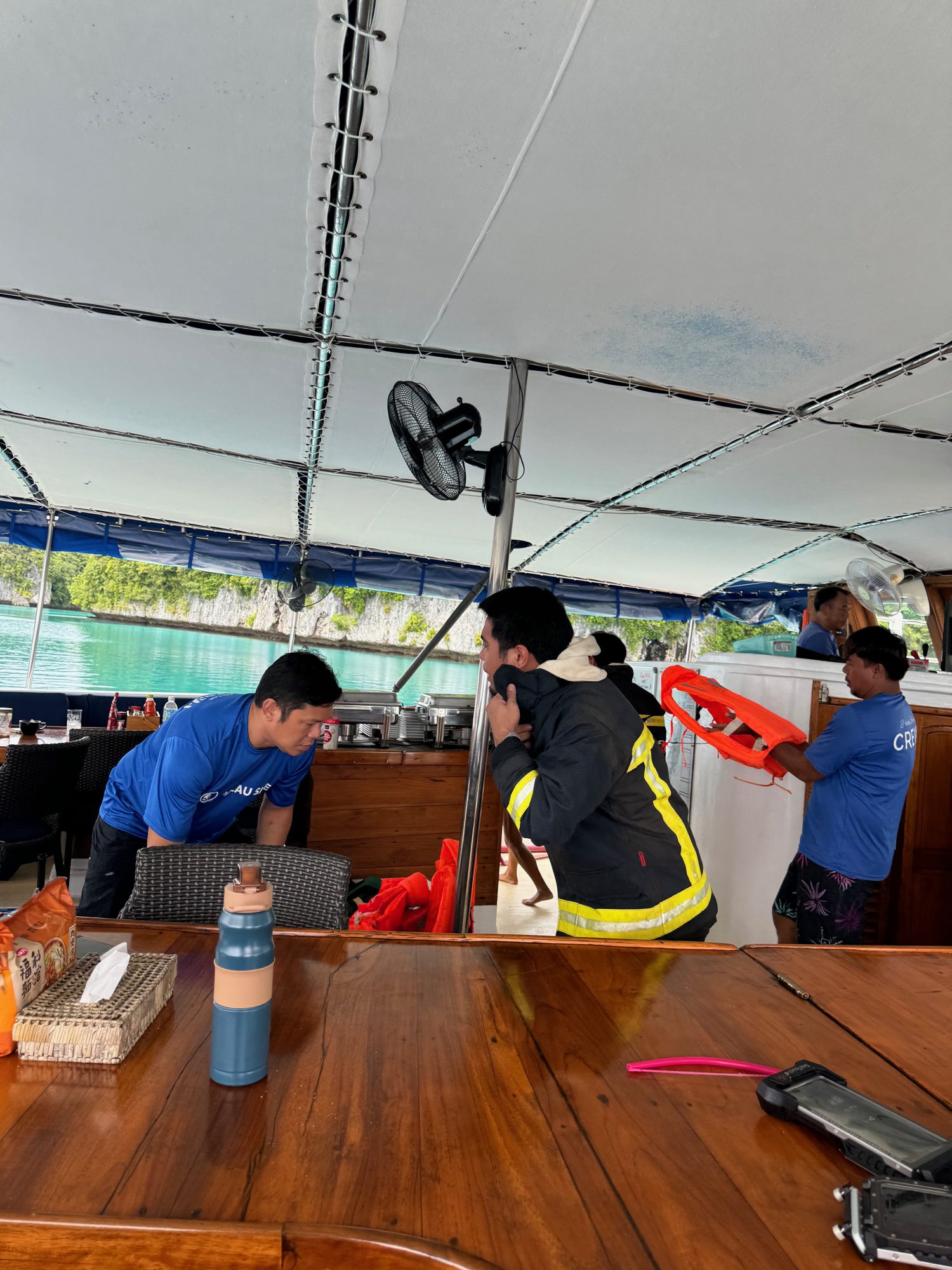
    Guests in orange life jackets during the safety briefing on board Galapagos Master
    Safety briefing on day one. Photo: Marc Stickler.

    Entry, visas and travel advice

    This section is based on the UK Foreign, Commonwealth and Development Office (FCDO) advice as read on 3 November 2026. Rules change, so check the latest FCDO advice for Ecuador before you travel.

    • British passport holders can visit Ecuador without a visa for up to 90 days in any 12-month period.
    • Your passport must have an expiry date at least 6 months after the date you arrive.
    • Tourists can stay in the Galápagos for up to 60 days.
    • For the Galápagos you need evidence of a hotel booking or invitation letter, evidence of a return flight to the mainland, and travel health insurance, which is mandatory for foreign tourists.
    • You must buy a transit control card at your departure airport before checking in for your Galápagos flight, and keep a copy.

    There are two local charges you pay yourself. The Galápagos National Park entrance fee is US$200 for international visitors over 12, according to both the operator and the Galápagos Government Council (checked 3 November 2026; confirm before travel). The operator says it is paid in cash when you land in the islands. The INGALA Transit Control Card must be bought before you check in for your Galápagos flight. The operator says it is paid in cash at Quito or Guayaquil airport, while the FCDO links to an online purchase portal, so we confirm the current process and amount with you before you travel. Ecuadorian departure taxes are also extra if they are not already in your flight ticket.

    In its update of 1 November 2026, the FCDO reports that heavy rain has caused flooding on Santa Cruz Island, and that the Galápagos government declared an emergency on 31 October 2026. It reports road closures, power outages and disruption to travel to Baltra Airport, and advises travellers to avoid flooded areas and confirm travel arrangements with airlines or tour operators. Check the latest FCDO advice before you travel, and talk to us if you have questions about your trip.

    Health and insurance

    We do not give medical advice. Here is what to check, and who to ask.

    • Vaccinations and travel health: see your GP or a travel clinic, and read NHS Fit for Travel for Ecuador.
    • Fitness to dive: speak to a doctor, ideally one with diving medicine experience, well before you travel.
    • Seasickness: this route has long open-ocean crossings. If you are prone to motion sickness, ask a doctor or pharmacist what is right for you before you go.

    Insurance matters here. The FCDO says travel health insurance is mandatory for foreign tourists in the Galápagos. Divers Alert Network (DAN) notes that very few travel protection plans cover scuba diving incidents, that most policies offering dive cover exclude dives deeper than 30 metres, and that chamber treatment is not typically covered by medical or travel insurance.

    Before you buy or renew a policy, check:

    • that scuba diving is covered at all, and to what depth
    • that hyperbaric (recompression) chamber treatment is covered
    • that medical evacuation from a remote island, by sea or air, is covered
    • any conditions, such as diving with a guide or holding a certain certification
    • that it meets the Galápagos travel health insurance requirement

    We do not recommend specific policies. Read the statement of benefits carefully and ask the insurer if anything is unclear.

    Money on board

    Ecuador uses the US dollar. The FCDO notes that cards are generally accepted in cities but not elsewhere in the country. The operator says the park entrance fee and the transit control card are paid in cash, so bring US dollar cash for both unless we confirm another way to pay.

    What is included and what is not, per the operator:

    • Included: return transfer between San Cristóbal airport and the boat, full board, tea, coffee, fruit juice and soft drinks, up to 4 dives a day, a single cylinder with air fills, weights, weight belt and SMB, and land excursions.
    • Not included: flights, fuel surcharge, equipment rental, nitrox, alcoholic drinks, crew and dive guide gratuities and merchandise.
    • Extras on the boat’s price list include a Wi-Fi data package and sparkling wine.

    The operator lists a fuel surcharge as not included on this route. We confirm whether it applies to your departure, and the current amount, before you travel. Crew and dive guide gratuities are not included. We will share the operator’s current guidance on tipping and how to pay on board before you go.

    One fee worth knowing: the operator currently charges 450 USD if you lose a Nautilus Lifeline (checked 3 November 2026; confirm before travel). Diet sodas are not available in the Galápagos, as they are not produced in recyclable bottles.

    What to pack

    Dive kit

    The operator says water can drop to 15°C or lower and recommends a 5mm or 7mm wetsuit with extra thermal layers underneath. Gloves, a hood or hooded vest and a 20-30 metre reel are not available to rent on Galapagos Master, so you must bring them.

    • 5mm or 7mm wetsuit, sized for extra layers
    • Thermal layers: a skin-suit, neoprene vest or long-sleeve neoprene top, and neoprene shorts or long-johns
    • Gloves (advised for warmth and for holding on to rocks in current)
    • Hood or hooded vest
    • 20-30 metre reel or spool for DSMB deployment
    • Your own dive computer (the rental set does not include one)
    • Mask, fins and booties if you prefer your own

    Rental and nitrox

    A full rental set covers BCD, regulators, wetsuit, mask, booties and fins, but not a computer. Rental is an extra cost, as is nitrox. The standard cylinder is an 80 cu ft aluminium cylinder with air fills. SMBs with a 5-metre line and Nautilus Lifelines are available to use free of charge. Tell us early if you want rental, so we can pass on your sizes.

    Clothes and personal items

    • Light layers for the day and something warm and windproof for evenings and crossings
    • Sun hat, sunglasses and sun cream
    • Walking shoes or sandals with grip for the land visits
    • A reusable water bottle
    • Any personal medication, in your hand luggage
    • US dollar cash in small notes

    Camera kit and charging

    There is an indoor camera set-up station with multiple charging points, and the operator lists US round pin plugs. Bring a suitable adaptor and a multi-socket extension for batteries. Extra storage drawers at the back of the boat are there for photographers’ kit.

    Documents

    • Passport valid for at least 6 months after arrival
    • Certification card, nitrox card and logbook
    • Insurance documents, including your diving cover
    • Return flight details to the mainland
    • Your booking confirmation and our pre-departure notes
    • US dollar cash for the transit control card and park entrance fee
    Classic twin cabin on Galapagos Master with two single beds and air conditioning
    A Classic twin cabin on Galapagos Master.

    A day on board Galapagos Master

    Galapagos Master is known locally as Deep Blue. She was fully refitted inside in 2015 and most recently refurbished in early 2025. A crew of 12 looks after 16 guests.

    A typical day

    The operator’s typical diving day runs: full breakfast and dive briefings, the first dives, then lunch, relaxation and more briefings before the afternoon dives, with up to 4 dives a day. On days 2 and 7, dives 3 and 4 are replaced by an island visit.

    • Day 1: board from 14:00, briefings, lunch and usually a shallow check dive in a sheltered bay near San Cristóbal, to a maximum of 9 metres.
    • Day 2: two dives, then a guided land tour of North Seymour (non-diving activity), and overnight cruising to Wolf and Darwin.
    • Days 3 to 6: diving at sites on the route such as Wolf, Darwin, Roca Redonda, Punta Vicente Roca (Isabela) and Cape Douglas (Fernandina).
    • Day 7: two dives, then a land tour of the Santa Cruz Highlands and Puerto Ayora town (non-diving activity).
    • Day 8: breakfast and off the boat by 08:30.

    The order of sites is set by the Galápagos National Park authorities and may vary from week to week, and the itinerary is at the Captain’s discretion.

    A dive guide explains the weight system during a dive briefing in the lounge of Galapagos Master
    Dive briefings take place in the lounge. Photo: Marc Stickler.

    Cruising time

    This route involves long periods of cruising, especially to and from Wolf and Darwin, and the longer crossings are overnight. As a guide from the operator: San Cristóbal to Baltra or Santa Cruz takes 6-7 hours, Baltra or Santa Cruz to Darwin 18-20 hours, Wolf to Fernandina 15 hours, and Fernandina to Punta Vicente Roca about 2.5 hours.

    Cabins

    All eight cabins are air-conditioned with a private en-suite bathroom and hot water. Classic Twin and Classic Twin/Double cabins are on the lower deck and no longer have windows or portholes. Premium Twin/Double cabins are on the upper deck, with views and ample storage.

    Spaces to relax

    There is an indoor lounge with a screen for films and photos, an indoor dining area with a bar, a shaded upper deck with cushioned loungers and a top sun deck.

    Snack jars, a coffee machine and drinks on the counter in the indoor area of Galapagos Master
    Coffee and snacks in the indoor area.

    Wi-Fi and safety

    Wi-Fi is sold as a data package for the trip. Safety kit on board includes GPS, VHF radios, satellite communication, two life rafts, emergency oxygen and an AED. The boat holds an official licence to run diving in the Galápagos from the Ecuadorian government and the National Institute of the Galapagos.

    Diving conditions to prepare for

    The Galápagos sit where three main ocean currents meet. The operator says these currents bring nutrients and the marine life the islands are known for, and strong currents are a feature of the diving. At Wolf Island most reefs and walls have medium to strong currents, and gloves are advised. At Darwin, medium to strong currents are expected, and Darwin’s Arch is a drift along the wall at an average depth of about 9 metres. Roca Redonda has typically strong, changeable currents and some down currents. Punta Vicente Roca is known as The Ice Box because of its cold thermoclines.

    Months Water (operator average) Season notes
    January to May 24-28°C Warm season, best visibility, season for manta rays
    June to November 18-23°C Whale shark season, hammerhead peaks
    December 22-26°C Transition, good all-round diving

    Thermoclines can bring much colder water at any time of year, so pack for the cold end whatever month you go.

    What is often seen at the sites

    • Darwin and Wolf: schooling hammerheads, Galápagos sharks, silky sharks, eagle rays and, in season, whale sharks.
    • Cabo Marshall: manta, mobula and cownose rays are often seen in the warm season, with hammerheads and schooling barracuda and salema.
    • Punta Vicente Roca and Cape Douglas: a chance of mola mola, plus marine iguanas, sea lions, fur seals and Galápagos penguins.
    • Cousin’s Rock: seahorses, frogfish and nudibranchs on a wall that rises to 3 metres, with rays and hammerheads also seen.

    Sightings are never guaranteed. Wildlife moves with the water, and every week is different.

    Sunset over the open Pacific seen from the side deck of Galapagos Master during a crossing
    Overnight crossings link the central islands with Wolf and Darwin. Photo: Marc Stickler.

    Responsible diving

    The Galápagos are an Ecuadorian province and National Park, and a UNESCO World Heritage site and Biosphere Reserve. In 2026, Ecuador’s authorities set new general visit rules and codes of conduct for the Galápagos National Park and Marine Reserve. They include:

    • Visits to protected areas must be made with an accredited Galápagos naturalist guide.
    • Visitors must keep a minimum distance from wildlife.
    • Filming with drones and similar equipment needs prior authorisation.

    Land visits are not permitted at Wolf or Darwin. The operator says good buoyancy is essential, and gloves are advised at sites with current.

    Your pre-trip checklist

    4 weeks before

    • Check your passport has at least 6 months left after arrival
    • Confirm your insurance covers diving depth, chamber treatment and evacuation
    • Book a GP or travel clinic appointment and check NHS Fit for Travel
    • Check your logbook shows 50 or more dives and find your nitrox card
    • Buy or borrow gloves, a hood or hooded vest, a 20-30 metre reel and thermal layers
    • Send us your rental sizes if needed

    1 week before

    • Check the latest FCDO advice for Ecuador
    • Get US dollar cash for the transit control card and park entrance fee
    • Service your regulators and check your computer battery
    • Confirm your domestic flight lands at San Cristóbal

    Day before

    • Be on mainland Ecuador
    • Pack documents, cash and medication in your hand luggage
    • Arrive early at the airport to buy the transit control card before check-in

    On board

    • Join the briefings and do the check dive
    • Set up your camera and charging on the camera station
    • Keep your Nautilus Lifeline and DSMB on every dive
    • Layer up for the cold sites

    Galápagos liveaboard pre-trip questions

    When is the best time to dive the Galápagos?

    It depends what you want. The operator lists June to November as whale shark season and the peak for hammerheads, with cooler water. January to May is the warm season with the best visibility and mantas. Sightings are never guaranteed.

    Do I need a 7mm wetsuit?

    The operator recommends a 5mm or 7mm wetsuit with extra thermal layers, because water can drop to 15°C or lower.

    Do I need Advanced Open Water for the Galápagos?

    Yes. The operator requires Advanced Open Water or equivalent, nitrox certification, at least 50 logged dives and experience in currents.

    How much time is spent cruising?

    Quite a lot. The longest legs, such as Baltra or Santa Cruz to Darwin at 18-20 hours, are mostly overnight. Shorter hops are 2.5 to 7 hours.

    What fees do I pay locally?

    The National Park entrance fee, US$200 for international visitors over 12 (checked 3 November 2026; confirm before travel), which the operator says is paid in cash on arrival, and the INGALA Transit Control Card, bought before you check in for your Galápagos flight. Departure tax may also apply if it is not in your ticket. We confirm the current amounts and how to pay before you travel.

    Can I rent gloves, a hood or a reel?

    No. These are not available to rent on Galapagos Master, so bring your own.

    Are there land visits?

    Yes, two non-diving activities: a guided walk on North Seymour on day 2 and the Santa Cruz Highlands and Puerto Ayora on day 7. Land visits are not allowed at Wolf or Darwin.

    What about seasickness?

    The crossings are long and in open ocean. We cannot give medical advice, so ask a doctor or pharmacist before you travel.

    Book your Galápagos liveaboard

    The Galápagos ask a lot of divers: cold water, strong current and long crossings. Arrive prepared and they give a lot back. Browse our Galápagos liveaboards, or Galápagos liveaboard departures for Galapagos Master. For seasons elsewhere, see our compare dive destinations month by month.

    Planning more than one trip? Read the Maldives pre-trip guide.

  • Before your Truk Lagoon liveaboard: the complete pre-trip guide

    Before your Truk Lagoon liveaboard: the complete pre-trip guide

    This guide covers everything to sort before a liveaboard in Truk Lagoon, the Chuuk Lagoon in Micronesia: level, paperwork, flights, kit, money and life on board. The operator asks for Advanced Open Water or equivalent and at least 50 logged dives. Most wrecks sit between 18 and 40 metres, which is why the operator recommends deep and nitrox training. Bring your own torch, check your US entry rules if you fly through Guam, and book rental and gas early.

    A diver hovers above a coral-covered deck gun on a Second World War wreck in Truk Lagoon
    Coral now covers the guns, holds and engine rooms of the wartime fleet. Photo: Steve Jones.

    At a glance

    Boat Pacific Master, 12 cabins, up to 20 guests
    Route Truk Lagoon, 9 nights (7, 8 and 10 night trips also exist)
    Embark and disembark Weno, Chuuk. Boarding from 15:00 (flight dependent), disembarkation at 07:00
    Minimum level Advanced Open Water or equivalent, 50 logged dives
    Recommended Deep Diver (40 metres); nitrox; Tec 50 or equivalent for technical divers
    Dives Up to 4 a day, up to 30 on 9 nights
    Wreck depths About 10 to 64 metres; most dives 25 to 35 metres
    Water temperature 28 to 30°C all year
    Visibility 10 to 30 metres
    Currency US dollar
    Time zone UTC+10, no daylight saving
    Plugs on board Not published by the operator; ask us before you pack adaptors
    Best months Diveable all year; trade winds from December to March can bring some chop

    Certification, logged dives and documents to bring

    The operator’s mandatory requirement for Truk Lagoon is PADI Advanced Open Water, or equivalent, with a minimum of 50 logged dives. For recreational divers it recommends Deep Diver certification (40 metres), and for technical divers PADI Tec 50 or equivalent. It also says nitrox certification is highly recommended.

    Technical and rebreather divers must have the relevant certification and experience for the depths and type of diving they plan to do. The fact pack we hold does not list courses on board for Truk Lagoon, so if you are below the minimum or want deep or nitrox training, do it with your training agency before you travel. Ask us if you are unsure whether your cards count as equivalent.

    What to have ready

    • Certification card (physical or app) showing Advanced Open Water or higher
    • Logbook or dive app showing at least 50 logged dives
    • Nitrox card, if you plan to dive nitrox
    • Deep, wreck, technical or rebreather cards for the diving you intend to do
    • Dive insurance documents (see Health and insurance)

    Pacific Master also runs separate Bikini Atoll itineraries in the Marshall Islands, which start from Ebeye Island. Those trips are for technical divers only: the operator requires technical certification to at least 45 metres, 100 or more logged dives and wreck diving experience. This guide is about Truk Lagoon; Bikini has its own rules and its own travel advice.

    Getting there from the UK

    Chuuk International Airport is on Weno, the main island of Chuuk State. United Airlines serves it from Guam and from Honolulu on the Island Hopper route. From the UK you connect in Guam or Honolulu for the Island Hopper flight to Chuuk. The Island Hopper does not fly every day, so check schedules before you fix dates.

    The operator includes the transfer between Weno airport and the vessel on embarkation and disembarkation days. Boarding starts from 15:00, depending on flight schedules, and there is no diving on embarkation day. Disembarkation is at Weno at 07:00. With few flights and long connections, consider a night in Chuuk or Guam before boarding as a buffer against delays. We can help you choose flights that fit your boarding and leaving times.

    Entry, visas and travel advice

    This summary is based on the UK government’s FCDO travel advice for Micronesia, checked on 3 November 2026. Rules change, so check the latest FCDO advice before you travel.

    • Your passport must have an expiry date at least 120 days after the date you arrive.
    • British passport holders do not need a visa for stays of 30 days or less.
    • You may be asked for a return or onward ticket. If you do not hold an entry permit, you complete a Customs, Immigration and Quarantine (CIQ) form on arrival.
    • FSM has strict customs rules, so declare anything that may be prohibited or taxed.

    Flying through Guam or the US

    The Guam Visitors Bureau says entry rules for Guam are the same as for any US destination. The FCDO says you need an ESTA or a US visa to enter or transit the US. Guam has its own arrival requirements, which can change, so check them for your routing before you travel. Read the FCDO USA entry requirements and check the latest FCDO advice before you travel, and check with your airline which authorisation fits your exact routing.

    Health and insurance

    We cannot give medical or fitness-to-dive advice. Here is what to check and who to ask.

    • TravelHealthPro advises seeing a health professional ideally at least four to six weeks before travel, and earlier if you have a pre-existing health problem. The FCDO suggests checking vaccine advice at least 8 weeks before your trip. Use TravelHealthPro for vaccinations and mosquito advice.
    • TravelHealthPro and the FCDO list dengue as a risk in Micronesia.
    • Ask a doctor, ideally one with diving medicine knowledge, whether you are fit to dive.
    • The FCDO says medical facilities are limited and that serious cases may need evacuation to Guam or Australia.

    What to check in your insurance

    DAN Europe notes that dive policies differ on depth limits, technical diving, hyperbaric treatment, evacuation and non-diving emergencies. Before you go, read your policy and check:

    • It covers the depths you will dive (wrecks here go well past 30 metres)
    • It covers technical or rebreather diving, if you do it
    • It covers hyperbaric treatment and medical evacuation from a remote Pacific island
    • It covers non-diving illness and trip cancellation or delay

    The FCDO advises insurance that covers local treatment and unexpected medical evacuation. We do not recommend any one policy.

    Money on board

    The US dollar is the official currency. The FCDO says most hotels accept cards and ATMs are limited. Plan how you will pay before you land. We are checking which payment methods the boat accepts on board and will confirm before you travel.

    What is included

    • Transfers between Weno airport and the vessel on embarkation and disembarkation days
    • Full board with breakfast, lunch, dinner and snacks, plus unlimited tea, coffee, fruit juice and soft drinks
    • Up to 4 dives a day at recreational depths, with a single 11 litre (AL80) cylinder and air fills
    • Weights, weight belt and DSMB

    What you pay on board

    Nitrox, equipment rental, extra cylinders, alcoholic drinks, merchandise, crew and guide gratuities and the obligatory surcharges are not included. The applicable local taxes and permit fees are added to your on-board bill and paid on the boat before disembarkation.

    • Marine park and port fees: the operator currently charges US$265 per person on the 9 night trip (checked 3 November 2026; confirm before travel).
    • Chuuk Airport departure tax: a departure tax applies when you leave; we confirm the current amount and how it is paid before you travel. Check the latest FCDO advice before you travel.
    • Fuel surcharge: one may apply to your departure; we confirm the current amount before you travel.

    The operator says all surcharges can change at any time. The operator does not publish tipping guidance for this trip; ask us and we will find out.

    What to pack

    Divers assembling cylinders and regulators at the kit stations on Pacific Master's dive deck
    Each guest has a kit station on the dive deck, with rinse tanks and showers close by. Photo: The Dirty Dozen.

    Dive kit

    • A dive torch: torches are mandatory for anyone penetrating a wreck and none are available to rent on Pacific Master
    • Your own dive computer. Computers can be rented at extra cost.
    • A full-length 3mm or 5mm wetsuit: the operator says 3mm suits those who do not feel the cold or will not dive past about 30 metres, and 5mm gives wreck divers more protection and warmth on longer dives
    • Mask, fins, boots, reels or spools you are trained to use, and spare straps and O-rings
    • A DSMB is included, but bring your own if you prefer it

    Rental and nitrox

    • Rental equipment, standard nitrox and extra cylinders can be pre-booked and pre-paid when you book.
    • Equipment must be pre-booked so the right sizes are on board.
    • The full recreational set is BCD, regulators, mask, fins, boots and a 3mm full-length wetsuit. Wetsuits and BCDs are only available to rent on Truk Lagoon trips.
    • Technical kit to rent includes full tec sets, tec regulator sets, harness, backplate and wing, 13.2 litre singles, manifolded twins, stage cylinders and CCR cylinder sets.

    Technical and rebreather divers

    • Send your gas and equipment requests as early as possible.
    • The operator currently charges 0.08 USD per litre of oxygen and 0.35 USD per litre of helium, with a minimum fill charge of 10 USD (checked 3 November 2026; confirm before travel).
    • Helium and trimix are generally only available for rebreathers.
    • Gas cannot be banked, and unused gas is still charged.
    • Sofnolime comes in 20kg tubs only, must be requested in advance and is paid for on board; the operator currently charges 450 USD per 20kg (checked 3 November 2026; confirm before travel).
    • Most CCR cylinders have 3/4 NPS neck threads, a few have M25, and you must bring your own adaptors if your unit needs M26.
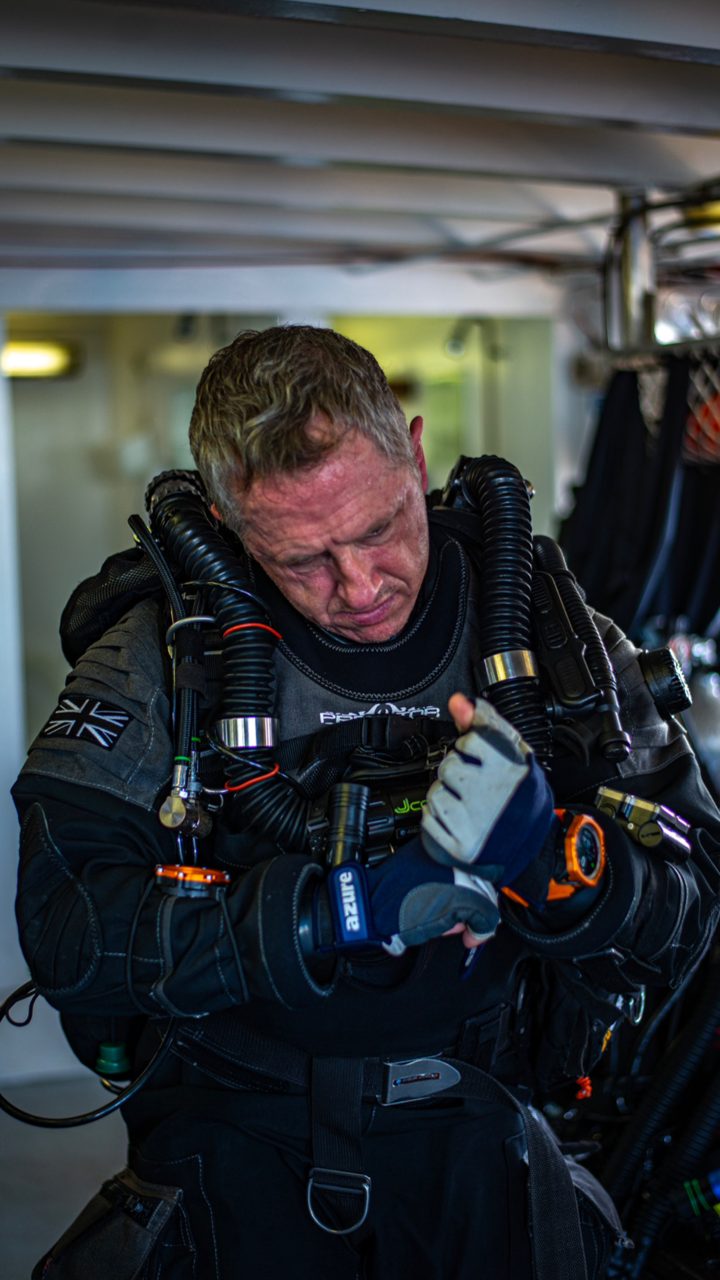
    A rebreather diver checks his gloves and kit on the dive deck in Chuuk
    Rebreather and technical divers should send gas and kit requests early.

    Clothes and personal items

    • Light clothes, a warm layer for the air-conditioned lounge and a rain jacket
    • Sun cream, hat and sunglasses for the sun deck
    • Seasickness remedies, if you need them (ask a pharmacist): the route includes overnight sailings
    • Any prescription medicines in original packaging, with a copy of the prescription
    • Insect repellent for time ashore

    Camera kit and charging

    • Pacific Master has a dedicated camera area for photographers.
    • Pack wide-angle lenses and strong video lights: engine rooms and holds are dark
    • Bring a multi-way adaptor and spare batteries; we will confirm the boat’s socket type before you travel

    Documents

    • Passport valid for at least 120 days after arrival
    • US entry authorisation matching your routing
    • Return or onward ticket
    • Certification cards, logbook and insurance details
    • Your gas and equipment request confirmation, if you sent one

    A day on board Pacific Master

    Pacific Master is a steel-hulled diving vessel that previously sailed in the Solomon Islands as M/V Taka. She has a large air-conditioned lounge and dining area on the main deck, with DVDs and large TVs, and a sun deck with loungers.

    A typical diving day

    1. Light breakfast, briefing and dive 1
    2. Full breakfast, rest, briefing and dive 2
    3. Lunch, rest, briefing and dive 3
    4. Snack, rest, briefing and dive 4 where possible

    When the boat is anchored inside the lagoon, the fourth dive may be a night dive. Most wreck dives go straight from the main vessel onto the wreck. The itinerary is an example only and stays at the Captain’s discretion, depending on weather, logistics and guests’ experience.

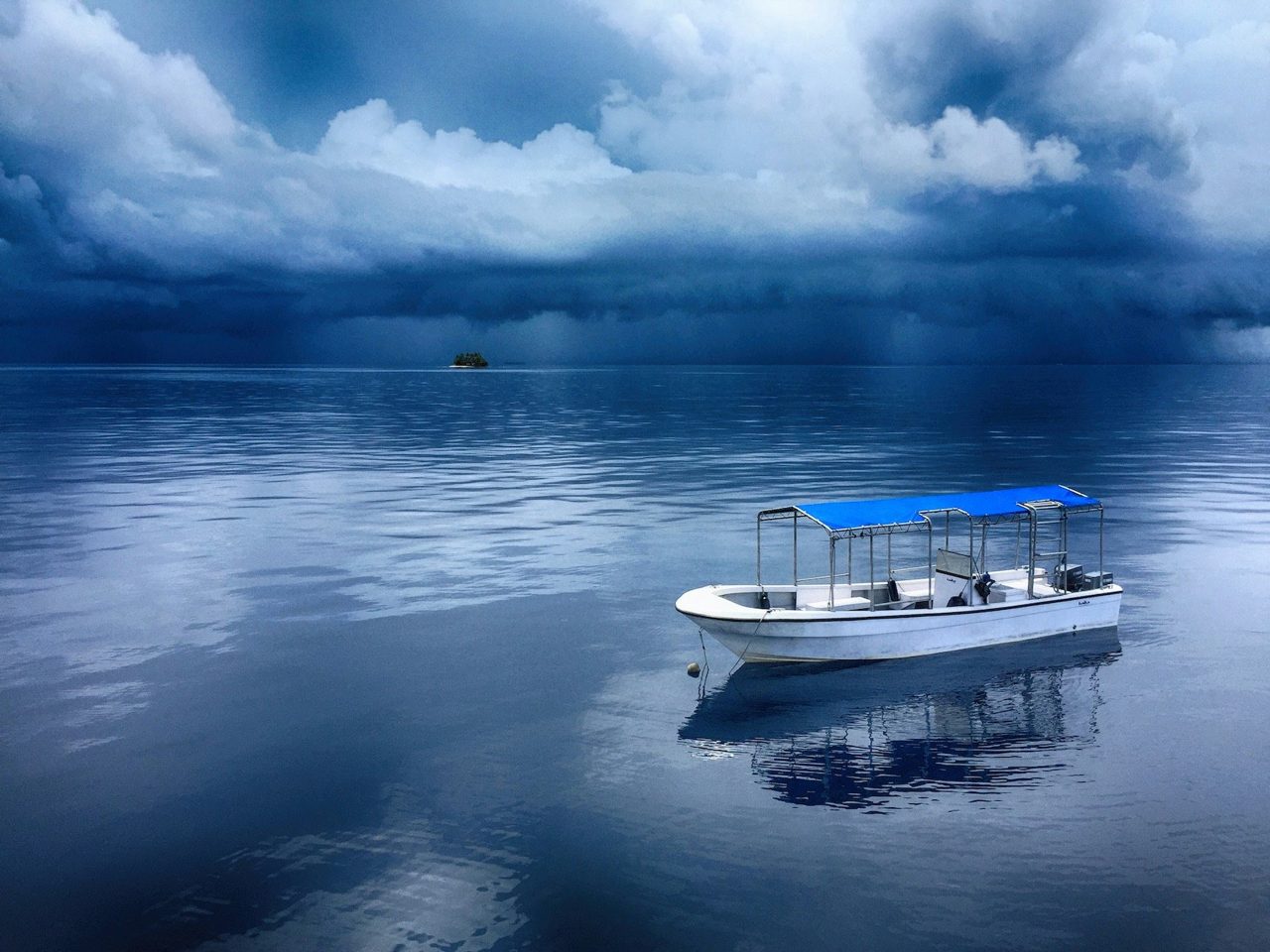
    A dive tender at anchor on flat calm water in Truk Lagoon under a stormy sky
    Calm water inside the lagoon, with a tender ready for the next dive.

    Cabins

    Pacific Master has one en-suite premium double cabin, five en-suite premium double or twin cabins, four standard single cabins and two standard twin cabins with shared bathrooms. Upper-deck cabins have en-suite bathrooms and individually controlled air conditioning. Lower-deck standard cabins share bathrooms on the dive deck and have centrally controlled air conditioning.

    Dive deck, power and wifi

    The dive deck has individual kit stations with storage, toilets, freshwater showers and rinse tanks. Wi-Fi data packages are sold on board, subject to availability, and cannot be paid for in advance. The operator does not publish socket types or voltage; we will confirm before you travel.

    Diving conditions to prepare for

    Truk Lagoon, properly called Chuuk Lagoon, holds more than 60 wrecks, from supply ships (Maru) to aircraft and a submarine, inside a coral reef lagoon. Most were sunk during the US-led Operation Hailstone in February 1944, when the lagoon was a major Japanese naval base. Holds still carry aircraft parts, tanks, torpedoes, trucks and ammunition, along with bottles, cooking utensils and personal belongings.

    How deep are the wrecks?

    Most wrecks lie within recreational depth limits at 18 to 40 metres, with average dive depths of 25 to 35 metres. Other wrecks sit at 40 to 64 metres and are only for suitably qualified technical divers. The 9 night trip visits wrecks from about 10 metres to more than 60 metres.

    Example wreck What the operator says
    Fujikawa Maru A 132 metre armed cargo ship sitting upright on a sandy bottom, with parts of Zero fighter aircraft in the holds
    Kensho Maru Upright at a maximum of 38 metres, superstructure at 18 metres, with an easily accessible engine room
    Shinkoku Maru A large oil tanker heavily encrusted with corals and sponges
    Rio de Janeiro Maru A former passenger ship on her port side at 35 metres, upper deck at 9 metres
    Betty Bomber A Mitsubishi G4M bomber on the seabed at 18 metres
    San Francisco Maru Upright at 60 to 62 metres, with tanks on deck at 50 metres: technical divers only

    Which wrecks you dive depends on the weather, the group and the Captain’s plan, so treat this as a taste rather than a promise.

    Rows of coral-encrusted gauges and controls inside a Truk Lagoon wreck
    Bridges, telegraphs and engine rooms are still recognisable under the growth. Photo: Steve Jones.

    Seasons and conditions

    Months Water What to expect
    December to March 28 to 30°C Trade winds can bring slight chop
    April to November 28 to 30°C Diveable, as all year

    The operator notes that adverse weather can affect the route, which includes several overnight sailings. The FCDO says the islands are at risk from tropical cyclones, so follow local advice if a storm is forecast.

    Marine life

    The wrecks have become artificial reefs, and channels through the outer reef bring in reef sharks and schooling pelagics. Whitetip, blacktip and reef sharks, manta rays and turtles are often seen. Sightings are never guaranteed. For a wider view of seasons across our destinations, see compare dive destinations month by month.

    Responsible diving

    Two divers in technical kit getting ready on the dive deck before a Chuuk wreck dive
    Good buoyancy and trim protect fragile wrecks and the artefacts inside them.
    • The wrecks are protected, and removing anything from them is prohibited. Take photos only.
    • The wrecks are a reminder of those who lost their lives during Operation Hailstone, so treat them with respect.
    • Local taxes and permit fees apply; the operator adds them to your on-board bill.
    • Keep fins and hands off coral-covered structures, and secure gauges and consoles so they do not drag.
    • Follow your guide’s and the Cruise Director’s briefing on depth, routes and penetration.

    Can I penetrate the wrecks?

    The operator plans each day so recreational and technical divers can explore the wrecks at their own level, and torches are mandatory for anyone going inside. Technical and rebreather divers must have the certification and experience for the type of diving they intend. Follow the Cruise Director’s briefing for every dive.

    Your pre-trip checklist

    4 weeks or more before

    • Check passport validity (120 days after arrival)
    • Book flights that fit a 15:00 boarding and a 07:00 disembarkation
    • Apply for the US entry authorisation your routing needs
    • See your GP or a travel clinic, and a doctor about fitness to dive
    • Buy dive insurance that covers depth, evacuation and hyperbaric treatment
    • Pre-book rental kit and nitrox; send gas and equipment requests
    • Finish any deep, nitrox or wreck courses

    1 week before

    • Check the latest FCDO advice for Micronesia
    • Service your regulators and computer, and test your torches
    • Plan how you will pay on board and get some US dollars
    • Check Guam arrival requirements for your routing

    Day before

    • Pack cards, logbook, passport and insurance details in your hand luggage
    • Charge cameras, lights and computer
    • Confirm your transfer details with us

    On board

    • Listen to the boat and safety briefings on day one
    • Tell the dive team your gas plan and any limits
    • Settle your on-board bill, including taxes and fees, before disembarkation

    Truk Lagoon liveaboard pre-trip questions

    How deep are the Truk Lagoon wrecks?

    Most wrecks lie at 18 to 40 metres, with average dive depths of 25 to 35 metres; others sit at 40 to 64 metres and are for technical divers only.

    Do I need nitrox for Truk Lagoon?

    It is not mandatory, but the operator highly recommends nitrox certification, and standard nitrox can be pre-booked and pre-paid.

    Can I penetrate the wrecks?

    The operator plans each day so divers can explore the wrecks at their own level. Torches are mandatory for anyone going inside a wreck and cannot be rented on board.

    What wetsuit for Truk?

    Water is 28 to 30°C; the operator suggests a 3mm or 5mm full-length suit, with 5mm better for deeper, longer wreck dives.

    What certification do I need?

    Advanced Open Water or equivalent with at least 50 logged dives; Deep Diver (40 metres) is recommended.

    How do I get to Truk Lagoon from the UK?

    Fly to Chuuk International Airport on Weno, on United’s Island Hopper from Guam or Honolulu; the transfer from the airport to the boat is included.

    Do I need a visa for Micronesia?

    The FCDO says UK passport holders do not need a visa for stays of 30 days or less, and you need an ESTA or US visa to enter or transit the US. Check the latest FCDO advice before you travel.

    Is Bikini Atoll the same trip?

    No. Bikini Atoll is a separate Pacific Master itinerary from Ebeye, Marshall Islands, for technical divers only.

    Truk Lagoon asks more of you than a reef trip: more depth, more planning and more kit. Sort the paperwork, training and gas early and you can give the wrecks your full attention. Read more about Truk Lagoon liveaboards and Pacific Master, then Truk Lagoon liveaboard departures. If anything here is unclear, ask us. Real people answer.

    Planning more than one trip? Read the Palau pre-trip guide.

  • Before your Palau liveaboard: the complete pre-trip guide

    Before your Palau liveaboard: the complete pre-trip guide

    This guide covers everything to sort before a Palau liveaboard: your level, flights, entry rules, kit, money and life on board. Four things matter most. You need Advanced Open Water and a minimum number of logged dives. Reef hooks and SMBs cannot be rented, so bring your own or buy them on board. State permits and taxes are paid on board. And every visitor signs the Palau Pledge on arrival.

    Guest relaxing on a sun lounger on the top deck of Palau Siren with a forested Rock Island behind
    The top deck of Palau Siren, anchored among the Rock Islands.

    At a glance

    Boat Palau Siren, 40 m, up to 16 guests in 8 cabins
    Routes Palau Islands; Full Moon Spawning; New Moon Spawning
    Nights Palau Islands 10 nights; spawning trips 7 or 10 nights
    Embark and disembark Sam’s Tours, Koror: boarding 17:30, leaving 10:00
    Level required Advanced Open Water or equivalent; 30 logged dives (Palau Islands) or 50 logged dives (spawning trips)
    Water temperature 28-30°C all year (operator data)
    Currency US dollar
    Time zone UTC+9
    Plugs Type A and B, 120 V, 60 Hz
    Best months October to June (dry season, per the operator); diving runs all year

    Certification, logged dives and documents to bring

    Palau is current diving, and the operator sets clear minimums for every route.

    What the operator requires

    • Palau Islands (10 nights): “PADI Advanced Open Water or equivalent, minimum 30 logged dives (mandatory), experience and comfortable in strong currents. Nitrox is strongly recommended.”
    • Full Moon and New Moon Spawning (7 or 10 nights): “PADI Advanced Open Water or equivalent, minimum 50 logged dives (mandatory), experience and comfortable in strong currents. Nitrox is strongly recommended.”

    The operator says the spawning dives are only for experienced divers, because currents are often very strong where the action happens.

    Bring proof

    • Your certification card (physical or digital).
    • Your logbook, paper or app, showing your dive count.
    • Your nitrox card, if you plan to dive nitrox.

    If you are below the minimum

    You cannot complete Advanced Open Water on board Palau Siren. Get it done at home before you travel. You can register for PADI Advanced Open Water and Enriched Air Nitrox online learning through the operator. On board, the operator lists PADI Enriched Air Nitrox, PADI Refresher (Scuba Review) and PADI Deep Diver Speciality. Courses are subject to availability and must be pre-booked so an instructor is free. If you are unsure whether you meet the minimum, talk to us before you book.

    Getting there from the UK

    Palau’s international airport is Roman Tmetuchl International (ROR), on Babeldaob island, near Koror. There are no direct flights from the UK. You connect through a hub in Asia or the Pacific. Scheduled services have recently included Manila, Taipei, Guam and Tokyo Narita. Schedules change often, so check current routes before you book flights.

    Transfers and boarding

    Transfers between Koror Airport or your hotel and the boat are included on embarkation and disembarkation days, depending on your flight times. Boarding is at Sam’s Tours in Koror at 17:30. The first evening is introductions, boat and safety briefings, and dinner. There is no diving on embarkation day. On the last morning you leave the boat at Sam’s Tours at 10:00.

    Should you arrive early?

    With long connections and a 17:30 boarding time, it makes sense to fly in a day or more early so a delayed flight does not cost you the start. Hotels and extra transfers are not included, so we can help you plan them. One point to watch: the operator says guests doing activities in Palau before or after the trip may need extra permits if their total time in Palau goes over 10 days.

    Entry, visas and travel advice

    This is a summary of the UK government’s travel advice for Palau, checked on 3 November 2026 (page last updated 10 December 2025). Rules can change, so check the latest FCDO advice for Palau before you travel.

    • UK passport holders do not need a visa for stays of up to 30 days. A 30-day tourist visa is issued on arrival.
    • You may need to show proof of onward or return travel.
    • Your passport must be valid for at least 6 months after your arrival date and have at least 2 blank pages.
    • You must complete the Palau entry form within 72 hours of arrival.
    • You must sign the Palau Pledge, which is stamped in your passport on arrival.
    • At customs, declare personal items worth more than US$400 and cash of US$10,000 or more.
    • It is illegal to bring reef-toxic sunscreen into Palau.

    The FCDO also notes heavy penalties for drug offences, a legal drinking age of 21, and that drinking alcohol in public is illegal outside licensed premises. Unexploded Second World War ordnance remains, especially on Peleliu and Angaur. Do not touch anything metal you find; photograph it and report it.

    Health and insurance

    We cannot give medical advice. Here is what to check and who to ask.

    Health

    • The FCDO advises checking vaccine recommendations at least 8 weeks before your trip. Talk to your GP or a travel clinic, and see NHS Fit for Travel for Palau.
    • The FCDO lists dengue and Zika as health risks in Palau.
    • Ask a doctor, ideally one with diving medicine experience, whether you are fit to dive.
    • Some UK medicines have a different legal status in Palau. Check before you pack them.

    The FCDO says Belau National Hospital in Koror is the only national hospital and has a hyperbaric chamber for diving accidents. Serious cases may need evacuation, and doctors often expect immediate cash payment. The emergency number is 911.

    Insurance

    Divers Alert Network says very few travel policies cover diving incidents, that most of those exclude dives deeper than 30 m, and that chamber treatment is not typically covered by medical or travel insurance. Read your policy wording and check:

    • The maximum depth covered, and whether nitrox is covered.
    • Hyperbaric (recompression) treatment and its limit.
    • Medical evacuation and repatriation, as the FCDO advises.
    • Any rule that you dive with a guide or hold a set certification.
    • Cover for your planned activities, including any land tours.

    Money on board

    Palau uses the US dollar. The Palau visitor authority advises carrying some cash, and the FCDO says doctors and medical centres often expect immediate cash payment.

    Included in your trip

    • Full board: breakfast, lunch, dinner and snacks.
    • Unlimited drinking water, tea, coffee, fruit juice and soft drinks.
    • Up to 4 dives a day with an 11 litre (AL80) cylinder and air fills.
    • Weights and weight belt.
    • Airport or hotel transfers on embarkation and disembarkation days.
    • On spawning trips, the spawning itinerary fee is included in the cruise price.

    Paid on board

    Palau Islands State Permits and Taxes are added to your on-board bill and paid before you leave the boat. The operator currently charges US$300 per person on 10-night trips and US$230 per person on 7-night trips (checked 3 November 2026; confirm before travel). Rock Islands permits last a maximum of 5 days, so each trip needs 2 permits. Surcharges, permits and taxes can change without notice.

    A 10% Palau Goods and Services Tax applies to payments made on board for equipment rental, nitrox, courses, alcohol, laundry and merchandise. Also paid on board: beer, cocktails, wine and spirits, Wi-Fi, and any rental or nitrox you did not prepay. Rental, nitrox, courses and permits can also be pre-booked and prepaid when you book.

    Fuel surcharge: the operator’s information is not consistent, so we confirm whether one applies to your departure before you travel.

    Tips

    Crew and dive guide gratuities are not included. The operator does not publish a set amount, so tip what feels right.

    What to pack

    Dive kit

    • Reef hook. The operator calls it an essential piece of diving equipment in Palau’s channels. It cannot be rented.
    • SMB. Also not available to rent. Bring your own or buy one on board.
    • Dive computer. Not part of the rental set, so bring yours.
    • Torch. Not in the rental set, and needed in the darker chambers of Chandelier Cave and for night dives.
    • Wetsuit. The operator says 28-30°C water means a 3 mm suit is usually enough.
    • Mask, fins, regulator and BCD, unless you are renting.
    Diver in a wetsuit lifting a BCD and cylinder beside a dive skiff at Palau Siren
    Kitting up beside one of Palau Siren's skiffs. Photo: @summitstoseas.

    Rental and nitrox

    Palau Siren has equipment rental and a nitrox compressor. All rental must be pre-booked so the right sizes are on board. Nitrox is strongly recommended on every route. Rebreather diving is generally only possible on dedicated technical or wreck itineraries. If you need oxygen or Sofnolime, ask when you confirm your trip, because shipping times are long.

    Clothes and personal items

    • Light, casual clothes; it is warm all year.
    • A light rain jacket. The FCDO says rainfall is higher from April to November, peaking in July and August.
    • Mineral sunscreen with zinc oxide or titanium dioxide only. Reef-toxic sunscreen is banned.
    • Hat, sunglasses and a rash vest.
    • Any personal medicines, in original packaging.
    • Towels and bathrobes are provided in the cabins.

    Camera kit and charging

    The saloon has designated areas for charging and preparing camera and video kit. The dive deck has a separate rinse tank for cameras. Palau uses type A and B plugs at 120 V, so bring an adapter and check your chargers handle 120 V. We have not confirmed the socket types on board, so pack a multi-adapter to be safe.

    Documents

    • Passport valid 6 months beyond arrival, with 2 blank pages.
    • Proof of onward or return travel.
    • Palau entry form confirmation.
    • Certification card, nitrox card and logbook.
    • Insurance policy details and emergency numbers.
    • Your booking confirmation.

    A day on board Palau Siren

    Palau Siren is a 40 m boat built in Sulawesi, Indonesia, from ironwood and teak. She takes a maximum of 16 guests.

    A typical diving day

    The operator offers up to 4 dives a day: 3 day dives and a sunset or night dive where possible. On spawning trips the fourth dive may be at sunrise, sunset or night, depending on spawning times. A typical day runs like this:

    1. Light breakfast, briefing and dive 1.
    2. Full breakfast, rest, briefing and dive 2.
    3. Lunch, rest, briefing and dive 3.
    4. Snack, rest, briefing and dive 4, where possible.

    On days with a land tour (non-diving), only 3 dives are possible. Day 2 starts with a check dive. The 10-night Palau Islands trip offers up to 32 dives.

    Skiffs and moorings

    All liveaboards in Palau must use set mooring areas around the Rock Islands, so the big boat moves little. You dive from 2 shaded fibreglass skiffs. The ride from the boat to most sites usually takes 5-15 minutes.

    Life jacket being demonstrated during a safety briefing in the saloon of Palau Siren
    Safety briefing in the saloon on embarkation evening.

    Cabins

    There are 8 cabins: 2 fixed double cabins at the bow, 4 fixed twins and 2 flexible twins that convert to doubles. Every cabin has its own air conditioning control and an en-suite bathroom with hot water.

    Food and spaces

    Meals are served in a covered outdoor dining area. The air-conditioned saloon has a bar, seating and a large TV. The dive deck has personal storage for each diver and fresh water showers.

    Guests gathered around the wooden table in the covered dining area of Palau Siren
    The covered dining area, where meals are served between dives.

    Wi-Fi and extras

    Wi-Fi is paid for on board and depends on service availability, so expect to be offline at times. Kayaks, laundry and massage are also available.

    Diving conditions to prepare for

    For an overview of every route, see our Palau liveaboards page. Most diving is in the Rock Islands Southern Lagoon, with a day at Peleliu. Narrow channels and tidal currents shape every dive. The operator puts average visibility at around 30 m.

    Seasons

    Months Water What to expect (operator data)
    October to June 28-30°C Dry season, best visibility and conditions
    July to September 28-30°C Wet season, still diveable

    For more on timing, see our compare dive destinations month by month.

    Palau Islands (10 nights)

    The trip usually starts with wrecks around Malakal Harbour, then heads into the Rock Islands. It runs south via Ulong Channel, German Channel and Ngemelis Island to Peleliu. Expect drift dives, Second World War wrecks, caverns and night dives. Sites often include:

    • Blue Corner: strong currents and reef hooks needed; sharks, snapper, barracuda and jacks are often seen.
    • German Channel: best known for manta rays visiting cleaning stations.
    • Blue Holes: a cavern lit by four openings above.
    • Chandelier Cave: four chambers with stalactites; bring a torch.
    • Wrecks: Iro Maru lies upright in 20 m; Teshio Maru rests on her side in 24 m; Chuyo Maru sits at 40 m with her deck at 30 m.
    • Peleliu Cut: some of the strongest currents of the trip.

    Palau’s waters are a designated shark sanctuary, and reef sharks and manta rays are often seen. Sightings are never guaranteed. Note that the Chuyo Maru’s depth is beyond the 30 m limit of many insurance policies.

    Full Moon and New Moon Spawning trips

    These are special departures timed to the moon. On Full Moon Spawning trips, the operator says red snapper (also called twin-spot snapper) gather in large numbers to spawn around the full moon, which draws predators. On New Moon Spawning trips, the operator says thousands of bumphead parrotfish gather in one area of Palau around the new moon each month to spawn. The Cruise Director gives talks on the ecology of these events and how to photograph them. Spawning behaviour depends on nature, so it is never guaranteed. The operator says blackwater diving may also be possible on most Palau Siren trips.

    Group of divers and crew on the foredeck of Palau Siren at sunset in the Rock Islands
    Sunset on the foredeck after a day in the channels.

    Responsible diving

    • Sign and keep the Palau Pledge. It is a promise, stamped in your passport, to protect Palau’s environment while you are there.
    • Use mineral sunscreen only. It is illegal to bring reef-toxic sunscreen into Palau or to use it there.
    • Use your reef hook as briefed. Your guide explains where and how to hook in before each current dive.
    • Respect the World Heritage site. The Rock Islands Southern Lagoon was inscribed by UNESCO in 2012.
    • Leave wrecks and war relics alone. Look, photograph, and take nothing.

    Your pre-trip checklist

    4 weeks or more before

    • Check your passport is valid 6 months beyond arrival, with 2 blank pages.
    • Confirm your certification and dive count meet the minimum.
    • See your GP or travel clinic about vaccinations and fitness to dive.
    • Check your insurance covers diving depth, hyperbaric treatment and evacuation.
    • Pre-book rental, nitrox, courses, oxygen or Sofnolime.
    • Buy a reef hook and SMB if you do not own them.
    • Book flights and any hotel nights.

    1 week before

    • Check the latest FCDO advice.
    • Service and test your kit, computer and torch.
    • Buy mineral sunscreen.
    • Pack adapters for type A and B sockets.

    Day before

    • Complete the Palau entry form (within 72 hours of arrival).
    • Pack cards, logbook and documents in your hand luggage.
    • Carry some US dollars.

    On board

    • Join the boat and safety briefings on the first evening.
    • Practise with your reef hook on the check dive.
    • Settle your on-board bill, including permits and taxes, before you leave the boat.
    Guests eating at a long table on a beach in the Rock Islands at dusk
    An evening ashore in the Rock Islands. Land activities are non-diving and vary by trip.

    Palau liveaboard pre-trip questions

    What is a reef hook and do I need one?

    A reef hook is a metal hook on a short line. You clip it to rock so you can hold your place in the current. The operator says it is essential in Palau's channels. Reef hooks and SMBs cannot be rented, so bring your own or buy one on board.

    Do I need Advanced Open Water for Palau?

    Yes. The operator asks for PADI Advanced Open Water or equivalent, with at least 30 logged dives on Palau Islands trips and 50 on spawning trips. You cannot complete Advanced Open Water on board, so do it before you travel.

    Can I visit Jellyfish Lake?

    Jellyfish Lake is snorkelling only (non-diving); scuba is not allowed there. The operator says the jellyfish populations have become seriously depleted, so it does not organise visits while that remains the case.

    What are the Palau permits and taxes?

    Palau Islands State Permits and Taxes are paid on board before you leave. The operator currently charges US$300 per person on 10-night trips and US$230 on 7-night trips (checked 3 November 2026; confirm before travel). A 10% GST applies to on-board purchases.

    Do UK citizens need a visa for Palau?

    No visa is needed for stays of up to 30 days; a tourist visa is issued on arrival. You must sign the Palau Pledge and complete the entry form within 72 hours of arrival. Check the latest FCDO advice before you travel.

    How warm is the water and what wetsuit should I bring?

    The operator gives 28-30°C all year and says a 3 mm wetsuit is usually enough.

    What is the best time to dive Palau?

    The operator describes October to June as the dry season, with the best visibility and conditions. July to September is the wet season but still diveable.

    Is nitrox available?

    Yes. Palau Siren has a nitrox compressor and the operator strongly recommends nitrox. Pre-book it, and bring your nitrox card.

    Book your Palau liveaboard

    Palau rewards divers who arrive prepared: a reef hook, the right card, and some dollars for the permits. If anything here is unclear, ask us. We have checked this guide against the operator’s information and official sources, and we confirm fees before you travel. See live Palau dates or read more about our Palau liveaboards.

    Planning more than one trip? Read the Truk Lagoon pre-trip guide.

  • Before your Philippines liveaboard: the complete pre-trip guide

    Before your Philippines liveaboard: the complete pre-trip guide

    A Philippines liveaboard with us means a trip on Philippine Siren, a 40 metre wooden vessel that sails either to Tubbataha Reefs from Puerto Princesa or around the Visayas from Cebu. This guide covers what to check, pack and pay before you go. The four things that matter most: your certification level for your route, landing by noon on Tubbataha embarkation day, marine park fees paid on board, and registering on the eTravel system before you fly.

    Two divers in full kit in deep blue water, with the sunlit surface above them

    At a glance

    What Details
    Boat Philippine Siren: 40 metres, up to 16 guests in eight cabins
    Tubbataha routes Tubbataha National Park (6 nights, from Puerto Princesa); Tubbataha and More (13 nights, between Puerto Princesa and Cebu)
    Visayas routes Visayas, Southern Leyte and Malapascua (10 nights); Malapascua and Visayas (10 nights); Southern Visayas (6 or 7 nights). All based in Cebu.
    Level required Tubbataha: PADI Advanced Open Water or equivalent, 50 logged dives, comfortable in currents. Visayas: PADI Open Water or equivalent, 25 logged dives.
    Embarkation 13:00 on day one. Disembarkation 09:30 to 10:00 on the last day.
    Water temperature 27 to 30°C at Tubbataha in season (operator figure). Visayas: ask us.
    Tubbataha season Mid March to mid June only
    Currency Philippine peso (PHP); park fees are quoted in US dollars
    Time zone UTC+8, no daylight saving
    Plugs Types A, B and C; 220 to 230 V, 60 Hz. Bring a UK adaptor.

    Certification, logged dives and documents to bring

    Your route sets the minimum level. The operator’s requirements are short and firm, so check yours before you pay a deposit.

    Tubbataha National Park and Tubbataha and More

    The operator’s mandatory requirement is PADI Advanced Open Water or equivalent, a minimum of 50 logged dives, and being comfortable in currents. The reason is the reef itself. The operator says Tubbataha is not suitable for entry-level or inexperienced divers because of its exposed location, strong currents, deep wall dives and surge.

    Tubbataha also needs a park permit for every guest. The operator applies for the Visitor Entry Permits on your behalf and needs your full details, including passport, dive logs and contact information, at least two weeks before the cruise.

    Visayas, Southern Leyte and Malapascua routes

    All Visayas routes ask for PADI Open Water or equivalent and a minimum of 25 logged dives. Southern Visayas trips include Balicasag Island, where the local authorities issue dive permits. For these trips the operator must send a copy of every diver’s certification card. Without it, the whole boat risks being refused permission to dive Balicasag, so please send us a clear scan as soon as you book.

    Below the minimum?

    Courses on board must be pre-booked so an instructor is available. The operator lists PADI Enriched Air Nitrox and PADI Deep Diver, with other specialities on request, and offers online learning for PADI Advanced Open Water and Nitrox. Course prices do not include materials or certification registration. If you need Advanced Open Water or more logged dives for Tubbataha, talk to us early so you arrive qualified.

    Philippine Siren cannot support rebreather divers.

    Getting there from the UK

    Where you fly to depends on your route. Book flights only after we confirm your cabin, and send us your flight times so transfers can be arranged.

    Tubbataha: Puerto Princesa, Palawan

    Tubbataha trips start in Puerto Princesa on Palawan, and the transfer from Puerto Princesa Airport or your local hotel to the boat is included. Embarkation is from Baywalk Pier at 13:00. If you are flying in on the day, the operator asks that your flight lands no later than 12:00. If you cannot land by noon, plan to arrive the day before.

    On boarding day, lunch is followed by a mandatory briefing from the Tubbataha Management Office and a Coast Guard check before the boat can leave port. There is no diving that day. Tubbataha lies about 150 km south east of Puerto Princesa, and the return crossing takes 12 to 16 hours.

    Tubbataha and More: one way

    Tubbataha and More cruises between Cebu and Puerto Princesa, so you fly into one city and out of the other. Check which direction your departure runs before you book flights. When the trip ends in Cebu, disembarkation is at the Marina Seaview Restaurant on Mactan Island at 10:00.

    Visayas routes: Cebu

    All Visayas routes start and finish in Cebu, with transfers between Cebu Airport or your local hotel and the vessel included on both days. The operator’s itinerary documents name the Marina Seaview Restaurant on Mactan as the meeting point. Embarkation is at 13:00 and there is usually no diving on the first day.

    One transfer detail is worth knowing. On the 6 night Southern Visayas trip, transfers between Cebu and Moalboal are not included. On all routes, disembarkation is between 09:30 and 10:00 after breakfast.

    Your flight home

    The operator asks that you leave at least 24 hours between your final dive and your flight. The last full diving day usually has two morning dives before the boat heads back. FCDO notes a departure tax of 850 pesos at Cebu Mactan airport, which can change, so check with your airline.

    Entry, visas and travel advice

    The rules below come from the FCDO travel advice for the Philippines, which was still current on 3 November 2026. Check the latest FCDO advice for the Philippines before you travel, as the Philippine authorities set and can change these rules.

    • British passport holders can visit for tourism for up to 30 days without a visa.
    • Your passport must be valid for at least 6 months after the date you arrive.
    • Most visitors are expected to show proof of return or onward travel.
    • You must register on the eTravel system within 72 hours before arrival and show the QR code. FCDO says registration is free and some airlines will not let you board without it.
    • You cannot bring in more than 50,000 pesos in cash, and foreign currency worth more than 10,000 US dollars must be declared.

    FCDO advises against all travel to western and central Mindanao and the Sulu archipelago, and against all but essential travel to the rest of Mindanao, with some island exceptions. Read the full advice and check it against your route: Tubbataha trips sail from Palawan into the Sulu Sea, and the other routes sail in the Visayas. FCDO also notes that most typhoons hit between June and November.

    Health and insurance

    We cannot give medical advice, and that includes fitness to dive. Please speak to your GP or a travel clinic about vaccinations and any other health advice for your trip. FCDO suggests checking vaccine advice at least 8 weeks before your trip, and NHS Fit for Travel has destination pages to read before your appointment. Ask a doctor whether you are fit to dive, especially if anything has changed since your last trip.

    FCDO warns that medical care may not meet UK standards, particularly in rural and remote areas. The operator names the nearest hyperbaric chambers as Viscom Station Hospital in Cebu City for the Visayas and Ospital ng Palawan in Puerto Princesa for Tubbataha, with evacuation to Manila also possible.

    That remoteness is why your insurance matters. FCDO says insurance should cover your itinerary, activities and emergency costs. When you check a policy, ask your insurer about:

    • Scuba diving cover to the depths you plan to dive.
    • Hyperbaric chamber treatment.
    • Emergency medical evacuation and repatriation from a remote reef.
    • Cancellation and curtailment, given the June to November typhoon season.

    Specialist dive cover, such as that offered by DAN, can sit alongside travel insurance. We do not recommend a particular policy.

    Money on board

    Your trip price covers the boat, but some costs are paid on board. Here is what to expect.

    What is included

    • Transfers between the local airport or hotel and the vessel on embarkation and disembarkation days.
    • Shared cabin, full board.
    • Tea, coffee, fruit juice and soft drinks.
    • An 11 litre (AL80) cylinder with air fills, weights and a weight belt.
    • Up to 4 dives a day.

    What is not included

    • Flights and any additional transfers.
    • Marine park and port fees, and other obligatory surcharges.
    • Equipment rental and nitrox.
    • Alcoholic drinks and on-board merchandise.
    • Crew and dive guide gratuities.

    Park and port fees

    Marine park and port fees are obligatory, vary by route, and are added to your on-board extras to be paid before disembarkation. The operator says all surcharges can change at any time without notice. For Tubbataha National Park, the operator currently charges US$120 per person (checked 3 November 2026; confirm before travel). For Visayas, Southern Leyte and Malapascua, the operator currently charges US$175 per person (checked 3 November 2026; confirm before travel). For the other routes, fees apply, paid on board; we confirm the current amount before you travel. We also confirm whether any fuel surcharge applies to your departure.

    Wifi is available on board as a paid extra. The operator does not publish payment methods or tipping guidance in the information we hold, so ask us before you go and we will tell you what to bring.

    What to pack

    Dive kit

    • Your certification card and logbook (or app) showing your logged dives.
    • Dive computer and torch. These are not part of the rental set.
    • Your own regulator, BCD, mask and fins if you prefer your own kit.
    • A surface marker buoy (SMB). One is included on most routes, but you may prefer your own.
    • Exposure protection suited to 27 to 30°C water at Tubbataha in season. The operator does not give a wetsuit recommendation, so ask us for advice on the Visayas.

    Leave the reef hook and gloves at home if you are going to Tubbataha. Both are banned in the park, and reef hooks are also not allowed at Kimud Shoal and Monad Shoal near Malapascua.

    Two smiling divers in wetsuits and BCDs standing on the wooden dive deck of Philippine Siren, ready to dive, with an island in the background

    Rental and nitrox

    Rental is available on board but must be pre-booked so the right sizes are on the boat. Philippine Siren has its own nitrox compressor. Nitrox is charged as an extra on most routes and you need to be certified to use it. The operator says rental, nitrox and courses, and on some routes marine park and port fees, can be pre-booked and pre-paid at the time of booking. Ask us when you book.

    Clothes and personal items

    • A reusable water bottle. Tubbataha has banned single-use plastics, including plastic bottles and cups. You can also buy an Eco Tumbler on board.
    • Light clothes for warm days, and a layer for air-conditioned rooms.
    • Sun protection, hat and sunglasses for the deck.
    • Any personal medication you need for the whole trip.

    Towels, bathrobes and shower gel are provided in the cabins.

    Camera kit and charging

    Philippine Siren has separate rinse tanks for cameras and designated areas for charging and camera preparation. Bring a UK to Type A or C adaptor and check your chargers are rated for 220 to 230 V. Drones are not allowed in Tubbataha unless you hold an advance permit from the Tubbataha Management Office.

    Documents

    • Passport valid for 6 months after arrival.
    • eTravel QR code (registered within 72 hours of arrival).
    • Proof of onward or return travel.
    • Insurance policy details and emergency numbers.
    • Certification card and logbook.

    A day on board Philippine Siren

    Philippine Siren was built on the Indonesian island of Sulawesi and handcrafted from ironwood and teak. She takes up to 16 guests in eight cabins: two fixed doubles, four fixed twins and two cabins that can be set up as either. Every cabin has individually controlled air conditioning, plenty of storage and an en-suite bathroom with hot water.

    The saloon is air-conditioned, with a bar, seating and a large TV. Meals are served outdoors under a covered area with views of the sea. The dive deck has space for every guest’s kit even when the boat is full, plus fresh water showers for after each dive. Two tenders take you to the dive sites.

    Dishes of stir-fried vegetables, prawns and braised meat laid out at a buffet on Philippine Siren
    A spread of dishes on board Philippine Siren.

    A typical diving day

    1. Light breakfast, briefing and dive 1.
    2. Full breakfast, rest, briefing and dive 2.
    3. Lunch, rest, briefing and dive 3.
    4. Snack, rest, briefing and dive 4 (a sunset or night dive where possible).

    In Tubbataha the day is up to 4 day dives, each no longer than 60 minutes, and there is no night diving. You cannot go ashore in the park, and Tubbataha trips do not suit non-divers who want to snorkel or swim. You can visit the rangers at the field station on the North Atoll to learn about reef protection.

    Guests with their arms raised cheering in the dining area of Philippine Siren as the chef arrives for the evening dinner briefing

    Extras off the dive deck

    Non-diving extras: the boat also has kayaks, a laundry service and massage. Ask us about prices before you travel.

    Diving conditions to prepare for

    Every itinerary is an example only and can change because of weather, local rules or the Captain’s decision. Several routes include overnight sailings, and the operator says bad weather can affect them.

    Route Nights Dives (up to) Season and dates
    Tubbataha National Park 6 19 Mid March to mid June. Live dates: March to June 2027.
    Tubbataha and More 13 39 (including up to 8 night dives) Live dates: March and June 2027.
    Visayas, Southern Leyte and Malapascua 10 32 See live dates.
    Malapascua and Visayas 10 33 See live dates.
    Southern Visayas 6 or 7 Up to 4 a day See live dates.

    For current months on every route, see our Philippines departure dates. For other destinations by month, see compare dive destinations month by month.

    Tubbataha

    Tubbataha Reefs became a National Marine Park in 1988 and a UNESCO World Heritage site in 1993, and you can only reach it by liveaboard. The park consists mainly of the North and South Atolls and Jessie Beazley Reef. The reefs are vertical walls rising from great depth, where hammerheads, thresher sharks and whale sharks can be seen. At Shark Airport, whitetip reef sharks are often seen resting on the sand. At Gorgonian Wall, visibility is typically 15 to 30 metres with moderate to strong currents. Sightings are never guaranteed. Our guide to Tubbataha season, mid March to mid June covers the short season in more detail.

    Malapascua and Cebu

    Kimud Shoal near Malapascua is a sunken island with a top at 12 to 16 metres and sides that drop beyond 200 metres. The operator says the endangered pelagic thresher shark regularly visits to be cleaned by wrasse. Pescador Island is known for large sardine balls, and the area around Moalboal for the sardine run.

    Southern Leyte

    The operator says whale sharks frequent the area around Southern Leyte, but sightings are never guaranteed. This route also visits Limasawa Island and Sogod Bay.

    Southern Visayas: Apo Island, Dauin, Balicasag

    This region mixes steep walls with sea fans, gentle reefs and black sand muck diving at Dauin, where small plane wrecks and cars form artificial reefs. Turtles, barracuda and jacks are often seen, along with frogfish, ghost pipefish and pygmy seahorses. On the 7 night route, diving with whale sharks at Oslob is optional and costs extra. Some sites, such as Mainit, have strong currents and are dived as a one-way drift.

    Responsible diving

    Tubbataha has some of the strictest rules you will meet on a liveaboard. Rangers and the Tubbataha Management Office enforce them.

    • No gloves, reef hooks, tank bangers or pointers. A medical exception for gloves needs a doctor’s certificate.
    • No single-use plastics, including plastic bottles, cups, cutlery, straws and styrofoam containers. The ban has applied since 2019, with stricter checks since 2023.
    • No drones without an advance permit from the Tubbataha Management Office.
    • No night diving and no going ashore.

    In the Visayas, reef hooks and gloves are not allowed at Apo Island, and night diving is not permitted there. Reef hooks are banned at Kimud Shoal and Monad Shoal. Your dive guide will brief you on local rules at every site.

    Your pre-trip checklist

    Four weeks or more before

    • Check your passport is valid for 6 months after arrival.
    • Book a GP or travel clinic appointment, ideally 8 weeks before.
    • Confirm dive insurance covers depth, chamber treatment and evacuation.
    • Send us your certification scan (Southern Visayas) or permit details (Tubbataha, at least two weeks before).
    • Pre-book rental, nitrox and any courses.
    • Send us your flight times.

    One week before

    • Service your regulator and check your computer battery.
    • Pack a reusable bottle and remove reef hook and gloves for Tubbataha.
    • Check the latest FCDO advice.

    The day before

    • Register on eTravel (within 72 hours of arrival) and save the QR code.
    • Print or save proof of your onward flight.
    • Pack your certification card and logbook in your hand luggage.

    On board

    • Join the welcome briefing (and the park briefing at Tubbataha).
    • Settle park fees and extras before disembarkation.
    • Leave 24 hours between your last dive and your flight.

    Philippines liveaboard pre-trip questions

    When is the Philippines diving season?

    Tubbataha opens only from mid March to mid June. For the Visayas routes, check our live dates for the months you want. FCDO notes most typhoons hit between June and November.

    Are Tubbataha park fees included?

    No. Park and port fees are paid on board before disembarkation. The operator currently charges US$120 per person on Tubbataha National Park (checked 3 November 2026; confirm before travel). We confirm the Tubbataha and More amount before you travel.

    Can I see thresher sharks at Malapascua?

    Thresher sharks regularly visit Kimud Shoal to be cleaned, according to the operator, and are one of the main draws around Malapascua. Sightings are never guaranteed.

    What wetsuit for the Philippines?

    The operator gives 27 to 30°C at Tubbataha in season but no wetsuit advice. Ask us and we will share what fits your route and how you feel the cold.

    What level do I need for Tubbataha?

    PADI Advanced Open Water or equivalent, at least 50 logged dives, and you must be comfortable in currents.

    Do I need a visa?

    FCDO says British passport holders can stay up to 30 days without a visa. You also need eTravel registration and proof of onward travel.

    Can non-divers come?

    Not to Tubbataha, which does not suit non-divers who want to snorkel or swim. Ask us about the Visayas routes.

    Book your Philippines liveaboard

    Philippine Siren gives you two very different trips: the remote walls of Tubbataha in a short spring window, or the varied reefs and muck sites of the Visayas. Read more about our Philippines liveaboards and Philippine Siren, then pick your dates on the Philippines departures page. If something here is not clear, ask us. Real people will answer.

    The crew of Philippine Siren in matching navy shirts waving from the sun deck, with open sea behind them
    The crew of Philippine Siren on the sun deck.

    Planning more than one trip? Read the Palau pre-trip guide.

  • Before your Thailand liveaboard: the complete pre-trip guide

    Before your Thailand liveaboard: the complete pre-trip guide

    A Thailand liveaboard is a dive trip where you live on Thailand Master for 4 to 10 nights and dive the Andaman Sea up to four times a day. This guide covers everything to sort before you go. The four things that matter most: you need Open Water certification and at least 10 logged dives, from 15 September 2026 UK passport holders can stay up to 30 days visa-free, marine park fees are paid on board, and you need 24 hours between your last dive and your flight home.

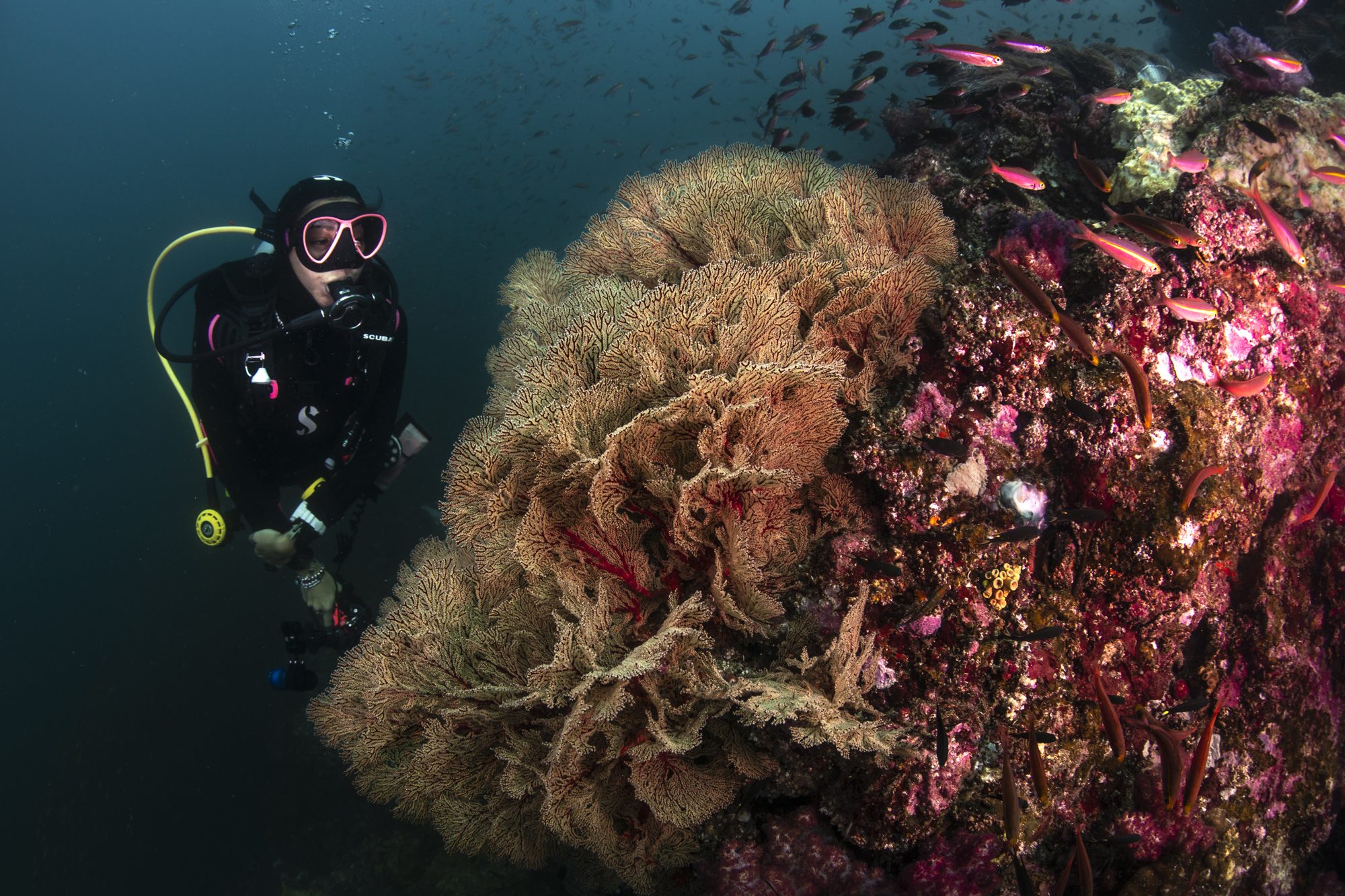
    A diver in a black wetsuit beside a large sea fan and colourful soft corals in the Andaman Sea, Thailand
    Sea fans and soft corals in the Andaman Sea.

    At a glance

    Topic What to expect
    Boat Thailand Master (also known as The Phinisi), a traditional phinisi sailing vessel for 18 guests in 7 cabins
    Routes Similan & Surin Islands (4 or 6 nights), Southern Thailand (4 nights), Best of Thailand (8 nights; 10 nights mainly on request for charters)
    Ports Thap Lamu Pier and Chalong, depending on route and direction
    Local airport Phuket
    Minimum level PADI Open Water or equivalent with at least 10 logged dives; Advanced Open Water and experience in currents recommended on some routes
    Water temperature 28-30°C from October to March, 29-31°C in April and May
    Wetsuit 3mm shorty suits most divers
    Currency Thai baht (THB); on-board fees are quoted in US dollars
    Time zone Indochina Time, UTC+7 all year (no daylight saving)
    Plugs on land Types A, B, C and O; a UK plug will not fit
    Season Similan & Surin trips run while the parks are open, roughly mid-October to mid-May; Southern Thailand runs mainly in May and June

    Certification, logged dives and documents to bring

    The operator’s minimum on every Thailand Master itinerary is PADI Open Water or equivalent with a minimum of 10 logged dives. The Similan & Surin Islands routes list exactly that: “PADI Open Water or equivalent – minimum of 10 logged dives”.

    The longer and more southern routes ask for more. For Best of Thailand the operator writes: “We strongly recommend divers have PADI Advanced Open Water certification or equivalent, with experience in strong currents and a mandatory minimum of 10 logged dives.” Southern Thailand carries the same recommendation for Advanced Open Water and the same 10 logged dive minimum.

    Why the higher bar? Some sites go beyond entry-level depth limits, and some have strong currents and surge. Hin Daeng and Hin Muang are open-ocean pinnacles that drop below 70 metres. The King Cruiser wreck can be challenging and is only suitable for divers with advanced or deep training and experience in similar conditions.

    If you are below the recommended level

    The PADI Advanced Open Water course can usually be completed on board, but it must be pre-booked. You can register for online learning for Advanced Open Water and PADI Enriched Air (Nitrox) before you travel. Other PADI speciality courses are also offered. Course prices on board cover the practical diving only; study materials and certification registration cost extra.

    Paperwork to bring

    • Your certification card (physical or digital) for your highest level
    • Your logbook, showing at least 10 logged dives
    • Your nitrox card, if you plan to dive nitrox
    • Proof of dive insurance

    Getting there from the UK

    Phuket is the local airport for Thailand Master. The operator includes return shared transfers between the local airport and the boat on embarkation and disembarkation days. Additional or private transfers are not included.

    From the UK, Virgin Atlantic runs a seasonal winter non-stop service from London Heathrow to Phuket, three times a week, which started on 18 October 2026. Schedules change, so check with the airline before you book, or ask us to help.

    Which port, and when to board

    • Similan & Surin Islands: embarkation is at 19:00. The 4-night trip disembarks no later than 14:00 on the last day. The 6-night trip disembarks at 10:00 after breakfast.
    • Southern Thailand: embarkation is at 19:00, and the boat returns to Chalong Pier for disembarkation after lunch on the last day.
    • Best of Thailand: the route alternates direction between trips. It starts in Chalong and ends at Thap Lamu Pier, or the reverse. Disembarkation is between 09:30 and 10:00. We confirm your ports and embarkation time with your booking.

    Because boarding is in the evening, a morning or early afternoon landing on embarkation day can work. If you are flying overnight from the UK, arriving the day before gives you a buffer for delays and a proper night’s sleep before your first dive. Ask us and we can help plan it.

    Your flight home

    The operator asks guests to leave 24 hours between their final dive and their flight. On the 4-night Similan & Surin and Southern Thailand trips, guests flying out of Phuket on disembarkation day will not be permitted to dive on the last day. Book your return flight with this in mind.

    Entry, visas and travel advice

    These are the rules for British passport holders as published by the UK Foreign, Commonwealth & Development Office (FCDO) and the Royal Thai Embassy in London, checked on 3 November 2026. They are set by the Thai authorities and can change at short notice, so check the latest FCDO advice before you travel: gov.uk/foreign-travel-advice/thailand. The FCDO also advises against all but essential travel to some parts of Thailand, so read the summary on that page.

    • Visa exemption: from 15 September 2026, British passport holders entering under the visa exemption scheme can stay up to 30 days, for tourism only.
    • Passport: it needs at least 6 months’ validity from your date of arrival and at least 1 blank page.
    • Digital arrival card: every non-Thai visitor must complete the Thailand Digital Arrival Card online before arrival. You can submit it within 3 days before you arrive, for every entry. It is free on the official TDAC website. It is not a visa.
    • Onward travel and funds: you may be asked for proof of onward or return travel and of sufficient funds. Check the current amount with FCDO or the Royal Thai Embassy in London.
    • Visa-exempt entries: the Royal Thai Embassy in London says visa-exempt entry is allowed twice per calendar year.

    Mergui Archipelago (Myanmar waters)

    Thailand Master’s itinerary list also includes the Mergui Archipelago in Myanmar. On 3 November 2026, the FCDO advises against all travel to “Tanintharyi Region, excluding Myeik township, and the archipelago and townships south of Tanintharyi township”, and against all but essential travel to “Tanintharyi Region south of Tanintharyi township”. The FCDO says your travel insurance could be invalidated if you travel against its advice. Read the FCDO travel advice for Myanmar and check the latest FCDO advice before you travel. We confirm whether a trip can go ahead.

    Health and insurance

    We do not give medical advice, but here is who to ask and what to check.

    • Vaccinations and malaria: FCDO suggests checking health risks and vaccinations at least 8 weeks before your trip. Speak to your GP or a travel clinic, and see NHS Fit for Travel.
    • Fitness to dive: ask a doctor. UK divers often use the UK Diving Medical Committee (UKDMC) Recreational Diver Medical Declaration. If you answer yes about a new health problem, UKDMC says you should contact one of its medical referees.
    • Medicines: FCDO notes that some medicines legal in the UK are regulated differently abroad. Check before you pack them.
    • Emergency number: FCDO lists 191 (ask for an ambulance) and 1669.

    What to check in your insurance

    DAN (Divers Alert Network) notes that very few travel policies cover scuba diving incidents, and that most of those that do exclude dives deeper than 30 metres. Read your policy for these points:

    • Diving is covered, to the depth you plan to dive (some sites here go deeper than 30 metres)
    • Hyperbaric (recompression) chamber treatment is covered
    • Emergency evacuation from the boat to hospital or a chamber is covered
    • Any conditions on certification or diving with a guide
    • Whether cover stays valid if you travel against FCDO advice

    FCDO’s Thailand advice also suggests asking operators about safety precautions, including transfer to a hyperbaric chamber. Ask us and we will get the answer from the operator.

    Money on board

    Thailand’s currency is the Thai baht. Some costs are paid on the boat and some can be paid before you go.

    Included in your trip

    • Return shared transfers between the local airport and the boat on embarkation and disembarkation days
    • Full board accommodation (shared occupancy)
    • Tea, coffee, fruit juice and soft drinks
    • Up to 4 dives a day, with an 11 litre (80 cu ft) cylinder and air fills
    • Weights, weight belt and SMB

    Not included

    • Flights, and additional or private transfers
    • Equipment rental and nitrox
    • Alcoholic drinks and on-board merchandise
    • Crew and dive guide gratuities

    Marine park and port fees

    Marine park and port fees are added to your on-board extras and paid on the boat. You can also pre-book and pre-pay them when you book. For Best of Thailand, the operator currently charges US$125 per person on 8-night trips and US$145 per person on 10-night trips (checked 3 November 2026; confirm before travel). For Similan & Surin Islands and Southern Thailand, fees apply, paid on board; we confirm the current amount before you travel.

    The operator currently lists no fuel surcharge for Thailand Master (checked 3 November 2026; confirm before travel).

    The operator notes that on-board prices can change without notice. Gratuities for crew and dive guides are not included. We confirm accepted payment methods on board before you travel.

    Twin cabin on Thailand Master with wood panelling, two single beds, red towels and air conditioning
    A twin cabin on Thailand Master. Every cabin has air conditioning and an en-suite.

    What to pack

    Dive kit

    • Dive computer (rental sets do not include one)
    • Torch for sunset and night dives (also not in rental sets)
    • Mask, fins and your own regulator and BCD if you prefer them
    • Exposure protection: the operator says a 3mm shorty suits most divers in 28-29°C water, and some divers wear just a rash guard and swimwear. Bring an extra layer if you feel the cold, as thermoclines can occur at deeper sites
    • An SMB is provided, but bring your own if you are used to it

    Rental and nitrox

    A full rental set includes BCD, regulators, wetsuit, mask, fins and snorkel, but not a computer or torch. The operator recommends pre-booking rental so the right sizes are on board. An upgrade to a 13 litre (100 cu ft) cylinder is available. Nitrox costs extra and can be pre-booked. If you are not nitrox certified, you can start PADI Enriched Air online before you go.

    Clothes and personal items

    • Light, casual clothes; you will spend most of the day in swimwear
    • A warm layer for evenings and after dives
    • Sun hat, sunglasses and sun cream
    • Seasickness tablets, if you use them; the routes include overnight sailings
    • Any personal medicines, in original packaging
    • Shoes you can walk in on sand for island walks

    Camera kit and charging

    • Spare batteries, chargers and memory cards
    • A travel adapter for your hotel: Thailand uses plug types A, B, C and O, and UK plugs do not fit
    • Ask us about charging points on board before you travel

    Documents

    • Passport with at least 6 months’ validity and a blank page
    • TDAC confirmation email
    • Proof of onward travel
    • Certification cards, logbook and nitrox card
    • Insurance policy details and emergency numbers
    • Booking confirmation
    Diver with an underwater camera rig swimming over a sandy reef in clear blue water in Thailand
    Bring spare batteries and memory cards: four dives a day fills a card fast.

    A day on board Thailand Master

    Thailand Master is a traditional Indonesian phinisi sailing vessel for 18 guests. She has a spacious dive deck with individual dive stations and storage for your kit. The outdoor dining area at the stern is covered and shaded.

    A typical diving day

    Your cruise director schedules up to four dives a day: three day dives and, where possible, a sunset or night dive. A full diving day usually runs like this:

    1. Light breakfast, briefing and dive 1
    2. Full breakfast and time to relax, then dive 2
    3. Lunch and time to relax, then dive 3
    4. Snacks and time to relax
    5. Briefing and dive 4, where possible

    All safety and dive briefings are in English. The operator says the 4-night Similan & Surin trip allows up to 14 dives, the 6-night trip up to 19, Southern Thailand around 14, and the 8-night Best of Thailand around 26. Itineraries are examples only and depend on weather, local regulations and the captain’s decision.

    Cabins

    • Three double or twin cabins; the bow cabin has a fixed double plus a single
    • Two fixed twin cabins
    • Two quad cabins, with two single beds and a bunk

    Every cabin has individually controlled air conditioning and an en-suite. Cabin occupancy is based on demand and may be mixed-gender share.

    Food

    The chefs prepare a mix of Western dishes and Thai food from fresh, locally sourced ingredients.

    Overhead view of a Thai lunch buffet on Thailand Master with curries, salads, rice and fresh fruit
    Lunch on board: Thai dishes, salads and fresh fruit.

    Time off the boat (non-diving)

    These are non-diving activities. On the Similan & Surin routes there is a chance to go ashore for beaches and views in the Similans, including the walk to Sail Rock on Island 8, and to visit a Moken village in the Surin Islands. Kayaks are available, subject to availability.

    Crew member hauling a rope to set the red sail on the phinisi Thailand Master
    Setting the sails on Thailand Master in the North Andaman Sea.

    Diving conditions to prepare for

    The Andaman Sea is warm all year, and the operator puts average water temperatures at 28-29°C. Visibility ranges from 10 to over 40 metres depending on location, tide and weather. Sites range from granite boulders, pinnacles and walls to sheltered bays and gentle coral slopes. Some have strong currents and surge.

    When can you dive?

    Thailand’s Department of National Parks closes the Similan and Surin parks each year for the southwest monsoon, roughly mid-May to mid-October, to protect visitors and let marine ecosystems recover. Thailand Master’s Similan & Surin and Best of Thailand trips run in the open season. Southern Thailand runs mainly in May and June, after the Similan season ends. For the latest months, Thailand liveaboard departures.

    Months Water What the operator says
    October to December 28-30°C Season opens, calm conditions
    January to March 28-30°C Peak season, the season for whale sharks at Richelieu Rock
    April to May 29-31°C End of season, still excellent diving

    What each route is known for

    • Similan Islands: a national park since 1982, extended in 2014 to include Koh Bon and Koh Tachai. Giant current-swept boulders with canyons, tunnels and archways on the west side; sheltered coral slopes of 5-25 metres on the east.
    • Koh Bon: usually the most likely place for manta rays, although their presence is never guaranteed. The West Ridge can be a lively drift dive.
    • Surin Islands and Richelieu Rock: some of the greatest hard coral diversity in Thailand. Richelieu Rock is a horseshoe-shaped pinnacle covered in soft corals, with macro life and the chance of bigger visitors.
    • Southern Thailand: Hin Daeng and Hin Muang are best known for manta ray and whale shark encounters. Koh Haa has pinnacles, walls, caverns, swim-throughs and lagoons. Around Phi Phi, many sites are walls of 10-25 metres.

    Leopard sharks, turtles, barracuda, giant morays, cuttlefish, seahorses, nudibranchs and harlequin shrimp are often seen. Sightings are never guaranteed.

    Underwater photographer with twin strobes hovering over a sandy reef in the North Andaman Sea
    In the North Andaman Sea, March 2022.

    Responsible diving

    The Similan, Surin and other dive areas on these routes are national parks. The annual park closure exists partly to let marine ecosystems recover. Your guides brief every dive, so follow their lead. A few habits help:

    • Keep your buoyancy under control and stay off the reef
    • Look, do not touch or feed marine life
    • Give mantas, whale sharks and turtles space
    • Take all rubbish back to the boat
    • Respect local communities on island visits, including the Moken village in the Surin Islands

    Your pre-trip checklist

    4 weeks or more before

    • Check your passport has 6 months’ validity and a blank page
    • See your GP or a travel clinic about vaccinations (ideally 8 weeks before)
    • Complete a dive medical declaration and see a doctor if needed
    • Buy dive insurance that covers depth, chamber treatment and evacuation
    • Pre-book rental, nitrox and any courses
    • Book a return flight that leaves 24 hours after your last dive
    • Service your regulator and check your computer battery

    1 week before

    • Re-check the latest FCDO advice for Thailand (and for Myanmar, if your itinerary includes Myanmar waters)
    • Confirm your port and transfer with us
    • Pack certification cards, logbook and nitrox card
    • Pack a travel adapter, spare batteries and a torch

    Within 3 days of arrival

    • Submit your TDAC on the official website and save the email

    Day before or day of boarding

    • Rest after your long-haul flight
    • Have your transfer details and phone charged
    • Be ready for evening boarding

    On board

    • Listen to the safety briefing and set up your kit
    • Tell the cruise director about any course or nitrox plans
    • Settle fees and extras before you leave the boat

    Thailand liveaboard pre-trip questions

    When is the Similan Islands diving season?

    The Similan and Surin parks are open roughly from mid-October to mid-May and close for the southwest monsoon in between. Exact dates are set each year by Thailand’s Department of National Parks.

    Do you need a licence to dive in Thailand?

    You need a recognised diving certification. Thailand Master asks for PADI Open Water or equivalent and at least 10 logged dives on every itinerary.

    Which Thai island is best for diving?

    It depends on what you want. The operator describes the Similan and Surin Islands, the Phi Phi Islands and Richelieu Rock as the most famous and diverse Andaman Sea areas. Southern Thailand adds deep pinnacles and caverns.

    Can I see whale sharks at Richelieu Rock?

    It is possible. The operator lists January to March as the season for whale sharks at Richelieu Rock. Sightings are never guaranteed.

    Can I fly home on the day I get off the boat?

    Leave 24 hours between your last dive and your flight. On 4-night trips, guests flying from Phuket on disembarkation day do not dive on the last day.

    What wetsuit do I need?

    A 3mm shorty suits most divers in 28-29°C water. Bring an extra layer if you feel the cold.

    How long can I stay in Thailand without a visa?

    From 15 September 2026, British passport holders can stay up to 30 days visa-free for tourism. Check the latest FCDO advice before you travel.

    Are marine park fees included?

    No. They are added to your on-board extras and paid on the boat, or you can pre-pay them when you book.

    That is everything we know you will need. If something is not covered here, ask us and a real person who knows Thailand Master will find out. Browse Thailand liveaboards, check Thailand liveaboard departures for Thailand Master, or compare seasons across our compare dive destinations month by month.

    Planning more than one trip? Read the Indonesia pre-trip guide.

  • Before your Indonesia liveaboard: the complete pre-trip guide

    Before your Indonesia liveaboard: the complete pre-trip guide

    This guide covers everything to sort before a liveaboard in Indonesia on Indo Master: level, flights, visas, health, money, packing, life on board and the diving itself. Four things matter most. Every route needs Advanced Open Water and 50 logged dives. Domestic flights often change, so arrive a day early. Park and port fees are extra and usually paid on board. And each route starts from a different port.

    A diver hovers over a reef of hard and soft corals in clear blue water in eastern Indonesia
    Coral reef diving from Indo Master in eastern Indonesia.

    At a glance

    What Details
    Boat Indo Master: 47 metres, built in 2022, up to 18 guests in 9 cabins
    Routes Raja Ampat; Komodo National Park; Misool, Halmahera & Lembeh; Banda Sea
    Nights Raja Ampat 10 (7-night version also listed); Komodo 7 or 10; Misool, Halmahera & Lembeh 12; Banda Sea 6, 7 or 10
    Embarkation port Sorong (Raja Ampat; Misool, Halmahera & Lembeh), Labuan Bajo (Komodo), Ambon (Banda Sea)
    Level required PADI Advanced Open Water or equivalent, minimum 50 logged dives
    Water temperature 21°C (southern Komodo) up to 30°C (Halmahera Sea, northern Raja Ampat)
    Currency Indonesian rupiah (IDR); park and port fees are quoted in US dollars
    Time zone Central Indonesia Time (WITA) in Labuan Bajo and North Sulawesi; Eastern Indonesia Time (WIT) in Sorong and Ambon
    Best months (operator guide) Komodo May to September; Raja Ampat November to April; Banda Sea October/November and April/May; Halmahera November and March

    On 3 November 2026, our live Indonesia departures are all Raja Ampat trips on Indo Master, running from December 2026 to April 2027, with more in December 2027. For Komodo, the Banda Sea and Misool, Halmahera & Lembeh, Indonesia liveaboard departures. The full route picture is on our Indonesia liveaboards page, and the boat has its own Indo Master page.

    Certification, logged dives and documents to bring

    Indonesia is not a place for newly qualified divers. The operator says much of the liveaboard diving here is “generally unsuitable for newly certified or inexperienced divers due to strong currents throughout the region and the exposed nature and depths of some dive sites.”

    The mandatory requirement on all four of our routes is the same: “PADI Advanced Open Water or equivalent with a minimum of 50 logged dives”. On Raja Ampat, Misool, Halmahera & Lembeh and the Banda Sea, nitrox certification and experience in currents are “strongly recommended”. On Komodo, nitrox and experience in strong currents are recommended.

    The rule is strict. Guests who do not meet the minimum, or who the crew feel lack experience in certain conditions, “may be denied participation in some or all dives”. If you are unsure, read the level you need for Raja Ampat before you book, and talk to us.

    If you are below the minimum

    The operator runs PADI Advanced Open Water on board, but it needs at least 3 students. With fewer, a private guide is required. PADI Enriched Air Nitrox and PADI Deep Diver courses are also listed. Course prices do not include materials or certification registration, and online learning is available for Advanced Open Water and nitrox. Book courses in advance through us.

    Paperwork to bring

    • Your certification card (or digital card) showing Advanced Open Water or equivalent
    • Your logbook, showing at least 50 logged dives
    • Your nitrox card, if you plan to dive nitrox
    • Travel and dive insurance documents

    Getting there from the UK

    From the UK you fly into one of Indonesia’s two main international airports: Jakarta Soekarno-Hatta (CGK) or Bali Ngurah Rai in Denpasar (DPS). Every Indo Master route then needs a domestic flight to the start port and another home from the end port. Some domestic routes are not direct.

    Arrive a day early. The operator warns that domestic flights in Indonesia “are often subject to delays, schedule changes and cancellations”. It strongly recommends arriving at least one day before your liveaboard and leaving at least one day after. If a domestic flight is delayed or cancelled, the local ground handler can help, but charges an administration fee. Ask us about domestic flights, hotels and transfers within Indonesia.

    Leave 24 hours between your final dive and your domestic flight. The last full day on board usually has 2 morning dives before the boat moves to port.

    Raja Ampat: Sorong

    Raja Ampat trips start and end at Sorong Marina in West Papua. Embarkation is between 12:00 and 12:30, and disembarkation is no later than 10:00. Transfers between Sorong Airport and the boat are included on both days. There is no diving on day 1: you have introductions, safety briefings and dinner, then a check dive on the morning of day 2.

    Komodo National Park: Labuan Bajo

    Komodo trips start and end at Labuan Bajo Harbour. Labuan Bajo has domestic flights from Bali and Jakarta, so check flight times when you book. Embarkation is between 12:30 and 13:00, and disembarkation is at 10:00. Return transfers from Labuan Bajo Airport or a local hotel to the harbour are included. An afternoon check dive on day 1 may happen if time allows, but is not guaranteed.

    Misool, Halmahera & Lembeh: Sorong to Bitung

    This 12-night route is one way. You board at Sorong Harbour in West Papua at 13:00 and leave from Bitung Harbour in North Sulawesi, with disembarkation between 06:00 and 10:00. So your flights in and out use different airports. The boat usually sails overnight to Misool on day 1, ready to dive on day 2.

    Banda Sea: Ambon

    Banda Sea trips start and end at Laha Harbour, Ambon. Embarkation is at 13:00 and disembarkation is between 08:00 and 10:00. On the Ring of Fire itinerary there is a late afternoon check dive on day 1, then an overnight sail. The operator asks you to arrive in Ambon the day before.

    Entry, visas and travel advice

    Entry rules are set by the Indonesian authorities and can change at short notice. Here is what the UK Foreign, Commonwealth & Development Office (FCDO) said for British passport holders when we checked on 3 November 2026 (page updated 18 September 2026). Check the latest FCDO advice before you travel.

    • Passport: it must expire at least 6 months after the date you arrive, with at least 2 blank pages.
    • Visa on arrival: a 30-day, single-entry visa on arrival costs 500,000 Indonesian rupiah and can be paid by cash or card. It can be extended once for another 30 days at an immigration office in Indonesia.
    • Onward ticket: you need proof of your onward or return journey to get the visa on arrival.
    • Arrival declaration: fill in the free online customs and health declaration on the All Indonesia arrival card website or app within 72 hours of arrival. Avoid sites that ask for payment.
    • Bali levy: if you arrive in Bali, the provincial government charges foreign tourists a levy of 150,000 rupiah.

    You can also apply online before you travel, through the Indonesian immigration website, for an electronic visa on arrival (e-VOA). UK passport holders are eligible. The FCDO says to apply at least one week before you leave and to make sure your visa is approved before you arrive. If you do not have one, the FCDO says most main airports and seaports issue visas on arrival.

    Regional advice for these routes

    The FCDO has specific sections that touch two of our start ports. It covers the Papua region, which includes Southwest Papua, and says the UK government has no permanent presence there. It also asks travellers to take particular care on Ambon Island. Read the regional risks page if you start in Sorong or Ambon. The FCDO also notes that volcanic eruptions occur frequently across Indonesia, so follow local authority advice if one affects your plans.

    Smiling Indo Master crew in the wheelhouse, with green islands visible through the windows
    The Indo Master crew in the wheelhouse.

    Health and insurance

    We do not give medical advice. Please speak to your GP or a travel clinic, and check NHS Fit for Travel for vaccinations and malaria. The FCDO says to check vaccine advice at least 8 weeks before your trip. It names malaria and dengue among the health risks in Indonesia, and notes that some medicines legal in the UK are regulated differently there.

    Fitness to dive is a question for a doctor. Ask well before you travel.

    What to check in your insurance

    The operator’s terms require all guests to have adequate travel insurance, and it strongly advises cover for costs caused by flight changes. The FCDO warns that medical evacuation can cost tens of thousands of pounds. Divers Alert Network (DAN) notes that dive injuries are often not covered by typical health insurance. Before you buy, check your policy for:

    • Scuba diving cover to the depth and certification level you dive
    • Hyperbaric chamber treatment
    • Emergency evacuation by air or sea from a remote area
    • Missed connections and changed domestic flights
    • Extra travel and accommodation if treatment delays your return

    Remote routes mean help is far away. The Raja Ampat itinerary notes a hyperbaric chamber in Waisai, “but it is not permanently staffed and can not be relied upon to be available”.

    Money on board

    Indonesia’s currency is the rupiah. Several costs are paid on the boat rather than in advance.

    Marine park and port fees

    Marine, park and port fees are obligatory for all guests on all itineraries. They cover park permits, port fees and other local taxes. The operator usually adds them to your onboard extras, to be paid before disembarkation. On some routes, including the Banda Sea, they can instead be pre-booked and pre-paid when you book. The operator says all surcharges are subject to change without notice.

    • Raja Ampat: fees apply, paid on board; we confirm the current amount before you travel. Raja Ampat visitor entry cards are valid for 12 months from purchase.
    • Komodo National Park: fees apply, paid on board; we confirm the current amount before you travel.
    • Misool, Halmahera & Lembeh: the operator currently charges 260 US dollars per person (checked 3 November 2026; confirm before travel).
    • Banda Sea: the operator currently charges 200 US dollars per person on the Ring of Fire itinerary (checked 3 November 2026; confirm before travel).

    A fuel surcharge may also apply to Indonesia trips. We confirm whether it applies, and how much, before you travel.

    What is included and what is extra

    Included on all four routes: airport or hotel transfers on embarkation and disembarkation days, full board, unlimited drinking water, tea, coffee, fruit juice and soft drinks, an 11 litre cylinder with air fills, weights, a weight belt and an SMB. Local lager, wine and spirits from the bar cost extra. Rental kit, nitrox and courses are also extras, and can be pre-booked and pre-paid when you book. Onboard prices can change without notice. We share the operator’s current guidance on crew and dive guide gratuities before you travel.

    What to pack

    Dive kit

    The water ranges from 21°C in the Sumba Strait area of southern Komodo to 30°C in the Halmahera Sea. The operator says a 3 mm full wetsuit suits most divers on most itineraries. A 5 mm with hood and booties is recommended for cooler water, or if you feel the cold after several dives a day.

    • Komodo: the Flores Sea to the north stays at 26 to 28°C, but the Savu Sea to the south averages 24°C and can drop to 21°C. Pack for the cold side.
    • Raja Ampat, Misool, Halmahera & Lembeh: warm water, up to 30°C in the north. A 3 mm full suit suits most people.
    • All routes: mask, fins, boots, BCD, regulator and your own dive computer. Weights, a weight belt and an SMB are provided.
    • Torch: bring one for the sunset and night dives, or rent one.
    • Komodo: leave your gloves and reef hook at home. They are not permitted inside the National Park boundaries.

    Rental and nitrox

    A full rental set includes wetsuit, BCD, regulators, mask, snorkel, boots, fins, weights and weight belt. Dive computer and torch rental cost extra. All rental kit must be pre-booked so the right sizes are on board. Extra 11 litre and larger 13 litre aluminium cylinders must also be requested in advance, and large cylinders are limited. Nitrox is available for certified divers and can be pre-booked.

    Clothes and personal items

    • Light, casual clothes for the boat and a warm layer for evenings and after dives
    • Trainers or comfortable walking shoes for land visits over uneven ground
    • Hat, sunglasses and sun protection
    • Any medication you need
    • Special foods if your diet is strict: some products are hard to find in Indonesia

    Laundry service is available on board.

    Camera kit and charging

    Indo Master has designated areas for camera and video equipment and separate rinse tanks. The saloon has a charging station. Drones need a permit obtained in advance in Komodo and are prohibited in some areas, so check with us before you pack one.

    Documents

    • Passport with at least 6 months’ validity and 2 blank pages
    • e-VOA approval, if you applied in advance
    • Proof of onward or return flight
    • All Indonesia arrival declaration QR code
    • Certification card, nitrox card and logbook
    • Insurance policy and emergency numbers
    An underwater photographer with a camera and strobe light approaches a large barrel sponge
    Indo Master’s camera areas and rinse tanks suit photographers.

    A day on board Indo Master

    Indo Master is a 47-metre boat, handcrafted from ironwood and teak on the Indonesian island of Sulawesi in 2022. She takes a maximum of 18 guests in 9 cabins: 4 fixed doubles, 4 fixed twins and 1 family suite with 2 double beds. Every cabin has air-conditioning and a private ensuite bathroom with hot water. The beds are larger than on many liveaboards.

    The air-conditioned saloon has a bar, a charging station and a large TV. The dive deck is spacious, with personal storage for small kit. There are 2 Zodiacs, plus kayaks and paddleboards.

    A typical day

    Your cruise manager schedules up to 4 dives a day: 3 day dives and a sunset or night dive. All briefings are in English, so tell us in advance if anyone in your group is not fluent.

    1. Light breakfast, briefing and dive 1
    2. Full breakfast, rest, briefing and dive 2
    3. Lunch, rest, briefing and dive 3
    4. Snack, rest, briefing and dive 4 (sunset or night), where possible
    5. Dinner

    Meals are full board, with international and locally inspired food, and freshly baked bread. Special diets can be catered for with advance notice, so tell us when you book.

    Land visits (non-diving)

    Most trips include at least 1 land visit, sometimes 2, depending on logistics and weather. On Raja Ampat this always includes Penemu Viewpoint. On Komodo trips you go ashore on a ranger-guided visit to look for Komodo dragons in their natural habitat. This is a non-diving activity.

    Diving conditions to prepare for

    Expect currents. Indonesia’s best sites are often current-swept channels, pinnacles and walls, which is why the level bar is high. The operator says visibility often extends up to 30 metres, and up to 40 metres on Misool, Halmahera & Lembeh. The captain decides the sites based on weather, local rules and guest experience. Marine life sightings are never guaranteed.

    Route Operator’s season Often seen
    Raja Ampat November to April (optimal October to April) Soft corals, manta rays, reef sharks, wobbegong and epaulette sharks, pygmy seahorses
    Komodo National Park May to October, best May to September Manta rays, dolphins, Napoleon wrasse, groupers, pygmy seahorses, anglerfish, nudibranchs
    Misool, Halmahera & Lembeh Halmahera best November and March Schooling fish, reef sharks, pelagics, Lembeh muck and macro life
    Banda Sea October/November and April/May Sea snakes, manta rays, hammerhead sharks (a possibility at Serua), mandarin fish

    For month-by-month detail, see the best time to dive Raja Ampat or compare seasons on our compare dive destinations month by month page.

    Raja Ampat

    The 10-night route covers north and south Raja Ampat, including the Dampier Strait and Misool. Expect soft corals close to the surface, current-swept pinnacles, seagrass, mangroves with corals growing beside them, and huge numbers of fish. The trip includes several overnight sails.

    Komodo National Park

    The operator notes that Komodo National Park became a UNESCO World Heritage Site in 1991 and covers 132,000 hectares of marine waters. Diving means drifts and seamounts, with dive sites around Sangeang Volcano and Sumbawa too. Manta Point is a cleaning station where mantas are often seen. The south is cooler than the north.

    Misool, Halmahera & Lembeh

    Up to 36 dives across three regions in 12 nights, crossing the Equator. Misool has limestone pinnacles and current-swept reefs. West of Halmahera the diving is more oceanic, with seamounts and drop-offs. Lembeh, near Bitung, is famous for muck diving and rare macro life.

    Banda Sea

    A remote route from Ambon through the Banda Islands and south to Nil Desperandum and Serua, which are on the 7 and 10-night trips only. Expect walls, seamounts and pelagics in deep, open water.

    A diver with a torch lights up a large orange sea fan on a reef wall
    A large sea fan on an eastern Indonesia reef wall.

    Responsible diving

    • Do not use gloves or reef hooks inside Komodo National Park. They are not permitted.
    • Get a permit in advance before flying a drone in Komodo, and do not fly where it is prohibited.
    • Marine park fees are obligatory: they cover park permits, port fees and local taxes.
    • Keep good buoyancy and keep your hands off coral and marine life.
    A diver with a camera rig photographs a reef of sponges and corals while another diver swims behind
    Photographing sponges and corals in eastern Indonesia.

    Your pre-trip checklist

    8 weeks before

    • Check vaccine advice with your GP or a travel clinic
    • Book domestic flights that arrive the day before and leave the day after
    • Check your passport: 6 months’ validity and 2 blank pages

    4 weeks before

    • Apply online for your e-VOA, at least one week before you leave (FCDO advice)
    • Buy insurance that covers diving, chamber treatment and evacuation
    • Pre-book rental kit, nitrox, extra cylinders and any course
    • Tell us about dietary needs or allergies
    • Ask a doctor about fitness to dive if you have any doubts

    1 week before

    • Check your e-VOA has been approved
    • Check the latest FCDO advice
    • Pack the right wetsuit for your route

    Day before

    • Complete the All Indonesia arrival declaration within 72 hours of arrival
    • Keep certification card, logbook and nitrox card in your hand luggage

    On board

    • Plan 24 hours between your final dive and your flight
    • Settle park fees and onboard extras before disembarkation

    Indonesia liveaboard pre-trip questions

    Do I need a visa for Indonesia?

    Yes, for a tourist trip. FCDO advice says British passport holders can get a 30-day visa on arrival for 500,000 rupiah, extendable once. You can also apply online for an e-VOA, at least one week before you leave. Check the latest FCDO advice before you travel.

    Is diving in Raja Ampat difficult?

    It can be. Currents are common, so the operator requires PADI Advanced Open Water or equivalent and at least 50 logged dives, and strongly recommends experience in currents.

    Will I see Komodo dragons?

    On Komodo trips you go ashore on a ranger-guided land visit to look for the dragons in their natural habitat. This is a non-diving activity, and sightings are never guaranteed.

    What wetsuit for Komodo?

    Southern Komodo can drop to 21°C, while the north stays at 26 to 28°C. A 3 mm full suit suits most divers; a 5 mm with hood and booties is recommended if you feel the cold.

    Are marine park fees included?

    No. They are obligatory and usually paid on board before disembarkation, though on some routes they can be pre-paid when you book. The amount depends on the route, and we confirm it before you travel.

    When should I arrive?

    The day before embarkation. Domestic flights in Indonesia often change, and a missed connection can mean arriving after the boat has left.

    Can I do nitrox or a course on board?

    Yes. Nitrox, PADI Enriched Air Nitrox, Deep Diver and Advanced Open Water are offered. Advanced Open Water needs at least 3 students, or a private guide. Pre-book through us.

    Book your Indonesia liveaboard

    Indonesia rewards divers who come prepared: the right level, a spare day for flights and the right suit for the route. If anything here is unclear, ask us. You can check live Indonesia dates or read more about Indo Master.

    Planning more than one trip? Read the Philippines pre-trip guide.

  • Before your Maldives liveaboard: the complete pre-trip guide

    Before your Maldives liveaboard: the complete pre-trip guide

    A Maldives liveaboard is a week or more living on board Maldives Master, a 42-metre boat for 26 divers run by our supplier Master Liveaboards, and diving the channels and reefs of the atolls from her dive dhoni. The four things that matter most: meet the minimum certification and logged dives for your route, bring a dive computer, carry clean US dollar notes for the fees paid on board, and complete the Maldives traveller declaration before you land.

    At a glance

    Topic What to know
    Boat Maldives Master, 42 metres, up to 26 divers, with the 19-metre dive dhoni Blue Shadow
    Routes Central Atolls; Central Atolls & Baa (Hanifaru Bay); Central & Southern Atolls; Far South (Fuvahmulah)
    Nights Central Atolls and Central Atolls & Baa: 7 or 10 nights. Central & Southern Atolls: 10 nights. Far South: the operator’s sample plan runs over 7 nights; check your departure
    Where you board Malé airport at 12:30 (all routes except Far South); Kooddoo Airport, Huvadhoo Atoll, at 13:30 (Far South)
    Level required Central routes: Open Water with Deep (30 metres) training and 30 logged dives. Southern routes: Advanced Open Water and 50 logged dives
    Water temperature 26-29°C on the operator’s itineraries; 28-30°C from November to April and 27-29°C from May to October
    Paying on board US dollars in cash, or card with a 3.5% surcharge (checked 3 November 2026; confirm before travel)
    Local currency Maldivian rufiyaa (MVR)
    Time zone UTC+5, no daylight saving (5 hours ahead of the UK in winter, 4 in British Summer Time)
    Plugs Not confirmed in the operator’s boat information; ask us before you pack adaptors
    Best months Diving runs all year. January to April for the best visibility; August to October for peak manta aggregations
    Diver smiling at the camera over a Maldives reef, with two more divers behind
    Divers on a Central Atolls reef.

    Certification, logged dives and documents to bring

    Maldives diving is mostly channel and outer reef diving in current, so every route has a firm minimum. These are the operator’s mandatory requirements, quoted from its itinerary pages.

    Central Atolls and Central Atolls & Baa

    • “Open Water with Deep Diver (30 metres) certification and a minimum of 30 logged dives.”
    • “Divers should also have experience and be comfortable diving in medium to strong currents.”
    • Advanced Open Water is strongly recommended, and nitrox certification is highly advantageous.

    Central & Southern Atolls and Far South

    • PADI Advanced Open Water or equivalent, a minimum of 50 logged dives and experience in currents.
    • For the Far South, the operator adds: comfortable with drift dives, negative entries and deploying an SMB underwater.

    The operator is clear that the southern routes involve diving in strong currents and are only suitable for experienced divers. On every route the crew reserve the right to deny participation in some or all dives if they judge a diver unfit or not experienced enough for the conditions.

    Courses on board

    The SSI Advanced Adventurer course can be pre-booked and done on board. It is equivalent to PADI Advanced Open Water, and the course fee includes SSI online learning, training dives on board and online certification. Other speciality courses are available on request. If you are close to a minimum but not quite there, talk to us before you book so we can check what fits.

    Paperwork to pack

    • Your certification card (or app) showing the level your route needs, including Deep training for the central routes.
    • Your logbook, paper or digital, showing your logged dives.
    • Your nitrox card if you plan to dive nitrox.

    Getting there from the UK

    Flights

    International flights land at Velana International Airport (MLE), on Hulhulé Island next to Malé. From the UK, nonstop flights run only from London Heathrow and take around 10 to 12 hours, depending on direction. Many divers fly one-stop instead, usually connecting in Dubai, Doha or Abu Dhabi. Schedules change by season, so check the current timetable with your airline. Flights are not included in the liveaboard.

    Boarding times and transfers

    Return shared transfers between the local airport and the boat on embarkation and disembarkation days are included. Additional or private transfers are not.

    • Central Atolls and Central Atolls & Baa: meet the crew at Malé airport for the transfer at 12:30. After lunch and briefings there is a check dive near Kurumba, a short dhoni ride from Hulhumalé. You disembark at Malé airport at 08:00.
    • Central & Southern Atolls: boarding is at Malé airport at 12:30, with no diving on embarkation day. The trip ends in Gaafu Alifu (northern Huvadhoo) Atoll, with disembarkation at 07:30 and a transfer of about 30 minutes to the airport.
    • Far South: boarding is at Kooddoo Airport in Huvadhoo Atoll at 13:30, with no diving on embarkation day. You disembark and transfer to the domestic airport no later than 08:00.

    The Malé transfer runs at 12:30 only. If your flight lands close to that time, or a missed connection would cost you diving, think about arriving the day before. We can help you plan it. Far South and Central & Southern trips start or end in the south, so your plans need a domestic flight link with Malé. Ask us how this works for your departure.

    Flying after diving

    On the Far South, the last dives are scheduled to leave at least 24 hours between your final dive and the flight to Malé. On the Central & Southern Atolls, the last diving day usually has two dives before lunch before the boat sails to port. Book your homeward flight with that in mind.

    Entry, visas and travel advice

    This is what the UK Foreign, Commonwealth & Development Office (FCDO) and Maldives Immigration said when we checked on 3 November 2026. Rules can change, so check the latest FCDO advice for the Maldives before you travel.

    • Passport: it must be valid for at least one month after the date you arrive.
    • Visa: tourists get a 30-day visa on arrival.
    • What Immigration asks for: confirmed return tickets, a prepaid confirmed booking at a registered facility, and enough funds for your stay. Keep your booking confirmation to hand.
    • Traveller declaration: every traveller, children included, completes the online declaration on the IMUGA portal within 96 hours before arrival.
    • Customs: it is illegal to bring in anything deemed contrary to Islam. FCDO lists pork and pork products and alcohol among the examples. Do not pack alcohol, including duty free.
    • Local customs: be sensitive to local dress standards outside resorts, and note that in Ramadan you should not eat, drink or smoke in public in the daytime outside holiday resorts.

    Health and insurance

    We cannot give medical or fitness-to-dive advice, but we can tell you what to check and who to ask.

    • Vaccinations and health risks: FCDO says to check the vaccine recommendations at least 8 weeks before you travel. Speak to your GP or a travel clinic, and see NHS Fit for Travel and TravelHealthPro. FCDO lists dengue among the health risks.
    • Fitness to dive: if your health has changed, see a doctor before you travel. UK divers use the UK Diving Medical Committee’s medical self-declaration, and a new “yes” answer means contacting a UKDMC medical referee for advice.
    • Remote locations: FCDO refers to 3 hyperbaric chambers in the islands and notes that many resort islands are more than an hour from the nearest one.
    • Medicines: the rules on some UK medicines differ abroad, so check before you pack them.

    Insurance: what to check

    FCDO advises insurance that covers local treatment and unexpected medical evacuation. Standard travel and medical policies often exclude diving or limit it, so read the wording. Divers Alert Network (DAN) notes that hyperbaric chamber treatment is rarely covered by typical medical or travel insurance. Check three things:

    • The maximum depth covered, which should match your training. Some Maldives sites drop to 30 metres and beyond.
    • Hyperbaric (recompression) treatment and how the insurer pays the chamber.
    • Emergency evacuation and repatriation, and the emergency number to call.

    Money on board

    Plan your on-board money before you leave the UK, because the rules on cash are strict.

    • Cash: only US dollars are accepted. Notes must be in good condition with no damage, creases, tears, pen marks, stains or discolouration. $100 notes must have the blue security strip (issued after 2013), and $20 and $50 notes must not be dated older than 2006.
    • Cards: card payments carry a 3.5% surcharge (checked 3 November 2026; confirm before travel).
    • GST: Maldivian Goods & Services Tax, currently 17% (checked 3 November 2026; confirm before travel), applies to all extras paid on board, such as rental, nitrox, courses, alcohol and merchandise.

    Fees and surcharges paid on board

    These are set by the operator or the Maldivian Government and can change at any time without notice. Figures were checked on 3 November 2026; confirm before travel.

    • Maldives Green Tax: a mandatory government environmental fee, payable on board only. The operator currently charges 84 USD per person for 7 nights or 120 USD for 10 nights (checked 3 November 2026; confirm before travel).
    • Service Charge: mandatory under Maldivian law and payable on board in cash only. The operator currently charges 200 USD per person (checked 3 November 2026; confirm before travel).
    • Hanifaru Bay (Central Atolls & Baa): the operator currently charges a 30 USD per person entrance fee, payable on board in USD cash (checked 3 November 2026; confirm before travel).
    • Tiger Harbour, Fuvahmulah (Far South): the operator currently charges 30 USD per person per dive, payable on board in USD cash (checked 3 November 2026; confirm before travel).
    • Fuel surcharge: a fuel surcharge applies on Maldives trips. We confirm the current amount before you travel.

    Crew and dive guide gratuities are not included in the trip. Alcohol is also extra and cannot be paid for in advance.

    What to pack

    Dive kit

    • Dive computer: all divers are required to dive with one.
    • Your own regulator, BCD, mask, fins and boots, unless you pre-book rental.
    • Exposure protection: the water is 26-29°C on the operator’s itineraries. A full rental set includes a wetsuit if you would rather not carry one.
    • SMB: provided free, along with weights and a weight belt. Bring your own if you prefer it, and be ready to deploy it underwater on the Far South.
    • Reef hook: the operator recommends one for strong-current sites such as Fotteyo in Vaavu.

    Rental and nitrox

    • The full equipment set includes wetsuit, BCD, regulators, mask, fins, boots and snorkel.
    • All rental must be pre-booked so the right sizes are on board. Rental, nitrox and courses can be pre-paid when you book.
    • An 11-litre cylinder with air fills is included. A 13.2-litre (AL100) cylinder or an extra 11.1-litre (AL80) cylinder can be added.
    • Nitrox is made on the dhoni by a membrane system and is an extra.

    Clothes and personal items

    • Light clothes for daytime temperatures of around 30-31°C, plus a layer for air-conditioned rooms.
    • Modest clothes for any time ashore outside resorts.
    • Sun hat, sunglasses and any personal medicines. Check the rules on your medicines before you pack them.
    • No alcohol and no pork products in your luggage.

    Camera kit and charging

    The dhoni has separate camera and equipment rinse tanks. Bring spare batteries, chargers and a multi-socket extension. Plug type and voltage are not in the operator’s boat information, so ask us before you buy adaptors.

    Camera work bench with storage shelves and wall sockets on board Maldives Master
    A camera work area on board Maldives Master.

    Documents

    • Passport valid for at least one month after arrival.
    • IMUGA traveller declaration confirmation.
    • Return flight details and your booking confirmation.
    • Certification cards, logbook and nitrox card.
    • Insurance policy number and emergency line.
    • Clean US dollar notes for fees and the service charge.

    A day on board Maldives Master

    Maldives Master is a 42-metre fibreglass boat for 26 divers. On board you have an indoor dining area, a bar, an air-conditioned lounge and a jacuzzi, a shaded outdoor lounge, viewing decks at the front, an open-air top deck and an ocean deck at the stern close to the water. On many evenings floodlights off the ocean deck attract plankton, which can draw mantas and whale sharks in close. Sightings are never guaranteed, but keep your camera handy.

    The dive dhoni

    All diving runs from Blue Shadow, a 19-metre custom-built dhoni. Each diver has their own station for gear. She has a toilet with a shower, two handheld showers on the back deck, separate rinse tanks, and two compressors with a nitrox membrane system.

    A typical diving day

    1. Light breakfast, briefing and dive 1.
    2. Full breakfast, rest, briefing and dive 2.
    3. Lunch, rest, briefing and dive 3.

    The cruise director schedules up to three dives a day. That means up to 16 dives on a 7-night trip and up to 25 on a 10-night trip. On the Far South it is up to 17 dives, with no night dives. On the central routes, the schedule shifts slightly when a sunset or night dive is offered.

    Cabins

    • Premium Twin/Double: lower deck, twin beds as standard, most can be made up as a double.
    • Premium Single: upper deck, ocean views and en-suite.
    • Superior Double: main deck, double bed, ocean views, en-suite with bath.
    • Superior Twin/Double: upper deck, twin or double, ocean views, en-suite with bath.

    Every cabin has individually controlled air-conditioning.

    Marble-effect en-suite bathroom with a bath and shower in a Superior Twin cabin on Maldives Master
    A Superior Twin en-suite with bath.
    Carpeted lower deck corridor with cabin doors and a staircase on Maldives Master
    The lower deck, home to the Premium Twin/Double cabins.

    Food and drink

    The trip is full board. Tea, instant coffee, soft drinks and drinking water are included. Alcohol is sold on board through specially licensed local suppliers, so the range and prices can vary on your trip.

    Wifi is not covered in the operator’s boat information. Ask us if staying connected matters for your trip.

    Diving conditions to prepare for

    Most Maldives diving happens in kandus (channels) and on thilas (submerged pinnacles), where currents push nutrient-rich water through the atolls. The operator says to expect drift dives and negative entries on its Maldives itineraries. The operator says diving is good all year, and rain can fall in any month.

    Seasons

    Months Water What the operator notes
    January to April 28-30°C Dry season, best visibility (30 metres plus)
    May to July 27-29°C Transition, manta season begins
    August to October 27-29°C Peak manta aggregations, Hanifaru Bay
    November to December 28-30°C Transition to the dry season

    The dry season runs from November to April and the wet season from May to October. For seasons across all our destinations, see compare dive destinations month by month.

    What each route is known for

    Full route details are on our Maldives liveaboards page.

    • Central Atolls: North and South Malé, Rasdhoo, and North and South Ari. Known for sharks, manta rays, eagle rays and turtles. South Ari is known for whale sharks, which the operator says can be seen there for most of the year, and Maamigili is the best-known spot for them.
    • Central Atolls & Baa: Baa, North Malé and North Ari, sometimes Lhaviyani with its two wrecks at The Shipyard. Baa is a UNESCO Biosphere Reserve, and Hanifaru Bay is famous for manta gatherings at certain times of year. The operator does not guarantee a Hanifaru visit.
    • Central & Southern Atolls: ten nights through South Malé, Vaavu, Meemu, Thaa, Laamu and Huvadhoo. Schooling jacks, tuna, sharks and rays, with very strong currents at sites such as Fotteyo.
    • Far South: Huvadhoo, Fuvahmulah and Addu, on both sides of the Equator. Fuvahmulah is best known for tiger sharks and silvertips, which are often seen there. Addu is known for manta sightings all year and the 140-metre British Loyalty wreck. Addu is not on every Far South trip.
    Underwater photographer with strobes hovering over hard coral in blue water in the Maldives
    Shooting over hard coral in the Central Atolls.

    Marine life moves with the season and the current. Sightings are never guaranteed.

    Responsible diving

    • Hanifaru Bay: the bay is protected and scuba diving there is not allowed. Snorkelling is allowed with an official Hanifaru Bay guide, so a Hanifaru visit is a snorkel.
    • Green Tax: the Maldives Green Tax you pay on board is a government environmental fee.
    • In the water: follow your guide’s briefing, keep off the reef, and use your reef hook only where your guide shows you.
    • Boat traffic: FCDO says there have been fatal accidents involving boat propellers in the South Ari Marine Protected Area and nearby whale shark sites, and that propeller guard rules are not yet fully enforced. Stay close to your guide and the dhoni at the surface.
    • Local customs: respect local dress and Ramadan customs if you go ashore away from resorts.

    Your pre-trip checklist

    4 weeks before

    • Check your passport is valid for at least one month after arrival.
    • Check your certification and logged dives meet your route’s minimum.
    • See your GP or travel clinic about vaccinations; FCDO says to check at least 8 weeks ahead.
    • Arrange dive insurance and check the depth, hyperbaric and evacuation cover.
    • Pre-book rental, nitrox, larger cylinders or courses.
    • Plan your arrival time against the 12:30 Malé transfer, or the Kooddoo boarding time for the Far South.

    1 week before

    • Get clean US dollar notes: $100s with the blue strip, and $20s and $50s from 2006 or later.
    • Service your regulator and computer, and charge camera batteries.
    • Check the latest FCDO advice for the Maldives.

    The day before

    • Complete the IMUGA traveller declaration (within 96 hours before arrival).
    • Pack your cards, logbook, computer and documents in your hand luggage.
    • Remove any alcohol or pork products from your bags.

    On board

    • Keep your cash fees and service charge ready for settling up.
    • Plan your last dive around your flight home.

    Maldives liveaboard pre-trip questions

    Which month is the best for diving in the Maldives?

    Diving is good all year. January to April gives the driest weather and the best visibility, often 30 metres plus. August to October is the operator’s season for peak manta aggregations, including Hanifaru Bay.

    Are there sharks in the waters of the Maldives?

    Yes. The operator lists whitetip, blacktip, grey reef, oceanic silvertip, nurse and lemon sharks among the species divers meet. Fuvahmulah is best known for tiger sharks and silvertips, and hammerheads turn up occasionally. Sightings are never guaranteed.

    Is diving the Maldives suitable for beginners?

    A Maldives liveaboard is not a first trip for new divers. The central routes need Open Water with Deep (30 metres) training and 30 logged dives, plus comfort in medium to strong currents. The southern routes need Advanced Open Water and 50 logged dives. Build your experience first, then talk to us.

    Can non-divers come on a Maldives liveaboard?

    The operator says opportunities for snorkellers and non-divers are “extremely limited”. Most sites are deep outer reefs in channels with strong currents and surge. The dhoni stays at the dive site, so snorkellers cannot be taken elsewhere. Snorkelling or swimming is generally only possible in the afternoon, once the boat has moored inside an atoll for the night.

    Do I need a visa for the Maldives?

    FCDO says tourists get a 30-day visa on arrival. You also need a passport valid for at least one month after arrival and the IMUGA traveller declaration, completed within 96 hours before you land.

    What do I pay on board?

    The Green Tax, the Service Charge, any route fees such as Hanifaru Bay or Tiger Harbour, and extras like alcohol. Cash must be clean US dollar notes, and the Service Charge and the Hanifaru and Tiger Harbour fees are cash only. Card payments carry a 3.5% surcharge, and extras carry 17% GST (checked 3 November 2026; confirm before travel).

    Can I do my Advanced course on board?

    Yes. The SSI Advanced Adventurer course can be pre-booked on board and is equivalent to PADI Advanced Open Water. Ask us whether it suits your route before you book.

    That is everything we know you need for a Maldives liveaboard. If anything here does not fit your plans, ask us and a real person will help. Ready to look at trips? See the boat on the Maldives Master page, or Maldives liveaboard departures.

    Planning more than one trip? Read the Indonesia pre-trip guide.

  • Before your Red Sea liveaboard: the complete pre-trip guide

    Before your Red Sea liveaboard: the complete pre-trip guide

    This guide covers everything a UK diver needs to sort before a Red Sea liveaboard on Blue Horizon or Blue Melody. Four things matter most. Boarding is at 18:00 only. Your logged-dive count decides which routes you can join. You will need a visa, and you should check the latest FCDO advice. And there are no power sockets in the cabins, so plan how you will charge your kit.

    At a glance

    A Red Sea liveaboard with us is a 7-night dive cruise from Hurghada or Port Ghalib, on one of two boats. Here are the key facts in one place.

    Item Details
    Boats Blue Horizon and Blue Melody
    Routes Northern Red Sea Wrecks & Reefs; Red Sea Wrecks; Strait of Tiran & North; Northern Red Sea & Brothers; Brothers, Daedalus & Elphinstone; Daedalus & St Johns; Rocky, Zabargad & St Johns
    Nights 7
    Embarkation Marriott Resort Marina, Hurghada, or Port Ghalib Marina, depending on route. Boarding at 18:00 only
    Disembarkation Day 8, between 09:00 and 10:00
    Level required PADI Open Water or equivalent. Minimum 10 logged dives on the two northern wreck and reef routes (20 for the Thistlegorm), 30 on all other routes
    Water temperature December to February 22-24°C; March to May 24-28°C; June to August 28-30°C; September to November 26-28°C
    Currency Egyptian pound (EGP)
    Time zone Usually 2 hours ahead of the UK
    Plugs Type C and F, 220-230 V, in hotels ashore. No sockets in cabins on board
    Best months All year. March to May for hammerheads at the Brothers, June to August for calm seas and visibility, September to November for oceanic whitetips
    Three divers swim over a coral-covered wreck site in clear blue Red Sea water
    Divers on a northern Red Sea wreck site during a Northern Red Sea Wrecks & Reefs week on Blue Melody.

    Certification, logged dives and documents to bring

    Every Red Sea route asks for PADI Open Water certification or equivalent. The real difference between routes is the number of logged dives you need. The operator states these minimums:

    • Northern Red Sea Wrecks & Reefs and Strait of Tiran & North: “PADI Open Water or equivalent – minimum 10 logged dives (minimum of 20 logged dives for Thistlegorm)”.
    • Red Sea Wrecks, Northern Red Sea & Brothers, Brothers, Daedalus & Elphinstone, Daedalus & St Johns and Rocky, Zabargad & St Johns: “PADI Open Water or equivalent – minimum of 30 logged dives”.

    The 20-dive rule for the SS Thistlegorm comes from local legislation, according to the operator.

    Pack your certification card, your logbook (paper or app) and your nitrox card if you plan to dive nitrox. Your logbook is how you show you meet the minimum, so make sure it is up to date.

    If you want to build skills on board, courses are offered. The operator notes that course prices cover the practical diving only. Course study materials and certification registration are charged separately, through SSI. Tell us before you travel which course you want, so we can check it is possible on your week.

    Getting there from the UK

    Your route decides your port. Northern Red Sea Wrecks & Reefs, Red Sea Wrecks and Strait of Tiran & North sail from Marriott Resort Marina in Hurghada. Daedalus & St Johns and Rocky, Zabargad & St Johns sail from Port Ghalib Marina. The two Brothers routes can use either port, so check your confirmation.

    Hurghada International Airport (HRG) serves Hurghada, and Marsa Alam International Airport (RMF) serves the southern coast. Which UK airports fly direct, and when, changes from season to season, so check before you book flights, or ask us to help.

    Shared return transfers between the local airport and the boat are included on embarkation and disembarkation days. Extra or private transfers are not included.

    Boarding is at 18:00 only, followed by dinner and orientation briefings. If your flight lands late in the evening or the schedule looks tight, talk to us about arriving the day before and staying a night ashore.

    Going home, you leave the boat on day 8 between 09:00 and 10:00, after breakfast. The operator asks you to leave at least 18 hours, ideally 24 hours, between your final dive and your flight home. The last dives are on the morning of day 7, followed by a free evening ashore. Check your flight time with us before you book.

    Entry, visas and travel advice

    This section is based on the UK Foreign, Commonwealth & Development Office (FCDO) advice for Egypt, checked on 3 November 2026. Rules can change at short notice, so check the latest FCDO advice before you travel: gov.uk/foreign-travel-advice/egypt.

    • Passport: the FCDO says your passport must have an expiry date at least 6 months after the date you arrive, and at least one blank page.
    • Visa: British passport holders normally need a visa for Egypt. Hurghada and Port Ghalib are on the mainland, so the free Sinai-only entry stamp does not apply.
    • E-visa: tourist e-visas are valid for up to 3 months. The official Egyptian e-visa portal asks you to apply at least 7 days before you leave.
    • Visa on arrival: the FCDO says you can buy a visa on arrival for 30 US dollars, cash only, valid for up to 30 days.
    • Money at the border: you can bring up to 5,000 Egyptian pounds in or out, and must declare foreign currency worth more than 10,000 US dollars on arrival.
    • Drones and cameras: do not bring a drone without prior permission from the Egyptian Ministry of Defence. Professional photo or film equipment needs a permit, and high-value electronics should be declared on arrival.

    The FCDO advises against travel to some parts of Egypt, including North Sinai and areas near the Libyan border. Read the summary and map on the FCDO page for the latest position on the Red Sea coast.

    The FCDO also notes that some medicines are controlled in Egypt. If you take prescription medicine, carry a letter from your GP and check the FCDO health page before you go.

    Health and insurance

    We cannot give medical advice, but we can tell you who to ask.

    • Vaccinations and travel health: the FCDO suggests checking the latest vaccine recommendations at least 8 weeks before your trip. See your GP or a travel clinic, and check NHS Fit for Travel for Egypt.
    • Fitness to dive: ask a doctor if you have any doubt. The UK Diving Medical Committee (UKDMC) runs a medical self-declaration system. If you answer yes on it to a question about a new problem, the UKDMC says you should contact one of its medical referees.
    • Insurance: check that your policy covers scuba diving to the depths you plan to dive, hyperbaric (recompression) treatment, and emergency evacuation. DAN Europe points out that dive accident cover is not the same as full travel insurance, so check both.

    The FCDO says diving below your policy’s depth limit will invalidate your cover. It also advises making sure your insurance, or the dive company, covers air or sea rescue, which it says can cost more than 4,000 US dollars per hour. Read your policy wording before you fly.

    Money on board

    A lot is already included. Your trip covers full board, tea, coffee, fruit juice, soft drinks and water, a 12 litre cylinder with air fills, weights, up to four dives a day and shared airport transfers on embarkation and disembarkation days.

    Not included: flights, extra or private transfers, equipment rental, nitrox, alcohol, soda and tonic water, on-board merchandise, and crew and dive guide gratuities.

    The operator currently charges 14% Goods & Services Tax on extras paid for on board (checked 3 November 2026; confirm before travel). Nitrox, equipment and cylinder rental can be pre-booked and pre-paid when you book, which keeps your on-board bill smaller.

    A Government Reef Tax also applies, which covers the Red Sea marine park fees. Fees apply, paid on board; we confirm the current amount before you travel.

    Gratuities for the crew and dive guides are not included in the price. Ask us before you go how to pay for extras on board, so you bring the right mix of cash and cards.

    What to pack

    Dive kit

    Two items are mandatory on every dive: a dive computer and a DSMB with a reel. Tanks, weights and a weight belt are provided. You can bring your own BCD, regulator, mask, fins and exposure suit, or rent them.

    Wetsuit thickness depends on the season. The operator suggests:

    • December to March: 5 mm or 7 mm full-length wetsuit.
    • Spring and autumn: 5 mm.
    • Summer: 3 mm or a shorty.
    Two scuba cylinders with regulators set up at the dive deck benches
    Kit set up on the dive deck of Blue Horizon. Cylinders with air fills are included.

    Rental and nitrox

    Both boats have a nitrox membrane system. A full recreational rental set includes wetsuit, BCD, regulators, weights, weight belt, SMB and reel, mask and snorkel, fins and boots. A computer is not part of that set, so bring your own or ask us about renting one. All equipment must be pre-booked so the right sizes are on board, and rentals can be pre-booked from the operator’s port store in Hurghada.

    Clothes and personal items

    • Light clothes, swimwear and a warm layer for evenings and windy crossings, especially in winter.
    • Sun hat, sunglasses and sun cream. The sun deck is exposed.
    • If you are prone to seasickness, ask a pharmacist or your GP what to bring. Some routes include several overnight sailings.
    • Toiletries. Cabins have hot water and complimentary shower gel.
    • Any prescription medicines, with your GP letter.

    Camera kit and charging

    Camera kit is welcome. Plan your charging, though. To comply with regulations from the Egyptian Maritime Inspections Office in February 2026, power sockets and USB ports have been removed from all guest cabins on both boats. Bring spare batteries, a multi-way charger and a power bank, and ask us before you go where charging is available on board.

    For hotels ashore, Egypt uses two-pin type C and F sockets, so bring a UK-to-European adapter.

    Documents

    • Passport with at least 6 months left after arrival and a blank page.
    • E-visa printout, or US dollars in cash for a visa on arrival.
    • Certification card, nitrox card and logbook.
    • Travel and dive insurance details, including the emergency number.
    • Your booking confirmation and flight details.

    A day on board Blue Horizon or Blue Melody

    A typical diving day follows a set rhythm. The cruise director plans up to four dives a day: three day dives and, where possible, a sunset or night dive.

    1. Light breakfast, briefing and dive 1.
    2. Full breakfast, rest, briefing and dive 2.
    3. Lunch, rest, briefing and dive 3.
    4. Snack, rest, briefing and dive 4, where possible.

    Night dives are not allowed in the marine parks, so the offshore routes have fewer night dives. On the Brothers, Daedalus & Elphinstone route, day 2 includes a check dive and a practice zodiac dive near port before you head offshore.

    A zodiac full of kitted-up divers sits on deep blue water before a dive
    Divers ready to roll in from the zodiac on a Brothers, Daedalus & Elphinstone week on Blue Horizon.

    The boats and cabins

    Blue Horizon has a large dining area, an air-conditioned sky lounge, a shaded deck and a sun deck with loungers. Her cabins are classic twins and twin/doubles on the lower deck and premium doubles on the mid-deck. Every cabin has air conditioning, an en-suite bathroom, a lockable safety box and a mini fridge.

    Blue Melody takes up to 26 guests in three premium upper-deck doubles and ten twin cabins, all en suite with air conditioning. She has a large dining area, an air-conditioned salon, a shaded upper deck with a bistro, a sun deck and a generous dive deck. She was fully refurbished in 2024.

    Two guests relax on cushioned sofas on the shaded upper deck of a liveaboard
    Down time on the shaded deck of Blue Melody between dives.
    A crew member holds a large decorated fruit platter in the dining area of a liveaboard
    Meals are part of the rhythm of the day on board Blue Melody.

    Diving conditions to prepare for

    Red Sea diving runs all year. Water temperature and the main highlights change with the season. This table uses the operator’s seasonal notes. Sightings are never guaranteed.

    Months Water Season notes Wetsuit
    December to February 22-24°C Fewer boats 5 mm or 7 mm full-length
    March to May 24-28°C Peak season for hammerheads at the Brothers 5 mm in spring (7 mm into March)
    June to August 28-30°C Best visibility, calm seas 3 mm or shorty
    September to November 26-28°C Oceanic whitetip activity peaks 5 mm in autumn

    For a deeper look at seasons across all our destinations, see compare dive destinations month by month.

    Northern routes: wrecks and reefs

    Northern Red Sea Wrecks & Reefs, Red Sea Wrecks and Strait of Tiran & North sail from Hurghada. They are known for wrecks such as the SS Thistlegorm, the Abu Nuhas wrecks, the Dunraven and the Salem Express, plus reef dives at Ras Mohamed. Strait of Tiran & North adds the four Tiran reefs, known for strong currents and a wide range of corals. Read our guide to diving the SS Thistlegorm before you go.

    Sha’ab El Erg, visited on some northern routes, is known for dolphin encounters, though they are never guaranteed.

    A diver hovers above a wreck section where a giant moray eel looks out from the metal
    A moray eel peers out of a Red Sea wreck, seen on a Blue Horizon trip. Photo: Focus Visuals.

    Offshore and southern routes: walls, currents and sharks

    Brothers, Daedalus & Elphinstone, Northern Red Sea & Brothers and Daedalus & St Johns take you to remote offshore reefs. Here you can expect strong currents, steep walls and drift dives. Hammerheads and oceanic whitetips are often seen at the Brothers and Daedalus, and Big Brother is known for thresher shark sightings. Sightings are never guaranteed. Our guide to Brothers, Daedalus and Elphinstone goes into more detail.

    Elphinstone sits 12 km offshore between Port Ghalib and Marsa Alam. Currents there are often strong and can be unpredictable, and its walls drop past 40 metres. Grey reef sharks are regularly spotted there in summer.

    Rocky, Zabargad & St Johns explores the deep south. Expect coral gardens, caves and swim-throughs at St Johns, walls at Rocky Island and a chance of sharks, turtles and rays. The week ends with an easy day at Fury Shoals.

    Adverse weather and sea conditions can affect any route, and the captain decides the final plan on the day.

    When each route sails

    Our live departures (3 November 2026) show these months:

    • Northern Red Sea Wrecks & Reefs: December 2026, then January to July, November and December 2027.
    • Red Sea Wrecks: December 2026, then January to March, September, November and December 2027.
    • Northern Red Sea & Brothers: November 2026, then April, May, July and November 2027.
    • Brothers, Daedalus & Elphinstone: April to October 2027.
    • Daedalus & St Johns: May, August and September 2027.
    • Rocky, Zabargad & St Johns and Strait of Tiran & North: Red Sea liveaboard departures.

    Responsible diving

    Much of the Red Sea you will dive is protected. Ras Mohamed is a national park, and the Government Reef Tax covers marine park fees. Night dives are not allowed inside the marine parks.

    • Keep your buoyancy tidy and your gauges and octopus clipped in, so nothing drags on the reef.
    • Do not touch, stand on or collect anything, including on the wrecks.
    • Give sharks, turtles and dolphins space. Never chase or feed marine life.
    • Follow your guide’s briefing on currents and entry points. Offshore reefs need a careful plan.
    • Ask for and listen to the safety briefing at the start of the trip. The FCDO says the UK Marine Accident Investigation Branch advises asking the crew for a thorough safety briefing before departure.
    Two divers swim side by side over a shallow coral reef with a sandy bottom
    Easy reef diving on a northern route.

    Your pre-trip checklist

    4 weeks or more before

    • Check your passport has 6 months left after arrival and a blank page.
    • Check vaccine recommendations at least 8 weeks before, and see your GP or a travel clinic.
    • Count your logged dives against your route minimum.
    • Arrange insurance that covers diving depth, recompression treatment and evacuation.
    • Pre-book rental kit, nitrox and any course with us.
    • Check your flight home leaves at least 18 hours, ideally 24, after your last dive.

    1 week before

    • Apply for your e-visa (at least 7 days before departure), or get US dollars cash for a visa on arrival.
    • Check the latest FCDO advice for Egypt.
    • Service your regulator and computer, and charge every battery.
    • Pack spare batteries, a power bank and a European plug adapter.
    • Get a GP letter for any prescription medicine.

    The day before

    • Confirm your port: Hurghada or Port Ghalib.
    • Put certification card, nitrox card and logbook in your hand luggage.
    • Check your flight lands in time for 18:00 boarding.
    • Leave the drone at home unless you have permission.

    On board

    • Listen to the orientation and safety briefings.
    • Show your certification and logbook when asked.
    • Set up your kit and DSMB, and check your computer.
    • Ask where to charge batteries.

    Red Sea liveaboard pre-trip questions

    Is there good diving in Egypt?

    Yes. The Egyptian Red Sea offers famous wrecks such as the SS Thistlegorm, colourful reefs at Ras Mohamed and offshore walls where sharks are often seen. Our routes cover the north, the offshore marine parks and the deep south.

    What is the best time to dive in Egypt?

    You can dive all year. March to May is the peak season for hammerheads at the Brothers. June to August brings the warmest water, best visibility and calm seas. September to November is when oceanic whitetip activity peaks. December to February is cooler, at 22-24°C, with fewer boats.

    Are sharks common in Egypt?

    On the offshore routes, hammerheads and oceanic whitetips are often seen at the Brothers and Daedalus, and grey reef sharks are regularly spotted at Elphinstone in summer. Sightings are never guaranteed. The FCDO notes that shark attacks are rare, but there have been attacks on tourists in the region, so follow your guide’s briefing.

    Is the Red Sea good for beginners?

    Yes, if you choose the right route. Northern Red Sea Wrecks & Reefs and Strait of Tiran & North need Open Water or equivalent with 10 logged dives (20 for the Thistlegorm). The offshore and southern routes need 30 logged dives and suit more experienced divers.

    Do I need a visa for Egypt?

    British passport holders normally need one. You can apply for an e-visa at least 7 days before you leave, or buy a visa on arrival for 30 US dollars in cash. Check the latest FCDO advice before you travel.

    Can I charge my camera in my cabin?

    No. Since February 2026, power sockets and USB ports have been removed from all guest cabins on both boats to meet Egyptian maritime regulations. Bring spare batteries and a power bank, and ask us where charging is available on board.

    How soon can I fly home after the trip?

    The operator asks you to leave at least 18 hours, ideally 24 hours, between your final dive and your flight. The last dives are on the morning of day 7 and you leave the boat on day 8 between 09:00 and 10:00.

    Book your Red Sea liveaboard

    Checklist done? Then you are ready. If anything is unclear, ask us. You can browse all our Red Sea liveaboards, or go straight to the Red Sea liveaboard departures to find your week.

    Planning more than one trip? Read the Maldives pre-trip guide.

  • Diving the SS Thistlegorm

    Diving the SS Thistlegorm

    The SS Thistlegorm is a British armed merchant ship that sank in the northern Egyptian Red Sea on 6 October 1941, after a German air attack while she lay at anchor. The wreck rests on the seabed at a maximum depth of around 30 to 32 metres. Her holds still carry much of her wartime cargo, including trucks, motorcycles and aircraft parts.

    The coral-covered stern of the SS Thistlegorm wreck in blue water
    The stern of the SS Thistlegorm.

    What is the SS Thistlegorm and where is it?

    The Thistlegorm was a cargo steamer built in Sunderland and launched in April 1940. She was lost while waiting at an anchorage known as Safe Anchorage F in the northern Red Sea. Master Liveaboards, our supplier for these trips, describes her as probably the most famous of the Red Sea wrecks.

    For UK divers the wreck has a clear pull. She was a Sunderland-built ship carrying military supplies to Egypt, and most of that cargo is still on board.

    The history of the Thistlegorm

    The Thistlegorm left Glasgow on 2 June 1941, bound for Alexandria in Egypt. Her cargo included Bedford trucks, Universal Carrier armoured vehicles, BSA and Norton motorcycles, rifles, ammunition, aircraft parts, radio equipment and Wellington boots. Two steam locomotives travelled as deck cargo.

    The ship was waiting at anchor in the Red Sea to enter the Suez Canal. At about 01:30 on 6 October 1941, a German Heinkel He 111 bomber found the anchored ships and dropped two bombs on the Thistlegorm. Both bombs struck hold 4, and some of the ammunition stored there exploded. The blast broke the ship in two and she sank.

    Nine men died: four merchant seamen and five Royal Navy gunners. The cruiser HMS Carlisle, anchored nearby, picked up the survivors. Jacques Cousteau found the wreck in the 1950s. After that it was largely forgotten, except by local fishermen, until a visit by the dive boat Poolster restarted recreational diving on it.

    What you see on the Thistlegorm dive

    Most of the cargo stayed inside the ship, so the holds are the main event. Divers find trucks, motorcycles and aircraft parts in the holds. The stern section lies apart from the rest of the ship after the explosion.

    A wartime motorcycle encrusted with marine growth inside a hold of the Thistlegorm, with a diver and torch beam in the background
    A motorcycle in one of the Thistlegorm’s holds.

    The two locomotives were thrown clear when the ship blew up and now lie on the seabed on either side of the wreck. Outside the holds, fish such as tuna, barracuda, batfish and moray eels are often seen around the wreck.

    The cab of a wartime truck inside the Thistlegorm wreck, lit by dive torches, with red soldierfish swimming around it
    A truck cab inside the wreck.

    The wreck is fragile and under pressure. Researchers from the University of Nottingham’s Thistlegorm Project have warned that dive boats tying their mooring lines directly onto the wreck, and looting, are damaging the site. Please look, photograph and leave everything where it is.

    How the Thistlegorm is dived

    The deepest part of the wreck is around 30 to 32 metres. Currents on the site can be strong, and good buoyancy control matters both for your own dive and for the wreck. Your guide will brief each dive on the day, based on conditions.

    On our Northern Red Sea Wrecks & Reefs route, the trip needs PADI Open Water or equivalent with at least 10 logged dives. To dive the Thistlegorm itself, local legislation requires a minimum of 20 logged dives. The Red Sea Wrecks route asks for PADI Open Water or equivalent with at least 30 logged dives. Every diver must use a dive computer.

    If you have any questions about your fitness to dive, please speak to a doctor before you book.

    When to dive the Thistlegorm

    Master Liveaboards’ season notes for Egypt cover every month of the year and give a useful guide:

    • December to February: water around 22 to 24°C, with fewer boats.
    • March to May: around 24 to 28°C.
    • June to August: around 28 to 30°C, with the best visibility and calm seas.
    • September to November: around 26 to 28°C.

    Pack for the season. The operator suggests a 5 mm or 7 mm full-length wetsuit from December to March, 5 mm in spring and autumn, and 3 mm or a shorty in summer. Conditions vary by week, so treat these as a guide rather than a promise. For kit lists and travel planning, see our Red Sea pre-trip guide.

    Which DiveTravel routes visit the Thistlegorm

    Several Master Liveaboards itineraries include the wreck. Two are built around the northern wrecks. Both are seven-night trips that embark at Marriott Resort Marina, Hurghada, at 18:00, with up to four dives a day and up to 21 dives in total.

    Northern Red Sea Wrecks & Reefs

    This route mixes wrecks and reefs. Alongside the Thistlegorm, the planned wrecks include the Dunraven, Giannis D and Carnatic, with reef dives at Ras Mohammed, Sha’ab El Erg and the Gubal Islands. It runs on both Blue Horizon and Blue Melody, which each have a nitrox membrane system. Departures currently run from December 2026 to July 2027, and again in November and December 2027.

    Red Sea Wrecks

    This route focuses on wrecks. As well as the Thistlegorm and Abu Nuhas, it visits the Salem Express and Al Kafain ferry wrecks near Safaga, then finishes with the El Minya minesweeper and the Mohamed Hassabella trawler near Hurghada. It also runs on both Blue Horizon and Blue Melody. Departures currently run from December 2026 to March 2027, then in September, November and December 2027.

    Which boat sails a given departure varies, so check the live dates on our Red Sea departure dates page.

    Abu Nuhas and Ras Mohammed nearby

    Abu Nuhas is a reef close to the Gulf of Suez shipping lanes, known as the Ship’s Graveyard. On its north side, four wrecks lie on the sand: the Ghiannis D, the Carnatic, the Chrisoula K and the Kimon M. Ras Mohammed sits at the tip of the Sinai Peninsula. At Shark and Yolanda Reefs you can drift along a wall, then cross a plateau to the scattered remains of the Yolanda and her cargo of toilets and baths.

    The sites on any trip depend on weather, conditions and local rules, and the captain makes the final call. Compare all our options on the Red Sea liveaboards page.

    Two wartime trucks side by side in a Thistlegorm hold, surrounded by a school of red soldierfish
    Trucks in a Thistlegorm hold.

    Thistlegorm FAQ

    Is there good diving in Egypt?

    Yes. The Egyptian Red Sea offers wrecks such as the Thistlegorm and Giannis D, as well as coral reefs and offshore walls.

    What is the best time to dive in Egypt?

    The operator’s season notes cover the whole year. They point to June to August for the warmest water, around 28 to 30°C, with the best visibility and calm seas, and December to February for cooler water and fewer boats.

    Do I need to be an advanced diver to dive the Thistlegorm?

    On our Northern Red Sea Wrecks & Reefs route, the minimum is PADI Open Water or equivalent with at least 10 logged dives, and local legislation requires at least 20 logged dives to dive the Thistlegorm itself. The Red Sea Wrecks route asks for at least 30 logged dives. Good buoyancy is important on this wreck.

    Are sharks common in Egypt?

    Sharks are part of Red Sea diving, but sightings are never guaranteed. Hammerheads are often seen at the Brothers and Daedalus, and oceanic whitetips at Elphinstone, all southern offshore reefs. The operator lists March to May as peak hammerhead season at the Brothers, and September to November as the peak for oceanic whitetip activity.

    If the Thistlegorm is on your list, have a look at the Red Sea departure dates. Our team is happy to talk through which trip suits your experience.

  • Hello world!

    Welcome to WordPress. This is your first post. Edit or delete it, then start writing!